
More urban and socially active than palace-style rivals, Four Seasons Madrid excels in wellness, dining, and city integration.
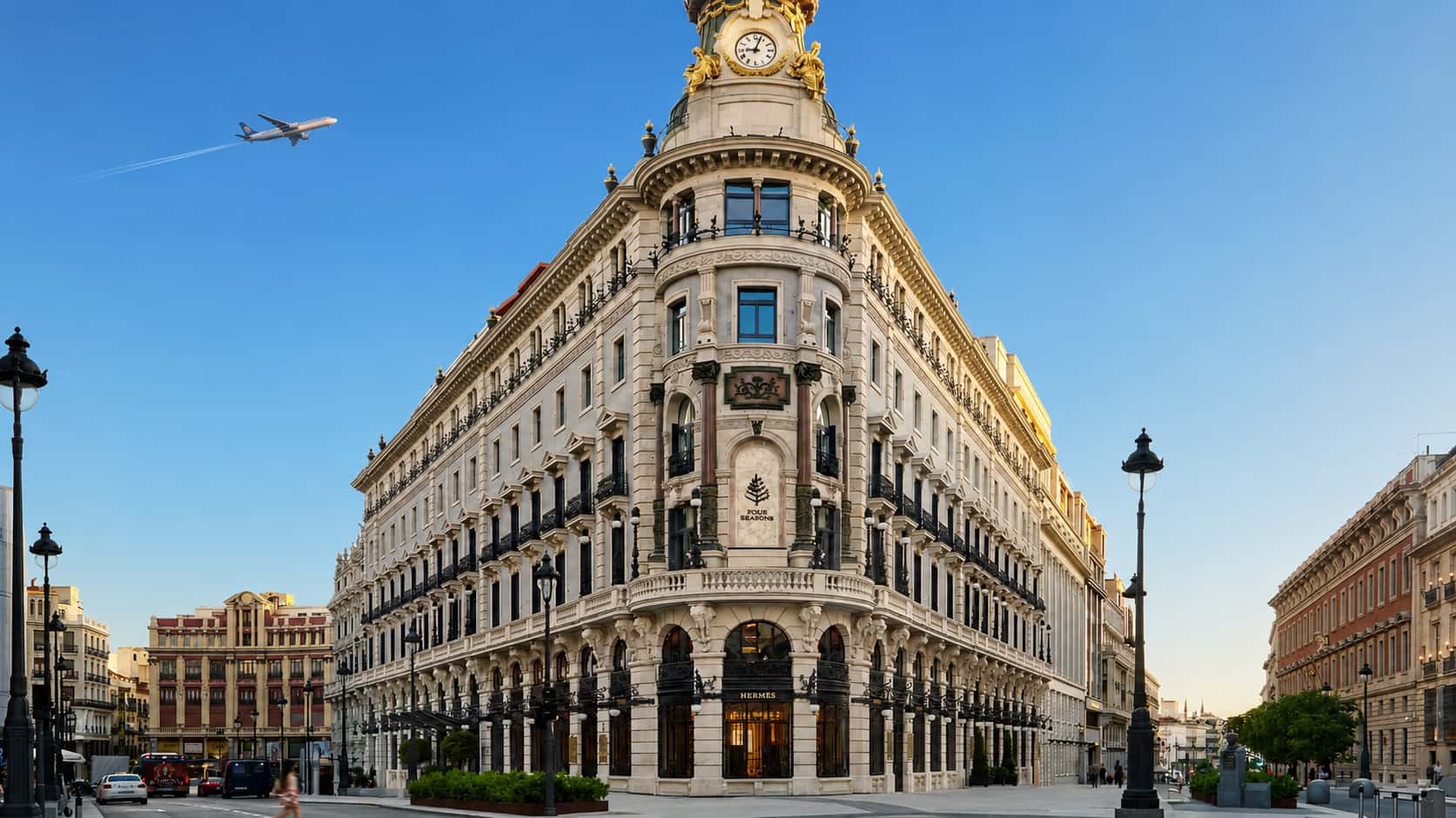
Four Seasons Hotel Madrid is less a hotel than a large-scale luxury environment stitched into central Madrid itself. Behind the restored banking façades sits a seven-building complex of restaurants, spa facilities, retail connections, long corridors, social lounges, and one of the busiest luxury hotel rhythms currently operating in the city center.
The venue delivers one of the most ambitious luxury hotel experiences currently operating in Spain. Its strongest advantage is not any single room category or restaurant. It is the scale and layering of the overall experience: spa, dining, wellness, concierge infrastructure, social spaces, walkability, and the ability to spend several days inside the hotel environment without feeling constrained.
The Private Stay Brief
Editorial Verdict
Book it if you want Madrid with movement and momentum. Think carefully if your ideal luxury stay depends on silence, emotional cocooning, or ultra-personal boutique intimacy.
Smart Booking Move
The biggest value jump comes when moving beyond standard entry categories into terrace rooms or proper suites. Minor category nudges feel less meaningful here than at smaller luxury hotels because the baseline room experience remains intentionally understated.
The Compromise
The hotel’s size and public energy can occasionally soften the seamlessness some travelers expect from Four Seasons. Service recovery exists and often works well, though experiences can feel timing-dependent during busy dining periods and socially active weekends.
Best Suited To
Couples, affluent leisure travelers, city-focused luxury visitors, spa-oriented travelers, and guests who will actively use the hotel beyond sleeping in the room.
- Accommodations: 200 rooms
- Suites: 39 options
- Ideal Stay Length: 3–4 nights
- Nightly Range: ~US$1,300–US$4,400
At A Glance
| Category | Detail |
|---|---|
| Positioning | Large-format luxury hotel integrated into restored historic complex |
| Best Strength | Spa depth and ecosystem-style luxury |
| Main Tradeoff | Less emotionally hushed than palace-style rivals |
| Best Room Strategy | Upgrade meaningfully or stay entry-level |
| Pet Policy | Dogs and cats allowed, US$290 per stay |
| Airport Access | ~25–35 minutes to Madrid-Barajas depending on traffic |
Currency reference used throughout this review: €1 = US$1.16.
Pricing, Fees, And Whether The Value Holds Up
This is top-tier Madrid luxury pricing. The hotel competes financially with Europe’s major luxury urban properties, not simply with other Madrid hotels. Rates fluctuate actively depending on season, demand compression, and room category. Breakfast is frequently not included at baseline rates, sharpening the overall value conversation.
Typical Pricing By Room Tier
| Room Category | June 2026 | October 2026 | January 2027 |
|---|---|---|---|
| Superior Room King | US$1,314 | US$1,786 | US$1,346 |
| Deluxe Room King | US$1,607 | US$1,831–2,035 | US$1,550 |
| Deluxe Room With Juliet Balcony | US$1,735 | US$2,239–2,564 | US$1,856 |
| Grand Premier Room With Terrace | US$2,182 | US$2,628–2,788 | US$1,990 |
| Executive Suite King | US$3,304 | US$2,934 | US$2,890 |
| Loft Suite King | US$4,210 | US$4,401 | US$4,720 |
Observed flexible rates were researched across official Four Seasons and Booking.com sample periods for two adults as of late May 2026. Breakfast was typically priced separately at approximately US$67 per person. Pricing remains highly volatile and can fluctuate significantly depending on season, demand, and booking window.
What The Pricing Pattern Actually Shows
The room ladder escalates quickly once outdoor space and suite categories begin entering the equation.
The smartest value zone sits around the Deluxe Balcony and Grand Premier Terrace categories. That is where guests start receiving more emotional differentiation instead of simply paying for access to the hotel stack itself.
Entry categories mostly sell access to the address, spa, restaurants, and wider hotel experience. The suites slow the pace down and introduce more residential comfort.
Seasonality also behaves interestingly here. Autumn demand compression can rival or exceed summer pricing due to Madrid event traffic, business travel, and peak cultural season demand.
Direct Booking vs Booking.com Logic
Four Seasons lacks a traditional points ecosystem, which changes booking psychology significantly compared with Marriott, Hilton, or IHG luxury competitors.
Instead, value extraction tends to come through Four Seasons Preferred Partner bookings, Amex Fine Hotels & Resorts, breakfast inclusions, upgrade opportunities, hotel official website’s offers, and flexible cancellation benefits.
For many luxury travelers, those channels matter more here than pure loyalty-status chasing.
What Kind Of Hotel This Is
Four Seasons Hotel Madrid is not Madrid’s quietest luxury hotel, nor its most intimate. It operates on a larger social and experiential scale than many direct competitors. The restoration itself is enormous: seven historic buildings stitched together into a mixed-use luxury complex incorporating retail, dining, residences, wellness facilities, and hotel functions.
Mandarin Oriental Ritz Madrid sells controlled palace elegance. Rosewood Villa Magna leans calmer and more residential. Santo Mauro offers aristocratic privacy and low-key discretion. Four Seasons Hotel Madrid moves in another direction entirely. It feels more urban, active, and externally connected to the surrounding city.
The building’s banking history still influences the experience. Grand staircases, marble-heavy public areas, restored architectural details, and long circulation corridors create a sense of scale that smaller luxury properties cannot replicate. The scale can feel impressive at first sight. Travelers expecting cocoon-like warmth may need longer to connect with it emotionally.
The hotel opened in 2020 as Four Seasons’ first property in Spain after a lengthy restoration of the historic Palacio de La Equitativa and neighboring Canalejas buildings. The scale of the redevelopment reshaped this section of central Madrid into a much more luxury-oriented district.
What The Stay Feels Like
Arrival sets the emotional tone quickly. The public spaces are bright, polished, active, and socially visible. The lobby functions less like a quiet lounge and more like a luxury meeting point. Guests drift between the bar, restaurants, concierge desks, retail passages, and elevators throughout the day. During peak evening periods, the hotel can feel closer to a refined urban social hub than a secluded retreat.
That energy works surprisingly well for Madrid. The city itself thrives on movement, late dining rhythms, conversation, and public life. Four Seasons Hotel Madrid mirrors that personality instead of insulating guests from it.
The strongest visual drama appears in shared spaces. Rooms are calmer and more restrained by comparison. Travelers expecting maximalist European palace interiors may initially find the accommodations visually quieter than anticipated. The emphasis here is comfort, proportion, materials, and functionality instead of decorative spectacle.
The emotional read varies sharply. Guests arriving for social Madrid weekends often respond very positively to the hotel’s energy. Travelers expecting hushed Four Seasons resort warmth sometimes leave less emotionally attached.
Rooms And Design
Entry Rooms: Buying The Full-Property Experience
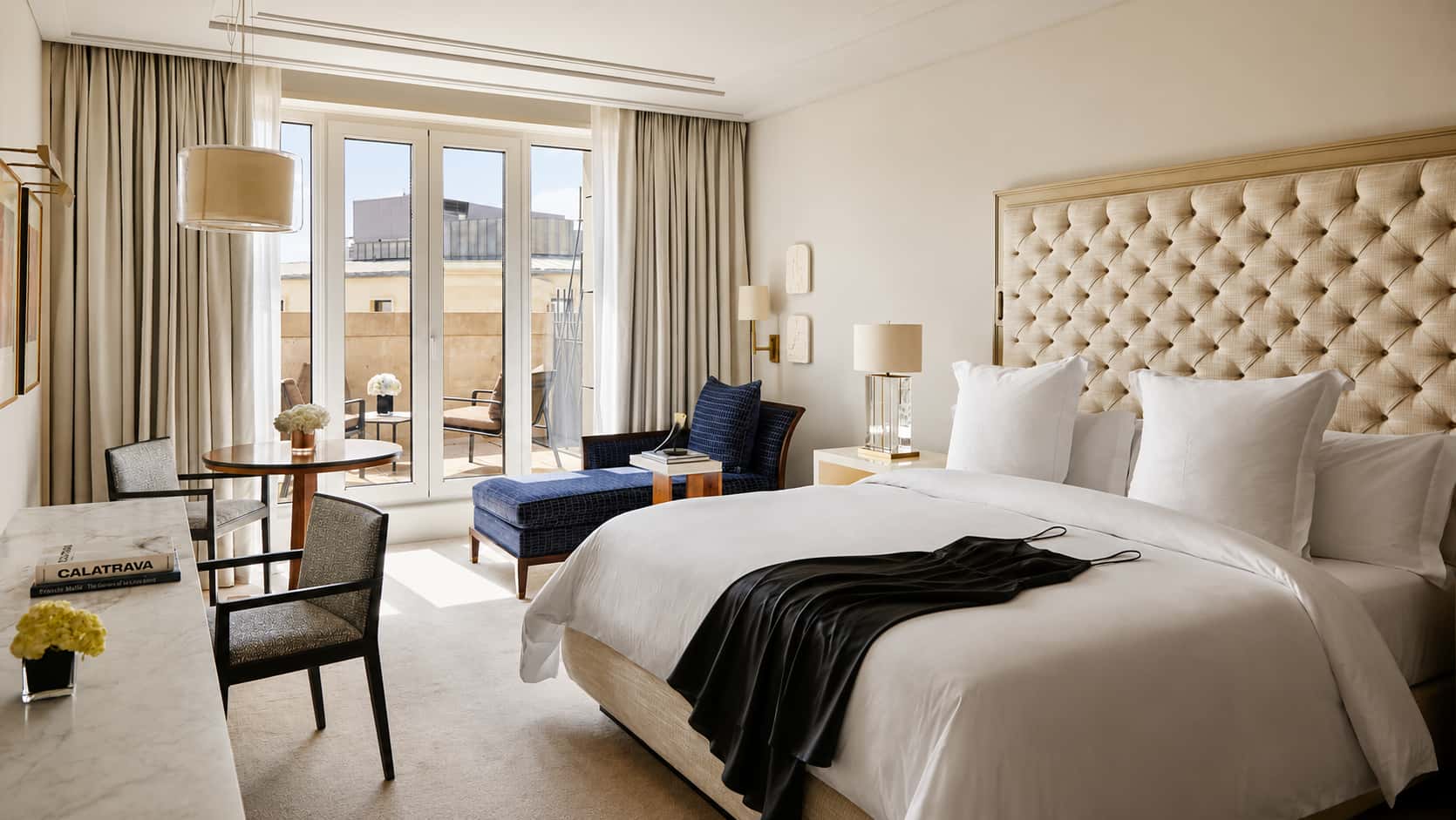
The Superior Room categories are best understood as access points into the broader hotel environment. At roughly 45 square metres, they are not small by Madrid standards, but the emotional emphasis is less about dramatic room individuality and more about comfort, location, and infrastructure access.
Published layouts suggest consistency, though guest feedback indicates real variation between orientations and circulation positioning because of the seven-building configuration underneath the hotel.
Courtyard-facing rooms tend to feel calmer. City-facing rooms add more visual connection to Madrid but can introduce more ambient urban noise depending on placement.
The design language remains understated. Cream palettes, stone bathrooms, soft lighting, and tailored upholstery create a polished contemporary feel without competing against the architecture downstairs.
Where The Upgrade Curve Starts To Matter
The Deluxe categories begin introducing more emotional payoff.
The Deluxe Room with Juliet Balcony is one of the first categories where the experience starts feeling meaningfully differentiated beyond square footage alone. The balcony itself is modest, but natural light and city connection noticeably improve the room mood.
The Grand Premier Room with Terrace is where the room hierarchy becomes more convincing. Outdoor space changes how guests use the room, especially during warmer months. For travelers planning slower mornings, evening drinks, or longer stays, this category creates a more memorable emotional experience than standard room upgrades typically achieve.
The pricing spread becomes substantial once terraces and suites enter the picture, which is why small room-category jumps make less sense here than at many luxury hotels. The smartest strategy is usually either staying relatively entry-level or upgrading enough to feel a true experiential shift.
Suites And Residential Comfort
The suite categories introduce a calmer and more residential emotional register.
Executive Suites improve spatial flow substantially and create more separation between sleeping and living functions. The Loft Suite pushes further toward residential luxury with larger bathroom scale and more expansive living arrangements.
The top suites operate at a very different pricing level altogether. Four Seasons Suites and Penthouse categories compete more directly with elite international urban luxury inventory than with mainstream Madrid luxury hotels.
Published rates reaching around $10,000 per night for top inventory align with the property’s positioning as one of Madrid’s most expensive hotel products.
The Practical Caveat
Room predictability is slightly less absolute here than at more traditionally structured luxury hotels. The historic conversion creates natural variability in corridor flow, orientation, and room feel.
Guests especially sensitive to noise, corridor activity, or layout flow should request quieter orientations and confirm preferences in advance.
Location And Transport
Few luxury hotels in Madrid place travelers this centrally without sacrificing immediate access to upscale dining, retail, and major sightseeing areas.
The hotel sits directly beside Puerta del Sol and within easy walking distance of Plaza Mayor, Gran Vía, the Prado Museum district, and Salamanca shopping corridors. For travelers exploring Madrid largely on foot, the location works exceptionally well.
Galería Canalejas directly reinforces the hotel’s experience logic. The indoor retail connection extends the sense of luxury infrastructure beyond the guestrooms themselves. That convenience becomes surprisingly valuable during hotter summer afternoons or shorter city stays.
Airport Access And Arrival Logic
Madrid-Barajas Airport typically sits around 25–35 minutes away depending on traffic conditions.
The hotel offers transportation coordination and VIP airport arrival services, including premium meet-and-assist options starting around $435. These services primarily appeal to higher-end international travelers or guests arriving on tight schedules.
For shorter overnight airport-oriented stays, the location is less practical than airport-adjacent luxury properties. Four Seasons Hotel Madrid works best for travelers actively engaging with central Madrid.
Valet parking and underground parking integration are strong advantages in this part of the city, where vehicle logistics can otherwise become frustrating quickly.
Dining and Public Spaces
Dani Brasserie And The Rooftop Effect
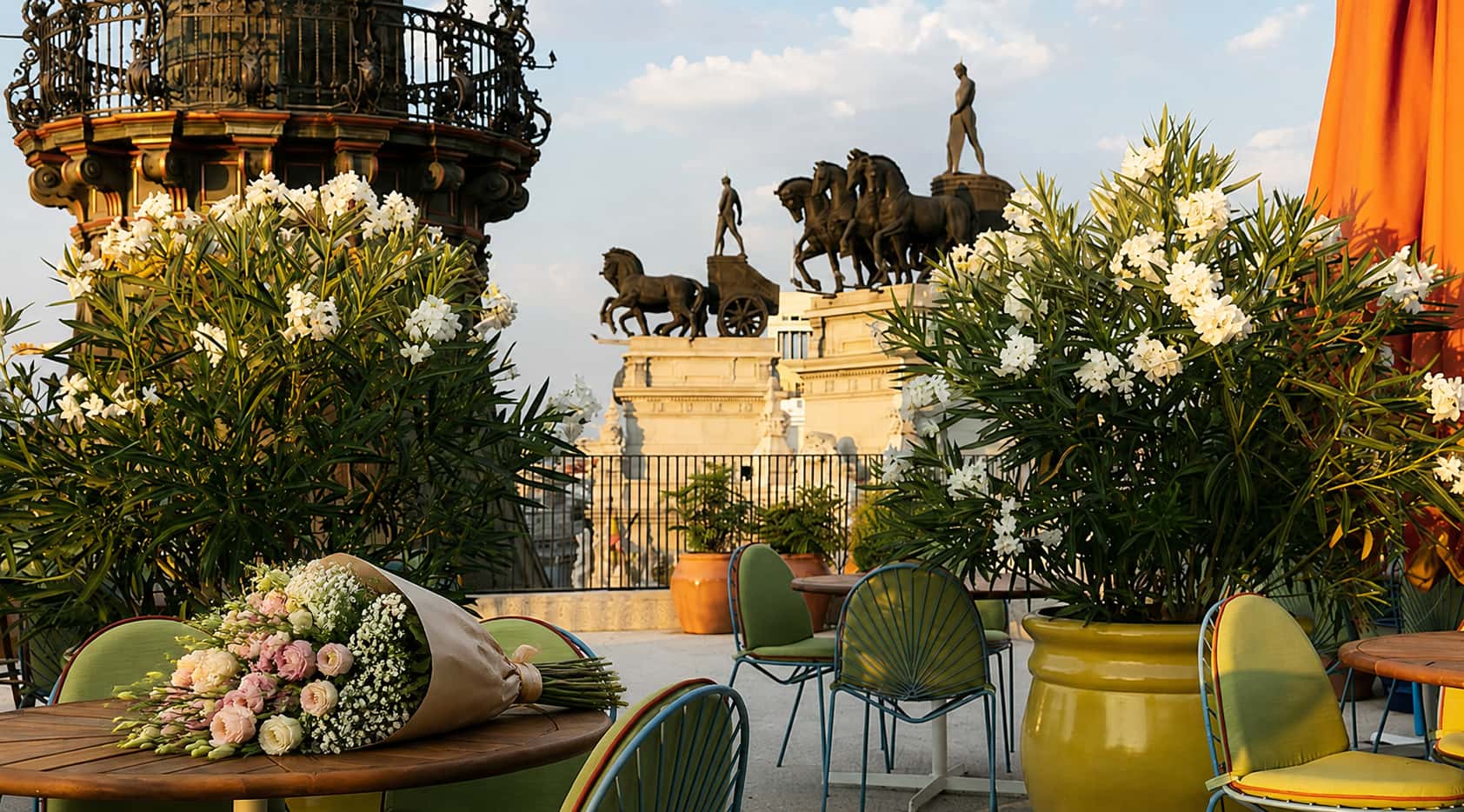
Dani Brasserie does real work for the hotel. It gives the property a social center that many luxury city hotels still struggle to create. The rooftop positioning provides one of the strongest social-view combinations currently operating in Madrid luxury hospitality.
The rooftop changes character throughout the day. Mornings feel relatively calm. By evening, the room shifts into full social mode, with cocktail traffic, skyline views, and a much louder energy.
Food feedback appears more mixed than the rooftop itself. Many guests enjoy the experience and setting more consistently than the cuisine execution. Breakfast sentiment especially varies depending on expectations relative to pricing.
Still, the rooftop materially improves the hotel’s broader value proposition because it gives travelers a compelling reason to remain on property instead of immediately dispersing into the city each evening.
El Patio And The Lobby Experience
El Patio functions almost like the hotel’s emotional center of gravity. The restored banking hall architecture gives the space impressive visual scale, and the constant movement through the lobby reinforces the property’s socially active identity. This is also where several recurring friction points emerge.
Some non-guest visitors describe feeling subtly filtered or unwelcome during busy periods, especially around reservations and seating management. A smaller cluster of hotel guests report inconsistent warmth in lobby-facing interactions compared with the stronger hospitality patterns visible in concierge or room-service experiences.
Those complaints do not appear dominant overall, but they repeat often enough to suggest that lobby and public-space staffing experiences fluctuate more than the rest of the property.
ISA Restaurant & Cocktail Bar
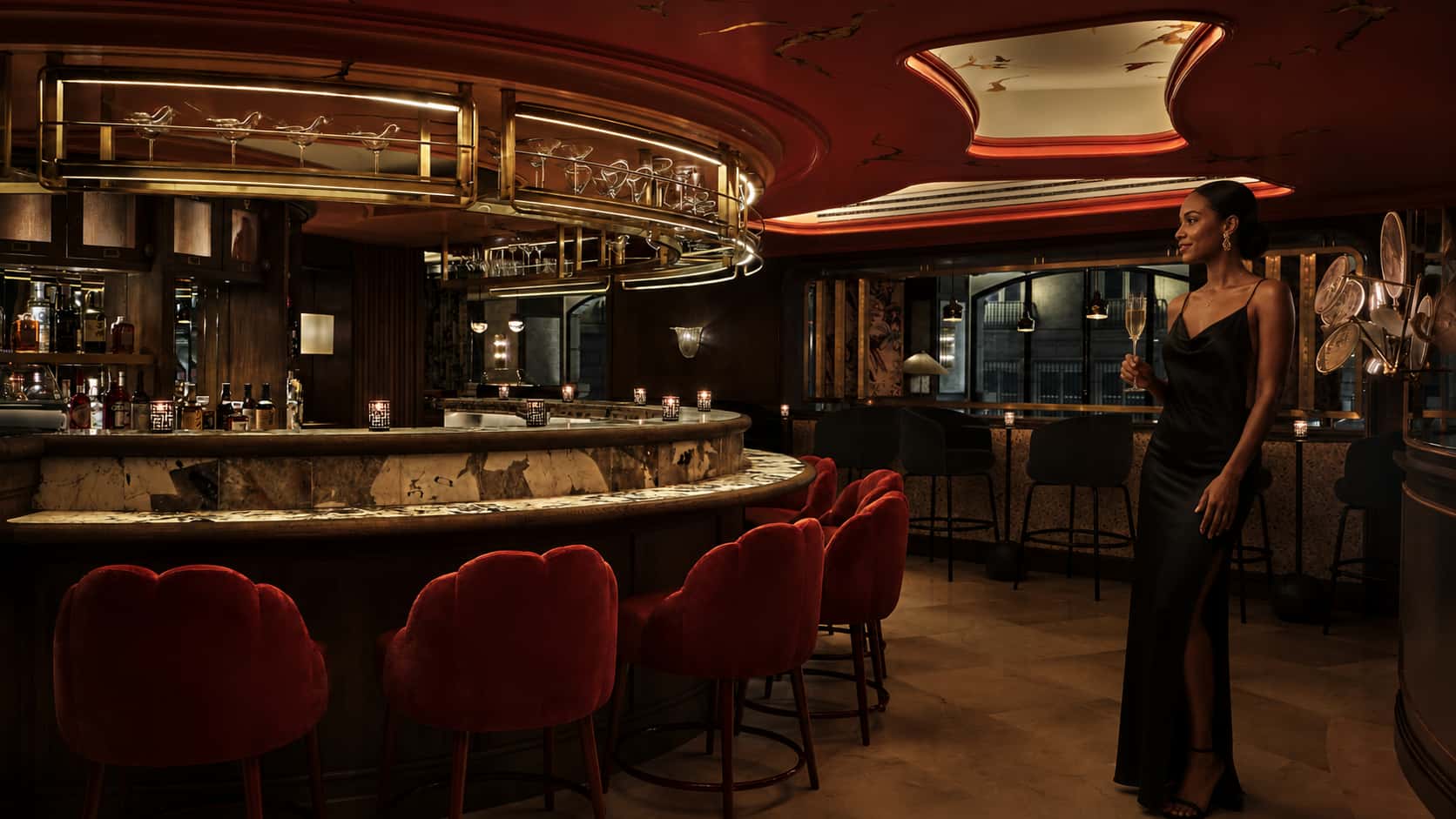
ISA brings a darker, more nightlife-oriented atmosphere compared with the brighter social openness of Dani Brasserie and El Patio.
The venue helps diversify the property’s dining stack effectively, especially for guests staying several nights who want more variation without leaving the hotel.
Spa and Wellness
The spa materially shifts the competitive equation in the hotel’s favor. Many luxury city hotels offer wellness facilities. But fewer make wellness feel central to the stay itself.
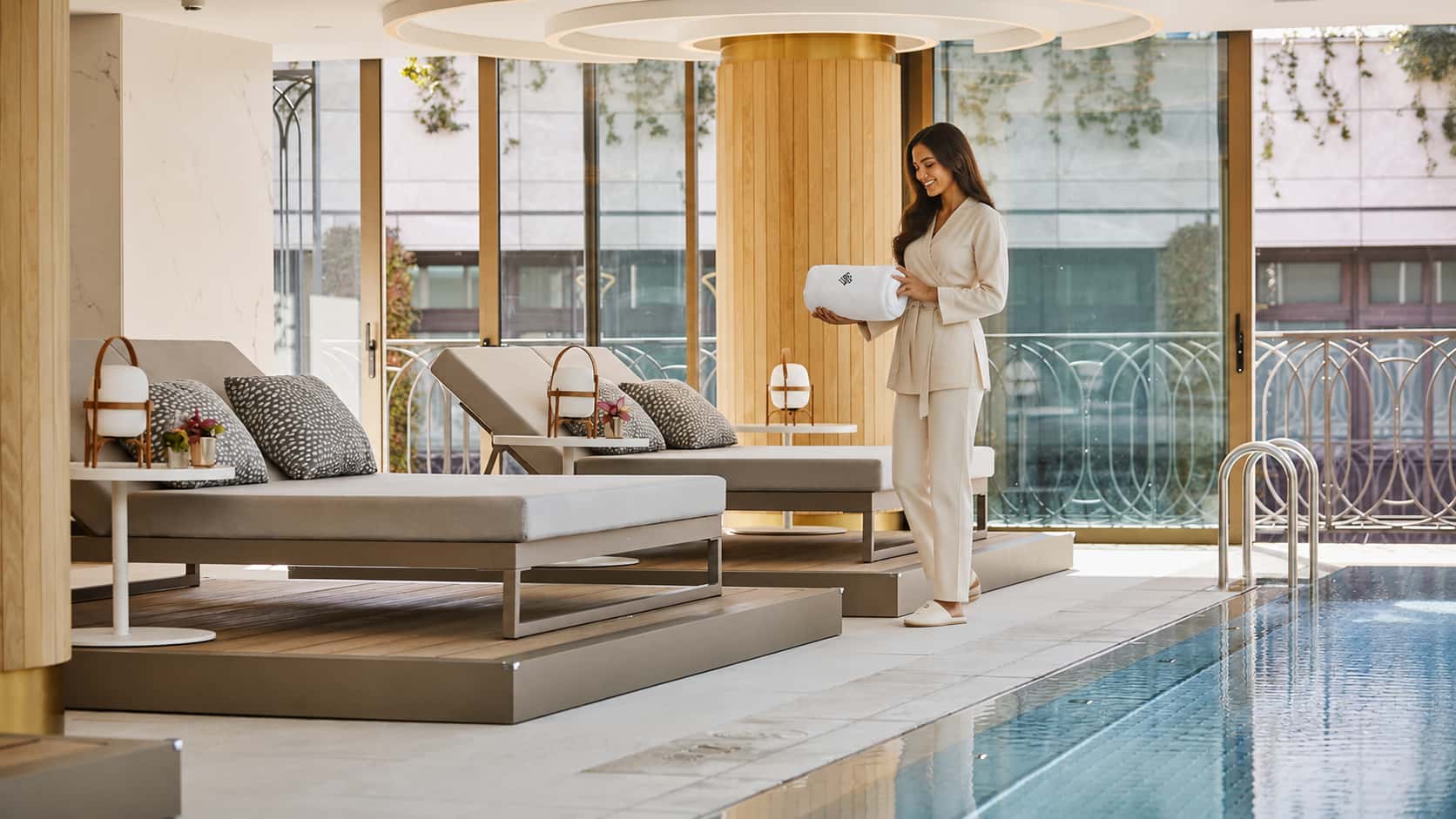
Four Seasons Hotel Madrid dedicates four levels to wellness infrastructure, including treatment rooms, saunas, steam rooms, relaxation spaces, a 14-metre indoor pool, and a substantial fitness centre. The scale genuinely stands out within Madrid city-center hospitality.
The pool receives mostly strong feedback visually, though a recurring minority of guests mention cooler-than-expected water temperatures in the pool and Jacuzzi areas.
Rossano Ferretti Hairspa further strengthens the wellness positioning and contributes to the hotel’s appeal among longer-stay international luxury travelers.
The property becomes significantly more convincing when guests actually use the spa consistently across several days. One-night stays struggle to fully absorb the ecosystem the hotel offers.
Why 3–4 Nights Work Best
The hotel performs strongest across longer luxury city stays. By the third day, the ecosystem begins compounding: breakfast familiarity, concierge rhythm, wellness routines, rooftop evenings, retail convenience, and walkable city access all start reinforcing one another. That layered experience is the hotel’s real competitive advantage.
Service Quality
Service quality trends are positive overall across major platforms. However, the emotional tone of feedback varies sharply depending on expectation level.
Many guests describe excellent warmth, attentiveness, professionalism, and practical problem-solving. Concierge support, family handling, and staff responsiveness receive especially strong praise in positive reviews.
Several guests specifically mention thoughtful details: adapters already prepared in rooms, baby amenities, spa attentiveness, and strong front-desk professionalism.
Yet Four Seasons branding creates unusually high emotional expectations. When friction appears, disappointment often becomes amplified.
Where Service Feels Strongest
The hotel performs best in structured hospitality moments such as concierge coordination, room preparation, wellness interactions, practical guest requests, family logistics, and multilingual assistance. In a hotel this large, practical competence becomes more valuable than theatrical service language.
Where Friction Can Emerge
The most recurring friction points involve breakfast pacing and value perception, occasional delays, public-space responsiveness, lobby or bar seating experiences, and uneven emotional warmth during busy periods. Some criticism also reflects expectation mismatch. Travelers accustomed to quieter Four Seasons resort environments occasionally react negatively to the faster social rhythm and more visible public circulation of this property.
Why Some Negative Reviews Are So Strong
Many guests arrive here for anniversaries, celebrations, or milestone trips, which naturally raises emotional expectations before check-in even begins. When service interactions feel transactional in those contexts, reactions become far stronger than the underlying issue alone might normally trigger. That emotional amplification appears clearly in several negative reviews associated with celebrations and public-space interactions.
Guest Feedback Patterns
Across platforms, the broad scoring picture remains very strong overall:
- Booking.com: approximately 9.4/10
- Tripadvisor: approximately 4.5/5
- Google: approximately 4.6/5
Those numbers confirm that the property succeeds for most guests.
What Guests Consistently Praise
The most stable praise themes include central location, spa quality, room comfort, bedding quality, concierge support, visual grandeur of shared spaces, and rooftop experience. Staff warmth also appears frequently in positive reviews, especially from guests staying multiple nights.
What Repeats In More Critical Reviews
The most repeated criticism themes include breakfast value relative to pricing, inconsistent public-space attentiveness, occasional delays, emotional coldness during certain interactions, and variability in room feel. A smaller but notable pattern involves guests feeling subtly screened or questioned in public areas during dining or bar access periods.
Which Complaints Feel Structural
Travelers seeking total privacy or consistently hushed luxury may never fully connect emotionally with the property. The room variability linked to the historic conversion also appears real.
Which Complaints Feel Situational
Many service complaints appear timing-dependent. Busy breakfast periods, lobby traffic surges, and heavily social evenings seem to correlate strongly with weaker emotional experiences. That distinction matters because quieter midweek stays may feel meaningfully different from peak social weekends.
Who This Hotel Fits Best
Four Seasons Hotel Madrid fits travelers who want luxury integrated into the rhythm of the city itself.
It works especially well for luxury long weekends, couples, affluent international travelers, spa-oriented city stays, travelers who enjoy socially active hotels, guests who value concierge support and walkability.
The hotel also performs well for families because of room flexibility, concierge depth, babysitting services, and broader infrastructure scale.
Pet owners benefit from unusually accommodating policies for a luxury urban property, though the $290 per-stay pet fee is substantial.
Travelers prioritizing total calm, intimate emotional warmth, or deeply residential luxury may connect more naturally with Mandarin Oriental Ritz Madrid, Rosewood Villa Magna, and Santo Mauro.
Guests strongly motivated by points accumulation may also perceive less value because Four Seasons operates outside the major loyalty ecosystems dominating luxury travel behavior.
Final Verdict
Four Seasons Hotel Madrid succeeds because it understands what modern luxury city travel increasingly looks like.
The hotel succeeds because it understands modern luxury city travel unusually well. Guests increasingly expect the property itself to shape part of the trip, not simply host it. That is exactly what this hotel delivers.
The tradeoff is that the experience can feel more public, socially charged, and occasionally less emotionally seamless than quieter palace-style luxury competitors. Some guests will perceive that immediately. Others will barely notice because the hotel gives them so much else to engage with.
For travelers who want Madrid luxury with movement, infrastructure, and genuine ecosystem depth, Four Seasons Hotel Madrid remains one of the city’s strongest overall stays.
Frequently Asked Questions
Is Four Seasons Hotel Madrid worth the price?
For travelers actively using the spa, rooftop dining, concierge services, and central location, yes. Travelers planning to spend most of the trip inside the room may find better value in smaller palace-style luxury hotels.
Which room category offers the best value?
The Grand Premier Room with Terrace offers one of the strongest emotional upgrades relative to pricing. Entry rooms work best for travelers prioritizing location and hotel infrastructure access.
Is the hotel quiet?
Not consistently. Public areas remain socially active throughout much of the day and evening. Courtyard-facing rooms generally feel calmer.
Is breakfast worth adding?
That depends heavily on how much travelers value convenience and rooftop atmosphere. Guest sentiment regarding breakfast quality and value is more mixed than for the hotel overall.
How does it compare with Mandarin Oriental Ritz Madrid?
Mandarin Oriental Ritz Madrid delivers a calmer, more palace-oriented experience. Four Seasons Hotel Madrid feels larger, more social, and more ecosystem-driven.
Is the spa actually one of the best in Madrid?
Yes. The scale, infrastructure, and integration into the broader stay make it one of the city’s strongest luxury hotel wellness offerings.
Does the hotel work well for families?
Generally yes. Larger room inventory, concierge support, babysitting services, and central walkability help family stays function smoothly.
Does Four Seasons Madrid have a loyalty program?
Four Seasons does not operate a traditional points-based loyalty ecosystem comparable to Marriott Bonvoy or Hilton Honors.
Are pets allowed?
Yes. Dogs and cats are welcome for an additional €250 per stay. Pet-friendly room assignment should be confirmed before arrival.
How practical is the location for exploring Madrid?
Extremely practical. Many of Madrid’s major cultural, shopping, and dining districts are reachable on foot.