
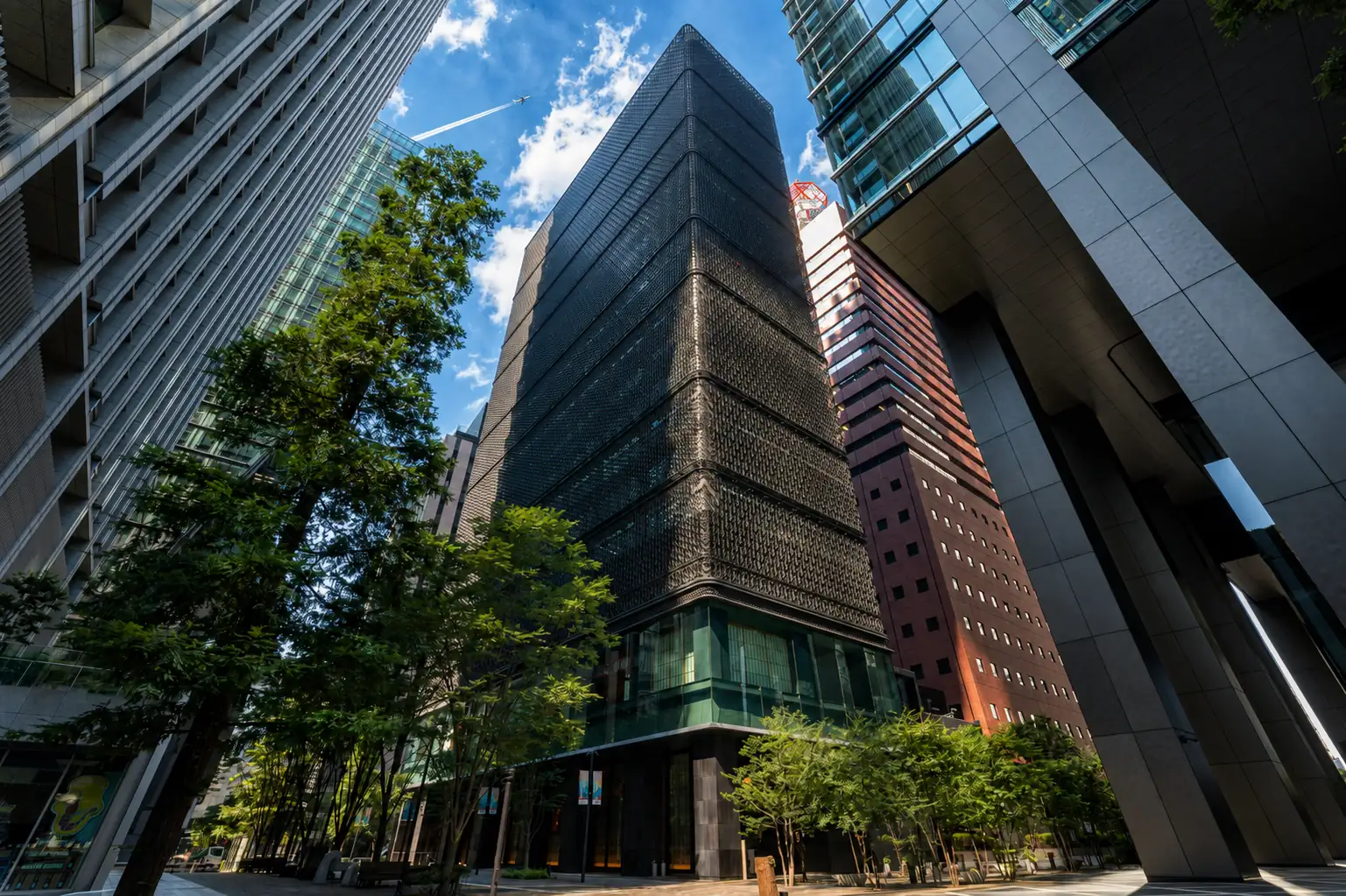
HOSHINOYA Tokyo pairs large rooms, floor lounges, and a natural rooftop onsen with a highly structured urban-ryokan model in Otemachi.
HOSHINOYA Tokyo is best understood as a highly structured urban ryokan, not simply a luxury hotel with a central Tokyo address. Shoes come off at the entrance, tatami runs through much of the property, six guestrooms share each floor’s OCHANOMA lounge, and a natural hot spring occupies the top of the building.
Travelers who actively want those rituals will find an unusual combination in central Tokyo. Guests expecting the broad facilities, concierge flexibility, and spontaneous dining of an international ultra-luxury hotel face a less straightforward value equation.
Research note: BusinessClass completed its research for this review in August 2026 using official property information, controlled direct and online travel agency (OTA) pricing observations, guest-feedback analysis, and comparative hotel research. Prices are highly volatile. All quoted rates should be treated as dated booking evidence rather than live quotations.
At a Glance
| Attribute | Details |
| Hotel | HOSHINOYA Tokyo |
| Address | 1-9-1 Otemachi, Chiyoda-ku, Tokyo 100-0004 |
| Best Understood As | A highly structured vertical urban ryokan in central Tokyo |
| Operator | Hoshino Resorts |
| Core Concept | Shoe-free tatami circulation, floor-based ryokan communities, OCHANOMA lounges, and a rooftop natural hot spring |
| Rooms | Sakura Deluxe Twin, 41 to 47 m²; Yuri Deluxe King, 41 to 49 m²; Kiku Executive Triple, 83 m² |
| Strongest Room Upgrade | Kiku, because it roughly doubles the footprint and adds three-person occupancy and a south-facing corner position |
| Strongest Feature | The combination of the Otemachi Onsen and six-room OCHANOMA floor communities |
| Main Limitation | Less conventional five-star flexibility, concierge-style assistance, and facility breadth than some international luxury competitors |
| Best For | Couples, repeat Japan visitors, design and wellness travelers, short experiential stays, self-sufficient Otemachi business travelers |
| Weaker Fit For | Spontaneity-first travelers, multi-room families, concierge-dependent guests, and travelers who prioritize a pool, substantial gym, or conventional hotel bar |
| Tokyo Station | Approximately 10 minutes on foot from the Marunouchi North Exit according to hotel guidance |
| Otemachi Station | Immediately accessible from the Otemachi area, with official guidance referencing A1 for the Marunouchi Line and C1 for other lines |
| Haneda Airport | About 20 minutes by taxi or 40 minutes by train in the hotel’s published guidance |
| Narita Airport | About 60 minutes by taxi or 70 minutes by train |
| Airport Shuttle | No hotel shuttle; limousine or airport transfer can be arranged on request |
| Dining | Structured Japanese dining, Sushi Otemon, Japanese or Western breakfast, and in-room dining |
| Wellness | Natural rooftop hot spring plus paid treatments and structured wellness programs |
| Pool | No swimming pool |
| Gym | No conventional in-house gym comparable with major international luxury competitors; guest evidence referenced paid nearby access |
| Bar | No conventional standalone luxury-hotel bar |
| Family Context | Kiku accommodates up to three guests; bed-sharing is allowed for children 11 and under within maximum occupancy. Connecting-room and same-floor allocation logic was not established |
| Pet Policy | Not allowed |
| Guest Feedback: Tripadvisor | 4.6/5 from 581 reviews; Rooms 4.7, Service 4.6, Value 4.0, Cleanliness 4.9, Location 4.4, Sleep 4.8 |
| Guest Feedback: Expedia | 9.6/10 from 842 verified reviews; Cleanliness 9.8, Staff & Service 9.6, Amenities 9.4, Property Condition 9.6 |
| Guest Feedback: Trip.com | 9.0/10 from 90 reviews; Cleanliness 9.1, Location 9.1, Amenities 8.9, Service 8.9 |
| Notable Recognition | No. 39 in The World’s 50 Best Hotels 2023; Condé Nast Traveler Triple Crown recognition; Tatler Best recognition for 2024 and 2025; AHEAD Global Awards 2019 design/new-concept recognition |
| Primary Comparison | Aman Tokyo |
| Review Verdict | One of Tokyo’s most distinctive choices for travelers who specifically want an urban-ryokan stay; a weaker value proposition for guests expecting the breadth and flexibility of a conventional international ultra-luxury hotel |
What HOSHINOYA Tokyo Actually Is
Calling HOSHINOYA Tokyo a luxury hotel with Japanese design understates how much the property asks guests to participate in its concept. Shoes come off on arrival, much of the interior circulation is on tatami, and each guest floor is organized around six rooms sharing an OCHANOMA Lounge reserved for people staying on that floor. The building translates ryokan customs into a vertical urban format instead of merely adding Japanese decorative cues to a conventional hotel.
The architecture supports the operating model. The contemporary tower incorporates Edo-period and ryokan references, from the patterned exterior to the continuity of tatami through guest areas. AHEAD Global Awards recognized the project in 2019 for its design/new-concept credentials.
HOSHINOYA Tokyo ranked No. 39 in The World’s 50 Best Hotels 2023. The research also documented Condé Nast Traveler Triple Crown recognition, and Tatler Best recognition in 2024 and 2025. The more useful test for a guest is whether the hotel’s prescribed meal times, limited conventional facilities, and floor-based ryokan structure suit the trip.
Architecture, serenity, room cleanliness, the onsen, and transport access recur across the research set. A corresponding negative pattern also appears: some guests arrive with expectations shaped by international five-star hotels and judge the same rules as inflexible.
Value privacy and highly personalised service? Discover La Réserve Paris, where residential scale and discreet hospitality create a similarly secluded retreat in the heart of a major capital.
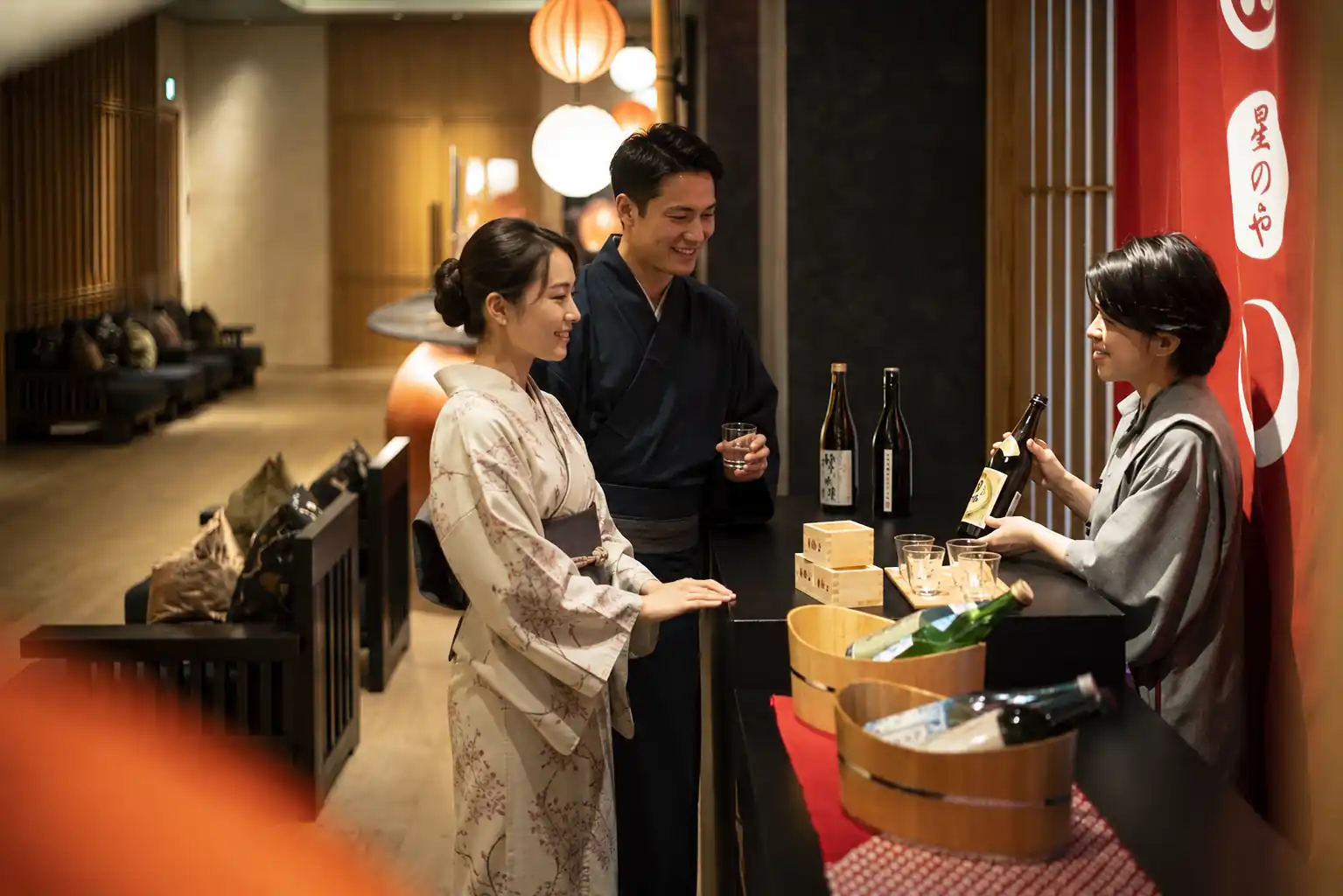
Rooms: Sakura and Yuri Are Peers, Kiku Is the Real Upgrade
Sakura vs. Yuri: Choose the Bed
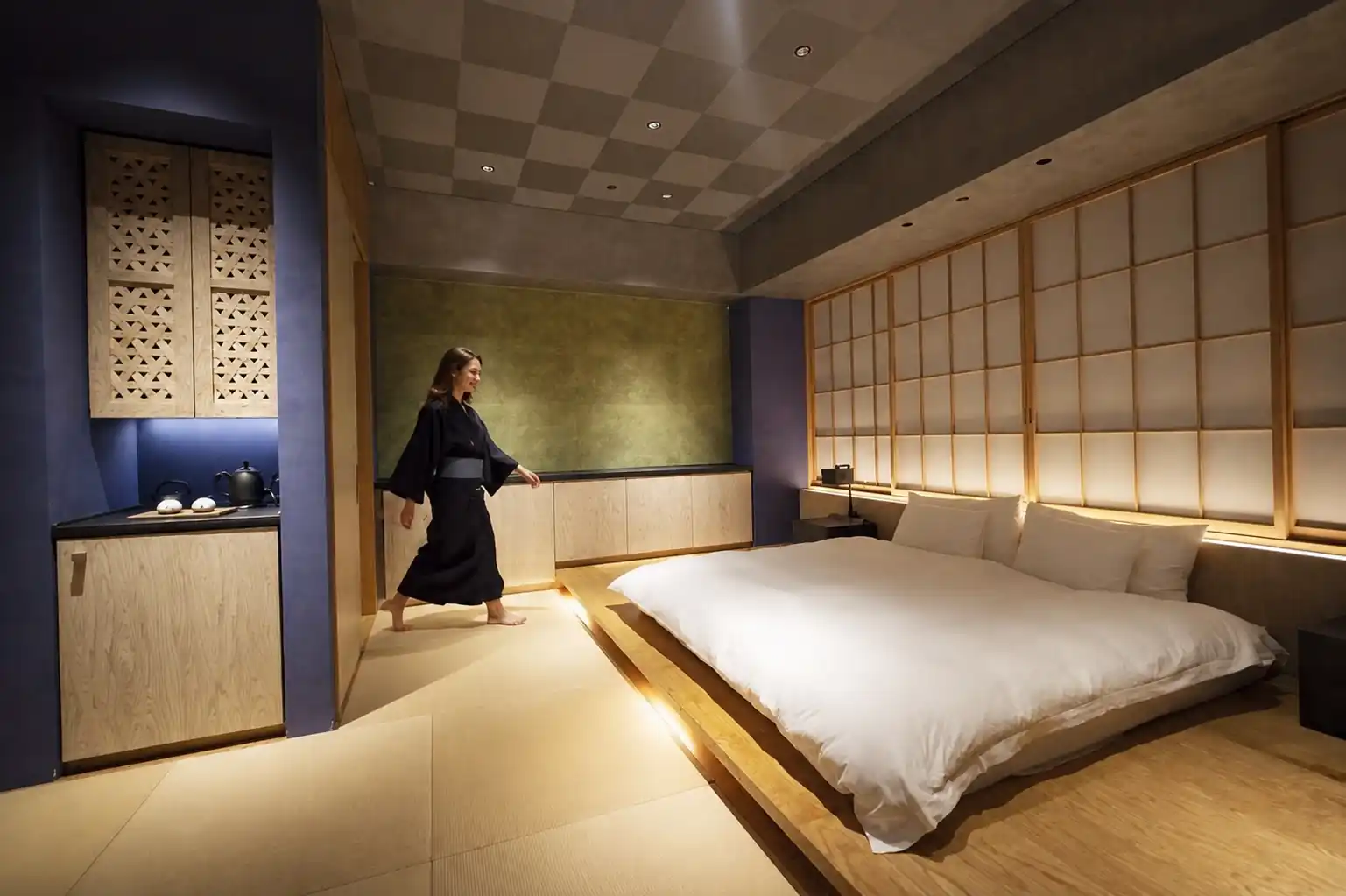
Sakura and Yuri occupy essentially the same level in the hierarchy. Sakura is a 41 to 47 m² Deluxe Twin for one or two guests, with two 205 x 105 cm beds. Yuri is a 41 to 49 m² Deluxe King for one or two guests, with a 205 x 180 cm king bed. Their size ranges overlap, and the controlled direct-price samples placed them at identical rates.
Couples should therefore choose Yuri when a king bed is preferable, not because the category represents a meaningful status upgrade. Sakura makes more sense for two travelers who want separate beds. Both receive the same floor OCHANOMA access.
Bathrooms across the three hotel room categories include a bathtub, separate shower booth, and separate WC with washlet. Common amenities include blackout curtains, Bluetooth speaker, humidifying air purifier, minibar, electric kettle, safe, pajamas, kimono-style loungewear, and Wi-Fi.
Spaciousness and cleanliness recur among the strongest room comments. A smaller group reports office-facing privacy compromises or darker rooms where screens need to remain closed.
When Kiku Makes Sense
Kiku is the only substantial physical step up. The 83 m² Executive Triple accommodates up to three guests, uses three single beds, occupies a south-facing corner, and appears once per floor.
The additional floor area is significant, but Kiku remains a guestroom category rather than a suite or club-level product. OCHANOMA access is already included with Sakura and Yuri.
Families have more variables to consider than couples. Children 11 and younger may share beds within the room’s maximum occupancy, and Kiku gives a three-person party a credible single-room option.
No connecting-room inventory or guaranteed same-floor placement was established. Families split between floors also lose the natural advantage of sharing one OCHANOMA lounge.
Location: Strong for Tokyo Station, Quiet After Hours
Otemachi is one of the clearest strengths for travelers who use Tokyo as a transport and business hub. Tokyo Station’s Marunouchi North Exit is about a 10-minute walk away. Otemachi Station is immediately accessible from the surrounding complex.
Leisure stays come with a different trade-off. Train connections are strong and the Imperial Palace area is nearby. But Otemachi has less immediate restaurant, nightlife, and street activity than Ginza, Shibuya, or Shinjuku. Couples happy to travel out for dinner may barely notice. But first-time visitors who want Tokyo outside the door may prefer another district.
Drivers can use underground parking in Otemachi Financial City Grand Cube. August 2026 research captured JPY 300 (~$3) per 30 minutes between 7:00 a.m. and 10:00 p.m. or JPY 5,500 ($35) per night, with no valet service. Parking-access notices were identified as time-sensitive, so current instructions should be checked before driving to the hotel.
Onsen and OCHANOMA: Where the Premium Becomes Distinctive
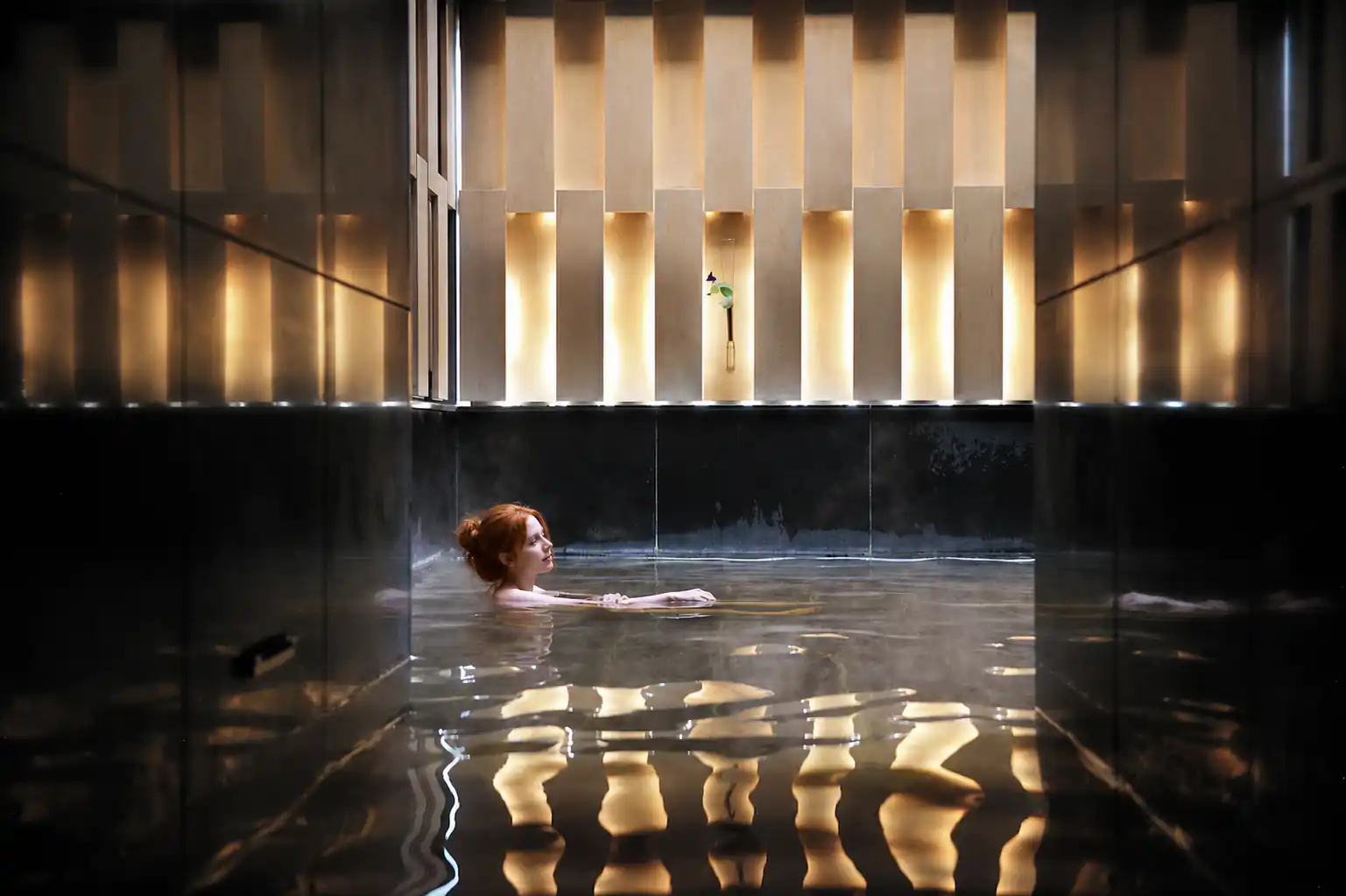
Two features explain HOSHINOYA Tokyo better than a conventional amenities list: the Otemachi Onsen and the OCHANOMA lounges.
The hotel’s natural hot-spring water is drawn from approximately 1,500 meters below ground and used in indoor and open-air bathing areas on the top floor. Guest feedback repeatedly identifies the onsen as one of the strongest reasons to stay. Here, the natural hot spring is part of the ryokan structure rather than a separate spa amenity, with indoor and open-air bathing on the top floor.
OCHANOMA is equally central to the building’s logic. Six guestrooms on each floor share one lounge reserved for that floor’s guests. August 2026 evidence showed complimentary 24-hour access, with scheduled elements including tea, seasonal evening drinks, and morning activities. Guests may use the space in hotel loungewear, making it function more like the communal heart of a small ryokan than an executive lounge.
Facility breadth is where comparisons with conventional ultra-luxury hotels become less favorable. Our research established no swimming pool, no major in-house gym equivalent to leading international competitors, no large business-center proposition and no standalone luxury-hotel bar ecosystem. Paid spa treatments and structured wellness programs exist. Guests who place substantial value on a large gym, swimming pool, cocktail bar, or extensive meeting facilities will find comparatively little of that infrastructure here.
Looking for another urban sanctuary with serious wellness? Explore Bvlgari Hotel Milano, where a secluded Brera setting, private garden, and accomplished spa offer a distinctly European take on discreet city luxury.
Dining and Service: Planning Is Part of the Model
Dining Rewards Advance Decisions
Dining follows the same structured philosophy as the rest of the property. Our research captured the main dinner at JPY 28,000 (~$176) per adult. This is before tax and a 10% service charge, with service from 5:30 p.m.
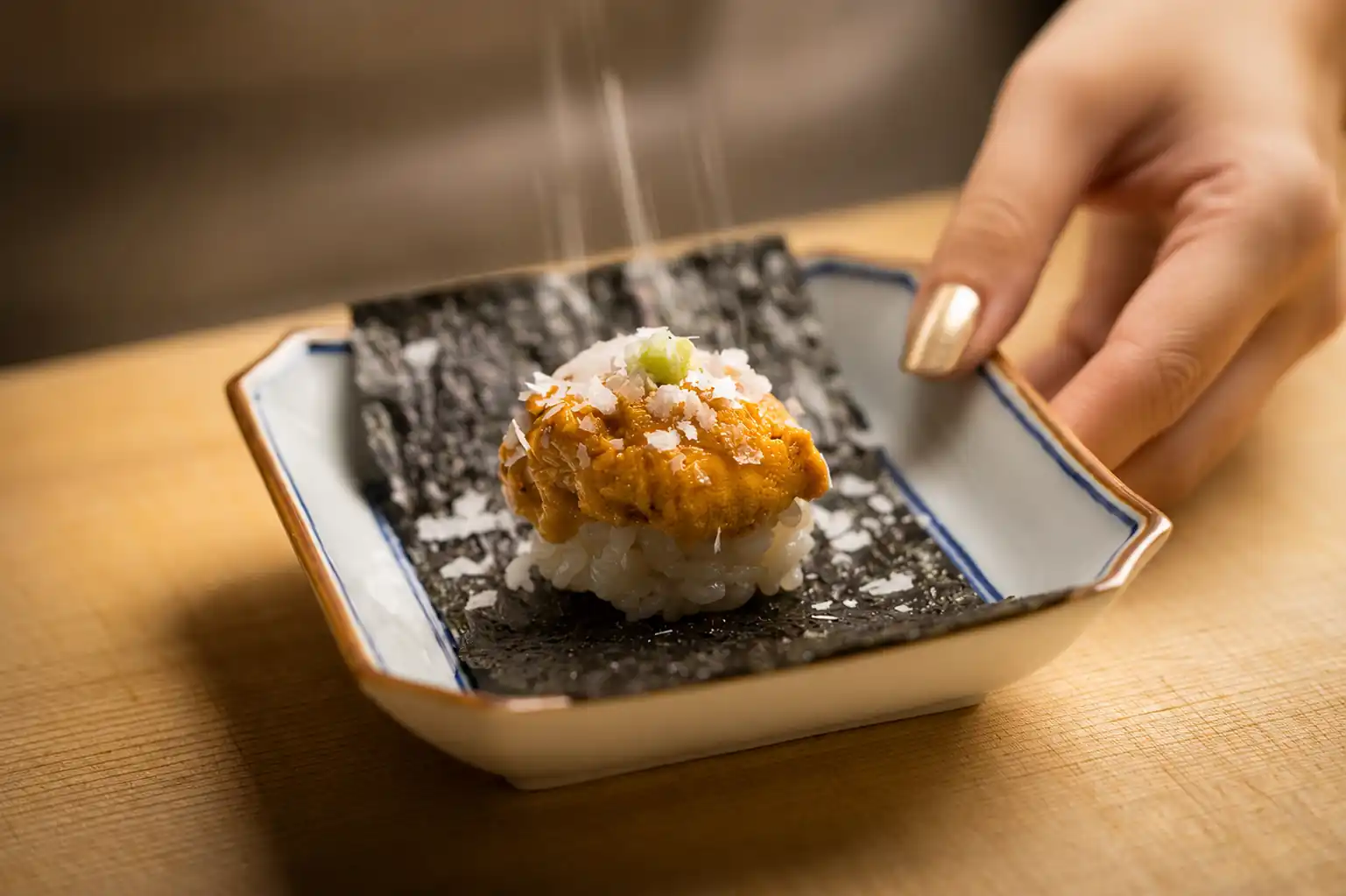
Sushi Otemon was documented as an eight-seat counter with 5:30 p.m. and 8:00 p.m. seatings, priced at JPY 30,000 (~$189) per person before tax and service and requiring reservations by the previous evening.
Breakfast is served in Japanese and Western formats, with an adult price of JPY 5,000 (~$31) and advance reservation required. Exact hours, menus, and prices are volatile operational details, so travelers should confirm them when booking. In-room dining provides useful flexibility, with light meals and beverages available across a broad part of the day.
Recurring criticism centers on breakfast quantity or value, advance reservations, limited spontaneity, and high prices, although positive food comments also appear. Guests who prefer to decide meals day by day are more likely to feel the restrictions.
Service Is More Polarizing Than the Aggregate Scores Suggest
Expedia’s 9.6/10 aggregate and Tripadvisor’s 4.6/5 score indicate a strongly positive base of guest feedback. Tripadvisor’s Service score was 4.6 and Expedia’s Staff & Service score was 9.6 during the research capture.
The recurring criticism is narrower than the aggregate scores suggest: policy-led refusals, limited discretion, communication friction, and less expansive external concierge assistance.
Positive staff reviews remain common. So, the strongest warning is about flexibility, particularly for guests expecting improvisation around restaurant bookings, room timing, or special requests.
Prefer international luxury with a stronger dining scene? Explore Mandarin Oriental, Tokyo, where sophisticated rooms, panoramic views, and destination restaurants provide a cosmopolitan alternative to HOSHINOYA’s immersive ryokan experience.
What HOSHINOYA Tokyo Costs, and How to Read the Rate
HOSHINOYA Tokyo’s direct booking engine displayed a first-night per-person figure alongside the total room rate, while Trip.com emphasized a headline “Today’s Price.” BusinessClass compared full two-night totals for one room and two adults across September, October, and December 2026.
Seasonal Pricing Sample
| Sample Stay | Dates | Sakura / Yuri, Two-Night Direct Plan | Kiku, Two-Night Direct Plan |
| Lower-Priced Weekday Sample | Sep. 7 to 9, 2026 | $1,499 | $2,155 |
| Higher Autumn Weekday | Oct. 5 to 7, 2026 | $2,155 | $2,811 |
| Early-December Weekday | Dec. 1 to 3, 2026 | $2,155 | $2,811 |
| December Weekend | Dec. 4 to 6, 2026 | $2,155 | $2,811 |
Figures above are dated full-stay samples for one room and two adults and should not be interpreted as current quotations.
September was materially cheaper than the later samples, but the observations do not establish a simple seasonal pattern. October, the early-December weekday, and the adjacent December weekend all produced identical direct totals, with no sampled Friday-to-Sunday premium.
Sakura and Yuri again behaved as peers. Kiku carried an identical $656 premium over the discounted entry total in every controlled sample. This extra bought roughly double the floor area, three-person occupancy, and the south-facing corner position. It did not buy a higher lounge or club-service tier.
The direct “Over 2 Nights Stay” plan was approximately 25% below the Standard Rate and was prepaid and nonrefundable. Standard Rate terms provided more cancellation flexibility.
In our August 2026 booking tests, one-night stays were offered only within 30 days of arrival. Dates further ahead required at least two nights on HOSHINOYA Tokyo’s official booking system, and Trip.com returned the same two-night-or-longer pattern. Minimum-stay controls can change, so check the current rule for your dates.
Direct or OTA?
Direct booking was not automatically cheaper. In September, Trip.com showed $1,492 nonrefundable for Sakura/Yuri versus $1,499 direct, and $1,988 with free cancellation versus a $1,996 direct Standard Rate. October and December showed similarly narrow gaps: $2,148 versus $2,155 nonrefundable, and $2,862 versus $2,871 on the more flexible rates.
Small headline differences should not drive the booking decision. Compare the full-stay total, cancellation terms, meal inclusions, and payment conditions. Trip.com meal packages were far more expensive and could not be treated as like-for-like equivalents of the hotel’s direct dining plans without checking exactly what each package included.
HOSHINOYA Tokyo vs. Aman Tokyo
Aman Tokyo is the clearest alternative for travelers choosing between Japanese immersion and a more conventional ultra-luxury hotel model. Both occupy the high end of central Tokyo hospitality and appeal to guests seeking large rooms, wellness, and a strong Japanese sense of place. HOSHINOYA pushes much further into prescribed ryokan ritual. Aman serves as the stronger reference for travelers who want Japanese serenity within a more conventional international ultra-luxury service and facility model.
- Choose HOSHINOYA when the floor lounges, tatami environment, onsen, and structured rituals are part of the reason for traveling.
- Choose the more conventional ultra-luxury route when broad facility infrastructure, concierge discretion, multiple social spaces, and familiar hotel operating norms carry greater value. Four Seasons, Mandarin Oriental, Peninsula, and Ritz-Carlton are also useful expectation benchmarks for you in that case.
Explore Aman Tokyo, where expansive rooms, panoramic skyline views, and exceptional wellness offer a contemporary alternative to HOSHINOYA’s intimate ryokan experience.
Who Should Book HOSHINOYA Tokyo?
- Couples are the cleanest fit. The combination of large rooms, quiet floors, shared lounge spaces, and rooftop bathing works well for travelers who want a restorative one-to-three-night stay within a broader Japan itinerary. Repeat Japan visitors may also appreciate a hotel that delivers ryokan rituals without requiring a trip to a resort destination.
- Business travelers can make equally good use of the property when meetings center on Otemachi or Marunouchi and they are comfortable organizing their own external arrangements. Tokyo Station access adds real value for onward rail travel.
Who Should Be Cautious
Families require more deliberate planning. Kiku accommodates up to three guests and children 11 or younger may share bedding, but no connecting-room or guaranteed same-floor allocation policy was established.
Prioritize spontaneous dining, intensive concierge help, a significant gym, a swimming pool, or an active hotel bar? Consider whether HOSHINOYA’s strengths justify paying a comparable premium for a much narrower conventional facility set.
Prefer familiar five-star luxury over the ryokan experience? Discover Four Seasons Hotel Tokyo at Otemachi, where international service, contemporary rooms, and extensive dining provide a more conventional luxury base for exploring the city.
Before You Book
- Expect to remove shoes and move through much of the property on tatami.
- Decide whether Sakura’s twin beds or Yuri’s king configuration better suits the stay before paying for Kiku.
- Reserve important meals and structured activities early where required.
- If booking more than 30 days ahead, check whether the two-night minimum observed in our August 2026 tests still applies.
- Families using more than one room should confirm room-placement options directly.
- Match cancellation terms before comparing direct and OTA prices.
- Recheck current dining prices, activity schedules, airport-transfer arrangements, and other time-sensitive operating details before travel.
Drawn to hotels where Japanese aesthetics meet European design? Discover Hotel Hana Paris, an intimate French-Japanese hideaway offering a more accessible and playful interpretation of cross-cultural hospitality.
Verdict
HOSHINOYA Tokyo justifies its rate most convincingly for guests who will actually use what distinguishes it: unusually large rooms, six-room OCHANOMA communities, shoe-free tatami living, and the natural rooftop onsen. Otemachi Station outside the property and Tokyo Station about a 10-minute walk away add unusually strong transport access to that formula.
Book HOSHINOYA Tokyo because you want its disciplined urban-ryokan format, not because you are looking for a default five-star base in Tokyo. Guests who value flexibility, broad facilities, and intensive concierge support should compare Aman Tokyo and the city’s leading international luxury hotels before committing.
Frequently Asked Questions
Is HOSHINOYA Tokyo a hotel or a ryokan?
HOSHINOYA Tokyo operates as a vertical urban ryokan. Tatami circulation, shoe removal, floor-based OCHANOMA lounges, structured dining, and a natural hot spring shape the stay more deeply than Japanese-inspired décor would in a conventional luxury hotel.
Which HOSHINOYA Tokyo room should I book?
Sakura and Yuri are parallel entry choices. Sakura offers twin beds in 41 to 47 m²; Yuri offers a king bed in 41 to 49 m². Kiku is a meaningful physical upgrade at 83 m² with three single beds, three-person occupancy, and a south-facing corner location. Sampled August 2026 pricing showed Kiku costing $656 more than the discounted entry rate over two nights.
Should I book HOSHINOYA Tokyo directly or through an OTA?
Compare equivalent conditions before choosing. Our August 2026 samples showed direct and Trip.com room-only pricing close to parity when cancellation terms matched. Direct was not automatically cheaper. Multi-night discounts, advance-payment terms, and meal packages created much larger differences than the booking-channel gap.
Is HOSHINOYA Tokyo worth the price?
The strongest value case comes from features that are integral to the stay: large guestrooms, OCHANOMA floor communities, the natural rooftop onsen, tatami-based ryokan rituals, and central Otemachi access. Value becomes harder to defend for travelers who judge an expensive Tokyo hotel by conventional gym, pool, bar, concierge, and spontaneous-dining breadth. The rate is easier to justify when the onsen, floor lounges, large rooms, and ryokan rituals are the reasons for booking; it is harder to justify for guests primarily paying for conventional hotel facilities and flexibility.