
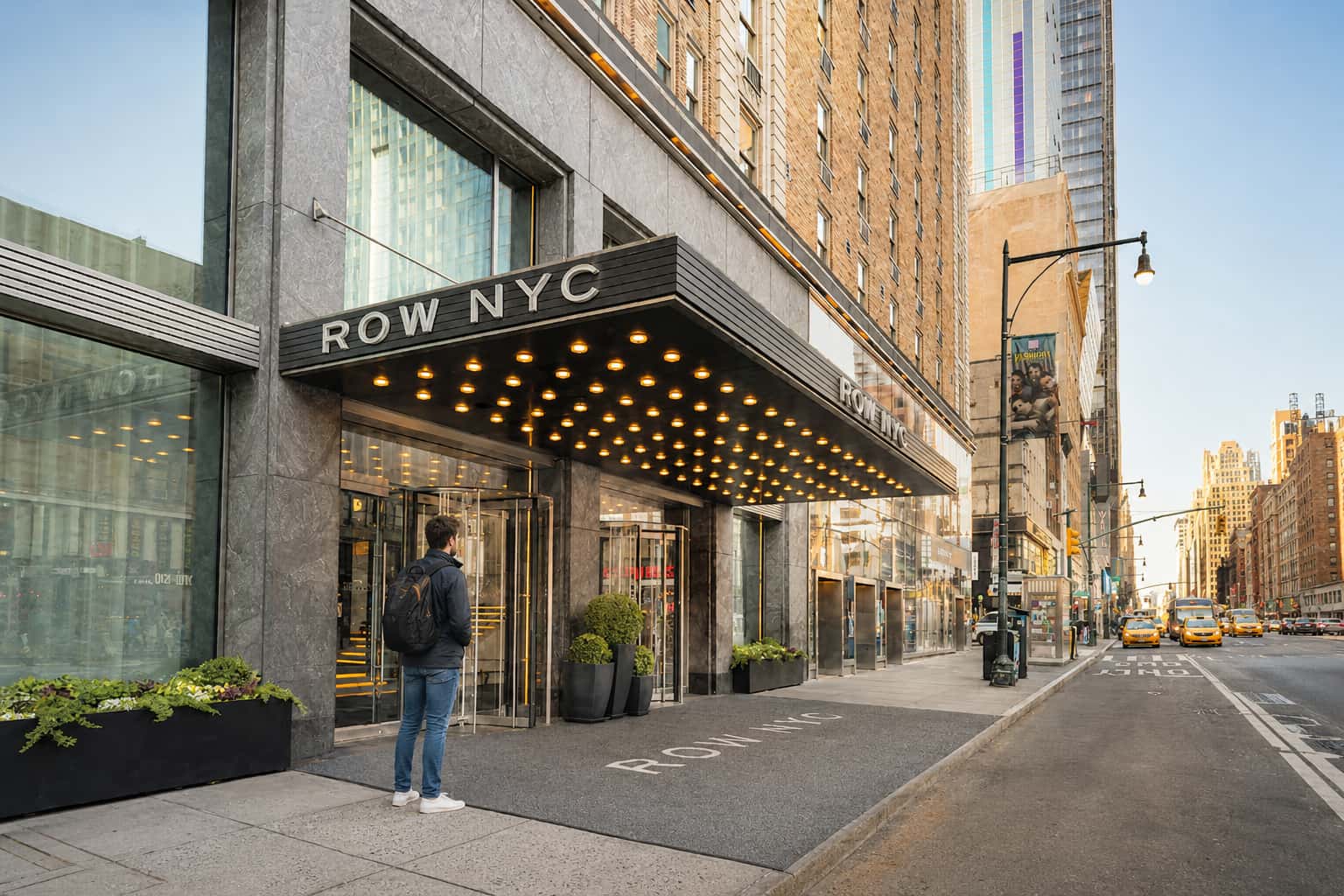
ROW NYC combines powerful Midtown positioning with highly variable operational consistency and compact-room realities.
Few Times Square hotels carry as much history, scale, and identity transition as ROW NYC. Originally opened in 1928 as the Hotel Lincoln before becoming the well-known Milford Plaza, the property has long operated as one of Midtown Manhattan’s defining high-volume hotels. Today, following a major reopening and renovation phase, ROW NYC occupies a distinctive position in the local market. It’s more design-conscious and visually ambitious than many nearby competitors, yet still shaped by the operational realities that come with running a 1,300-room hotel in one of the busiest parts of New York City.
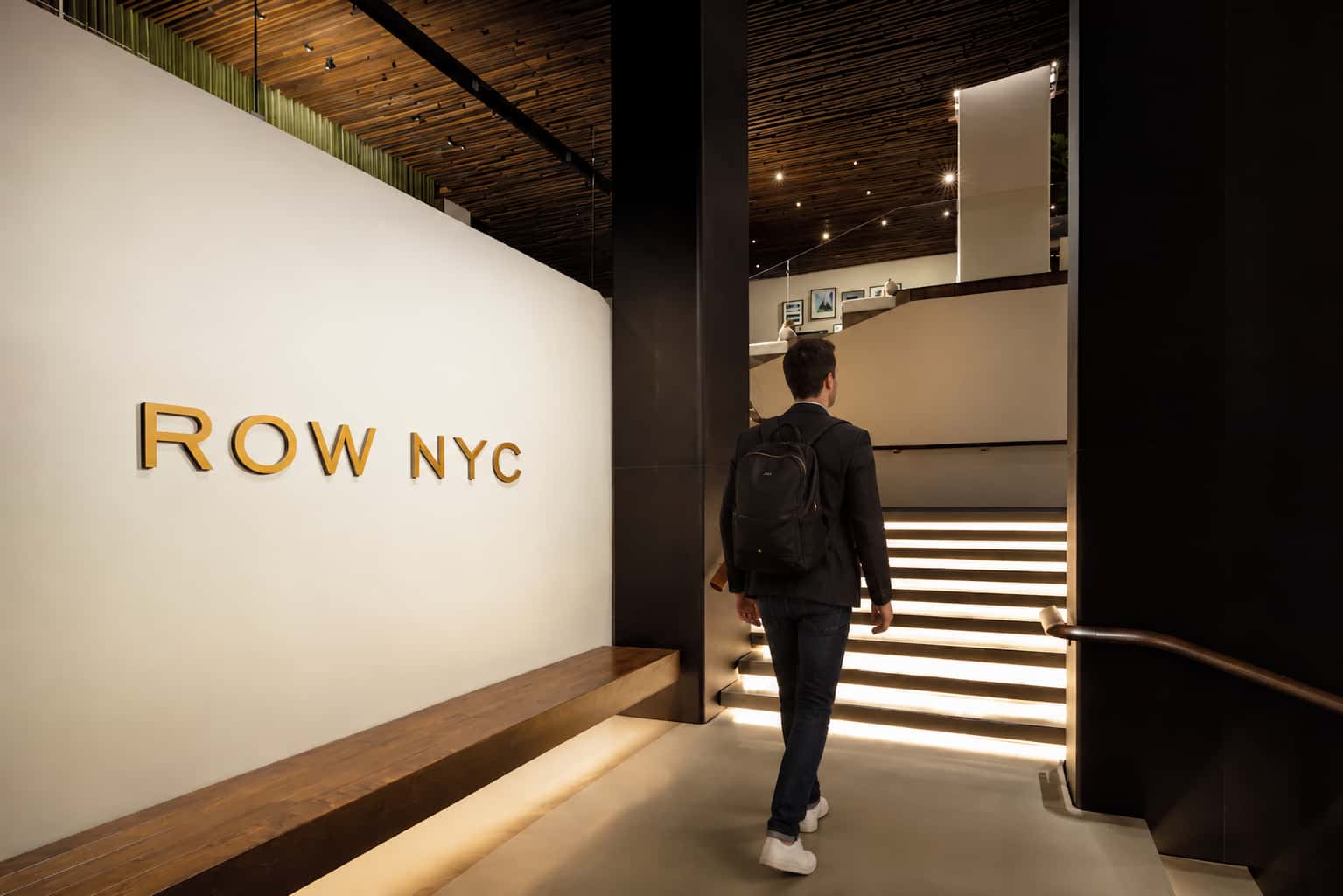
The tension between those two identities shapes almost every part of the stay. Many travelers choose the hotel for its unusually practical location near Broadway, Times Square, and major subway connections. The redesigned lobby and public spaces give the property a noticeably more contemporary atmosphere than its earlier reputation might suggest. The public-space redesign by Gabellini Sheppard Associates even received recognition from the International Design Awards, reflecting an effort to reposition the hotel beyond the feel of a traditional Midtown tourist base.
At the same time, guest feedback shows that the experience can vary meaningfully depending on timing, occupancy pressure, and room expectations. Reviews consistently point to strong convenience and energetic atmosphere as core advantages. However, discussions around elevators, room functionality, noise, and operational consistency appear frequently enough to shape the hotel’s unusually divided reputation online.
This review examines:
- where ROW NYC genuinely stands in today’s Manhattan hotel market
- how the reopening and redesign have changed the experience
- which room categories make the most sense
- why the property continues to attract such a broad mix of travelers despite one of the more debated reputations in Times Square hospitality.
All pricing referenced throughout this review was checked in mid-May 2026 and should be treated as indicative only, as New York hotel pricing can fluctuate very significantly depending on season, occupancy, events, and booking window.
Quick Decision Snapshot
| Category | Assessment |
|---|---|
| Best for | Broadway visitors, friend groups, short-stay tourists, and guests who want Midtown access over a quiet hotel experience |
| Not ideal for | Luxury travelers, infrastructure-sensitive guests, business travelers needing calm reliability, and visitors expecting spacious rooms |
| Main strength | Exceptionally practical Times Square and Broadway positioning |
| Main trade-off | Execution quality can vary noticeably, especially during high-pressure periods |
| Room experience | Compact, renovated, and functional, but still shaped by old-building constraints |
| Strongest value play | Two-double rooms during lower-demand periods, especially for groups |
| Biggest pricing risk | Autumn weekday compression, when rates can move well beyond the hotel’s experiential category |
| Best stay strategy | Book for location, compare direct and Booking.com pricing, and avoid assuming the smallest room is the best value |
What Kind of Hotel ROW NYC Actually Is
ROW NYC is not a luxury hotel, despite moments of visual polish and ambitious branding. It is better understood as a large-scale, design-conscious Midtown access hotel.
The hotel’s real value does not come from privacy, residential calm, or highly personalized service. It comes from scale, room availability, and the ability to place guests close to Broadway, Times Square, major subway lines, and Midtown’s most heavily used visitor corridors.
Its public spaces carry more design intent than many nearby tourist hotels. The lobby, lounge energy, and food-and-drink positioning aim for a social, contemporary Midtown mood. Historically, the hotel’s “More New York Than New York” campaign leaned into glamour, nightlife, and Times Square attitude. That branding still helps explain the property’s identity, but it can also create expectation pressure.
The lived experience is more practical than glamorous. ROW NYC is a high-volume hotel where small operational details matter enormously. Elevators, check-in flow, room readiness, sound insulation, HVAC performance, and service recovery can shape the stay more than the design story.
That divide largely explains the hotel’s unusually fragmented reputation. Some see it as a smart, renovated, centrally located base. Others feel the price and presentation promise more than the operation reliably delivers.
Location and Times Square Positioning
The hotel sits on 8th Avenue between West 44th and 45th Streets. It’s close enough to Times Square and Broadway that many guests can structure a New York stay with minimal transport friction. Theatergoers can walk back after evening performances. First-time visitors can reach major Midtown sights quickly. Subway access is practical, and the Port Authority Bus Terminal is nearby.
Airport Access
Airport access is practical by Manhattan standards, though heavily dependent on traffic timing.
- LaGuardia is usually the simplest transfer at roughly 30–45 minutes by car in normal conditions.
- JFK can range from 45 minutes to well over 90 during tunnel or Midtown congestion.
- Newark is often the least predictable despite manageable mileage, with transfers commonly ranging from 45–75 minutes depending on traffic and tunnel flow.
Travelers relying on rideshare or taxis should allow more buffer than mapping apps may initially suggest, particularly before evening theater traffic, morning departures, or heavy Midtown event days.
Neighborhood Specifics
The neighborhood is dense, bright, crowded, and active late into the evening. Some visitors thrive on that intensity. Others burn out on it by the second night.
ROW NYC works best when the location is treated as a logistical advantage, not as a romantic New York setting. Its strongest guests are people who plan to spend most of the day outside the hotel and want a reliable return point in the middle of Manhattan’s visitor grid.
Guests who prefer a calmer version of New York may be better served by hotels in NoMad, Flatiron, Bryant Park, the Upper West Side, or downtown neighborhoods with a softer evening rhythm.
Arrival Experience and First Impressions
The lobby is one of the hotel’s clearest strengths.
Guest feedback repeatedly points to the arrival space as newer, more welcoming, and more visually appealing than expected. That matters because the property’s history could easily pull expectations toward an older Midtown convention-style hotel. Instead, the redesigned public areas create a more current impression.
Several positive reviews describe friendly staff, a good welcome, and a lively lobby. Several negative reviews describe long waits, system issues, delayed responses, and a feeling that the hotel was still stabilizing after reopening. This creates one of the clearest emotional patterns in the feedback: the hotel can make a good first impression, then lose confidence if operational friction begins to stack up.
Elevators deserve particular attention. In a building this large, elevator flow quietly shapes the entire day. Guest complaints about long waits, limited working elevators, and crowded flows appear often enough to treat this as a meaningful risk area, especially during high occupancy.
Rooms: What the Experience Actually Feels Like
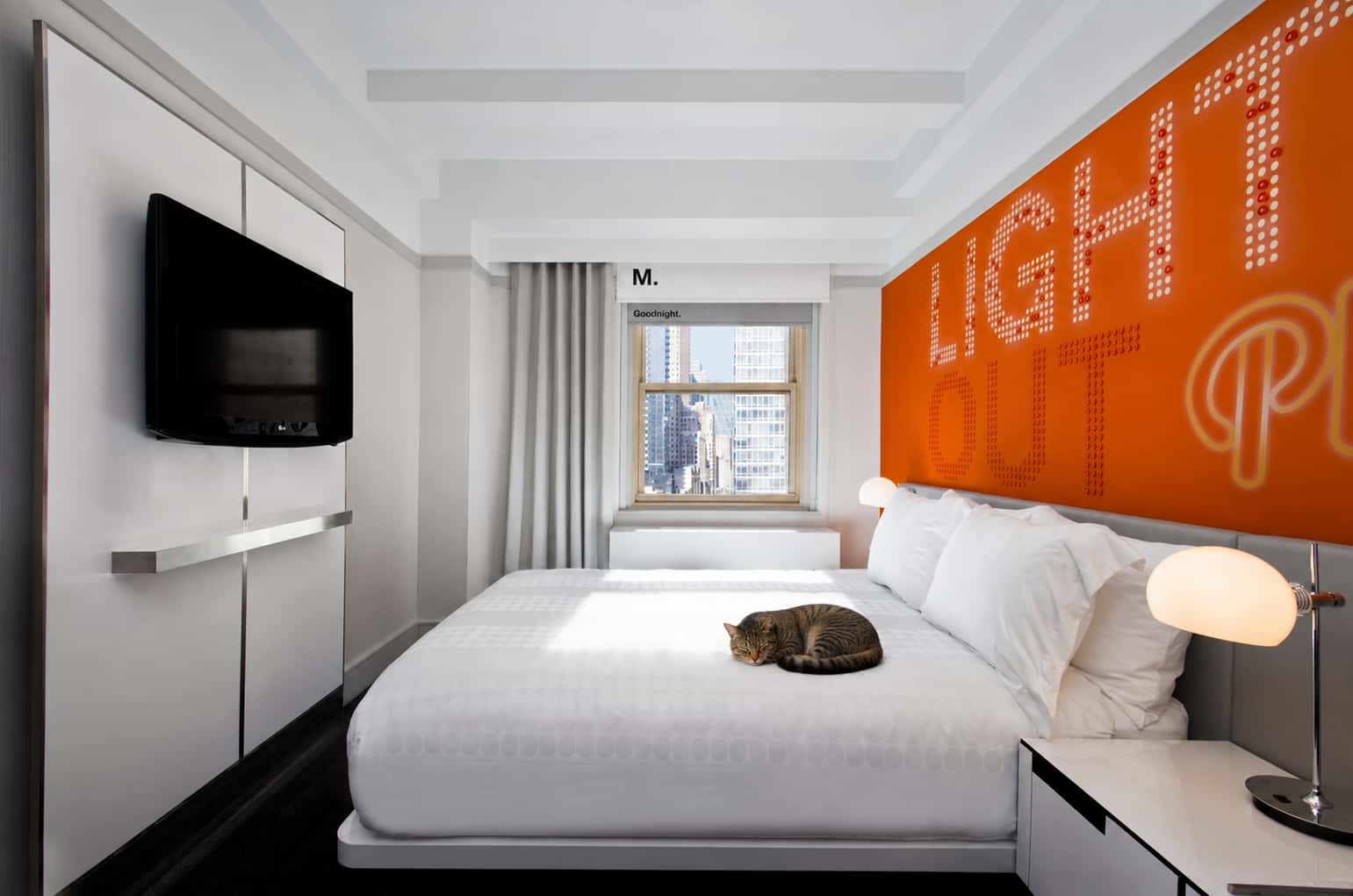
ROW NYC’s rooms should be judged as compact urban inventory, not as lifestyle luxury rooms. The official room mix is broad, but it makes more sense to group it by how travelers actually use the space.
| Room group | Includes | Real positioning | Best for | Main watchout |
|---|---|---|---|---|
| Entry rooms | Standard Full, Standard Queen | Ultra-compact location-access rooms | Solo travelers, short stays, low luggage needs | Movement space, storage, noise, bathroom practicality |
| Enhanced rooms | Superior King, Superior Queen, Premium Queen City View, Premium King City View, Deluxe King | Slightly more livable Midtown rooms | Couples, short leisure stays, travelers who want a better base than the smallest rooms | Still compact, not a major experiential jump |
| Family-capable rooms | Superior Two Doubles, Deluxe Two Doubles | Density-optimized group rooms | Friends, families, budget-conscious groups | Sleeps four technically, but 175 to 200 sq ft can feel tight |
| Suites | One Bedroom Suite, Penthouse One Bedroom Suite | Space-relief products inside a high-density hotel | Longer stays, older travelers, couples wanting breathing room | Higher price without a full luxury-hotel experience |
| ADA rooms | Multiple ADA configurations across room tiers | Strong accessible-room variation for this segment | Guests needing mobility-specific layouts | Confirm exact configuration before booking |
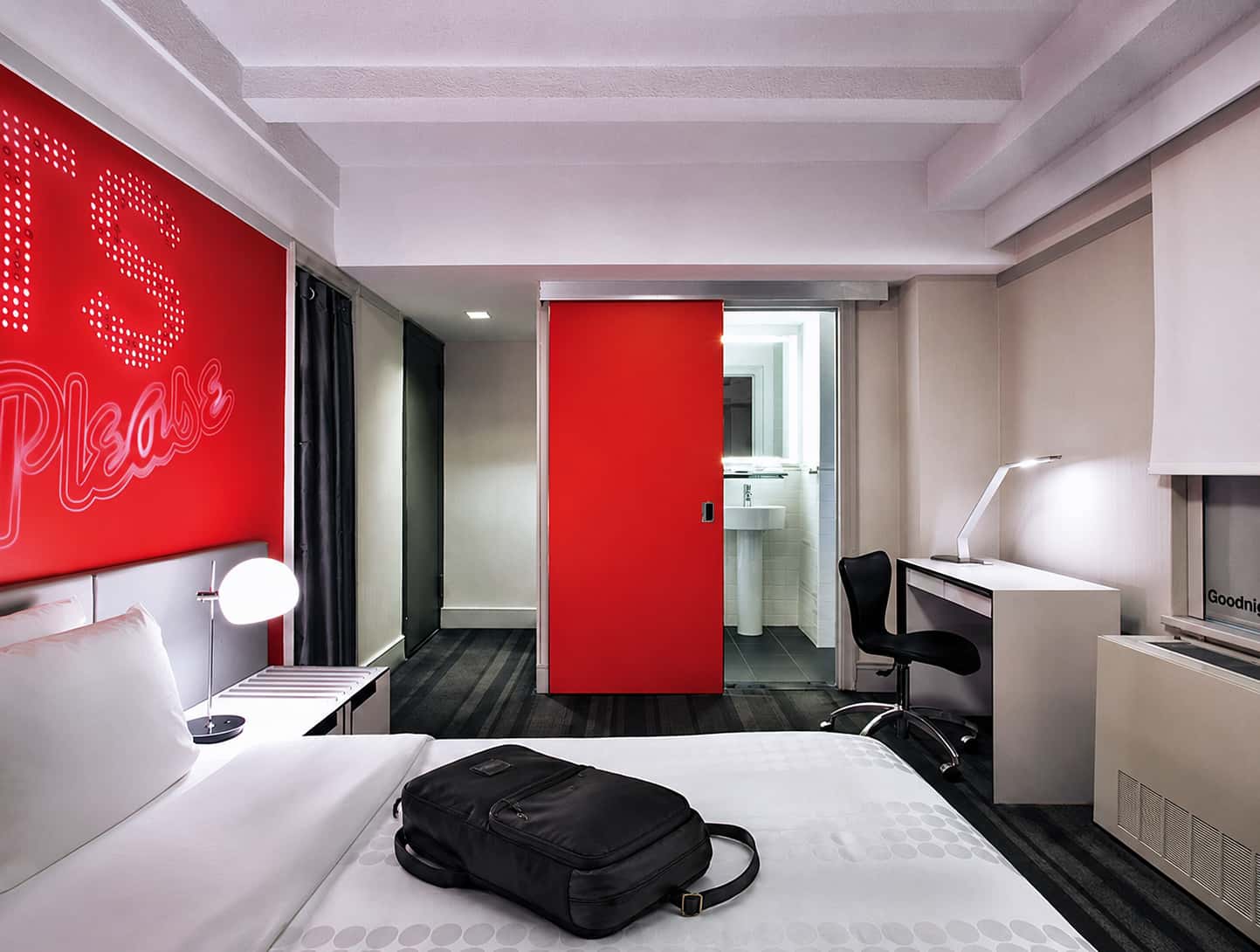
Space management matters more here than interior styling. Entry and standard superior categories generally start from 200 sq ft (19 sq m), which quickly limits circulation once luggage is opened, especially for two guests. Furniture placement is intentionally compact, with shallow desks, tight bedside spacing, integrated shelving, and very little unused floor area.
For short Midtown-focused stays, the layouts work reasonably well. During longer downtime inside the room, the density becomes more noticeable. Lighter finishes, Broadway-inspired accents, and upgraded bedding help the rooms feel newer than many older Times Square competitors. However, the footprint still reflects the realities of a high-density Manhattan hotel built in another era.
For many travelers, the Superior tier is the more realistic starting point. It does not transform the stay, but it can offer a better balance of comfort and price than the smallest inventory.
The two-double rooms are especially interesting. They may be one of the hotel’s strongest practical value plays because the premium over a queen room is often modest outside peak leisure weekends. For groups of three or four, the per-person economics can be strong. The trade-off is physical comfort. A room that technically sleeps four may still feel crowded once luggage, bathroom sharing, and movement space are considered.
Suites are not luxury suites in the traditional Manhattan sense. They are larger urban relief products. Their value depends on whether the extra space meaningfully improves the stay, because the broader hotel experience remains busy and high-volume.
Sleep Quality, Comfort, and Infrastructure Reliability
Guest scores and written reviews suggest that beds can be comfortable and many rooms feel visibly refreshed. Yet comfort feedback is uneven because sleep quality depends on more than bedding. Noise, temperature control, water pressure, elevator proximity, hallway traffic, and the reliability of in-room systems all matter.
The most serious recurring complaints involve infrastructure. Guests have reported hot-water issues, HVAC problems, weak water pressure, nonworking phones, TV or WiFi frustration, and elevator delays. Not every guest encounters these problems. Some have smooth stays and praise the rooms. But the pattern is consistent enough to treat infrastructure reliability as a central review issue, not a marginal complaint.
This matters especially because ROW NYC’s pricing can rise sharply during compressed Manhattan periods. At a lower rate, guests may forgive a compact room. At a higher rate, basic operational failures become much harder to accept.
Food, Bar, and Social Atmosphere
ROW NYC’s food and drink offer is positioned around convenience and social energy, not destination dining.
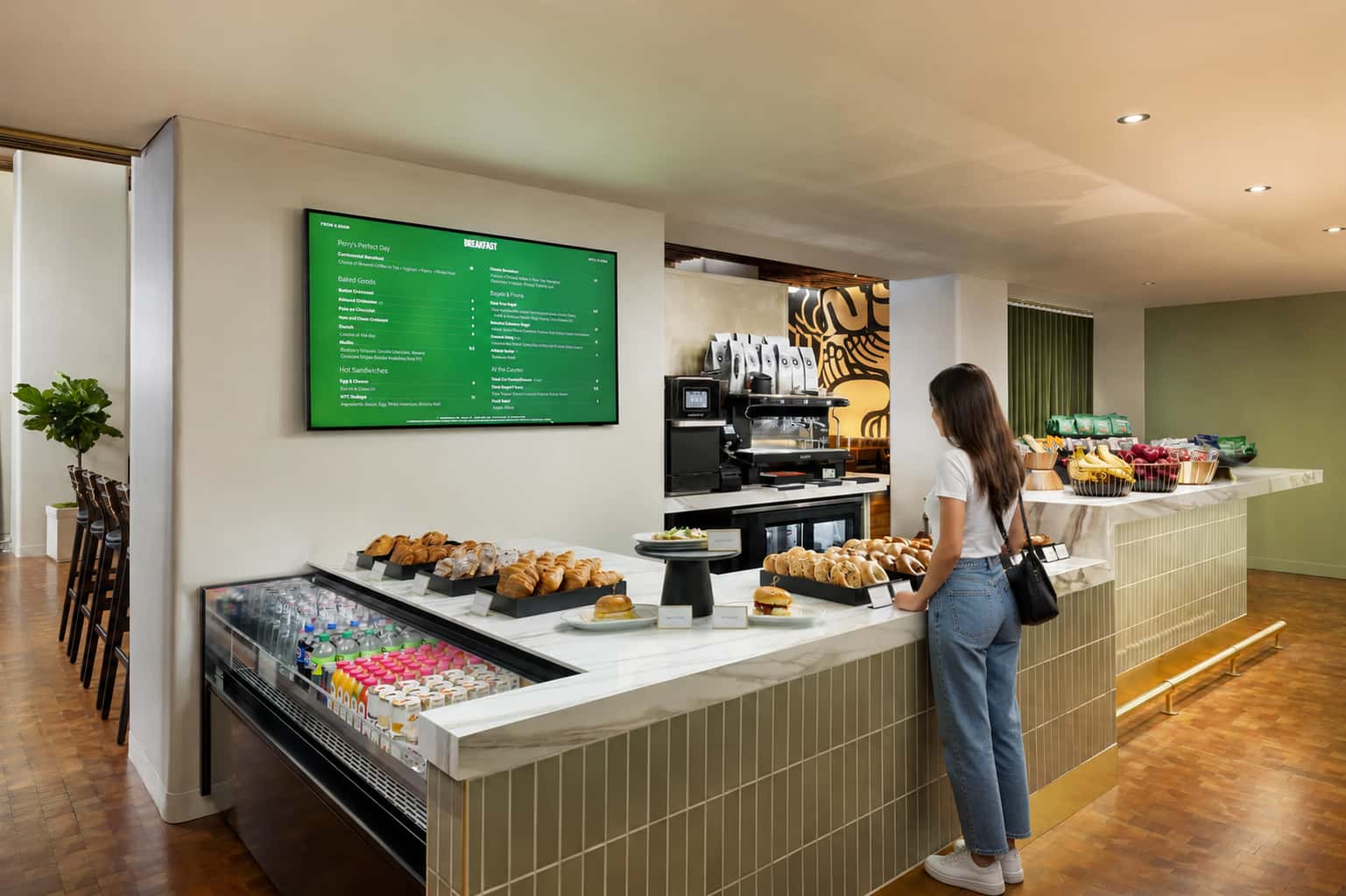
Percy All Day, located in the lobby, is designed as an all-day café and bar with breakfast items, sandwiches, cocktails, and casual comfort food. The hotel also promotes dining credits and bed-and-breakfast packages, which suggests that food is part of the stay packaging rather than the main reason to book.
Given the surrounding Midtown food density, the strategy feels logical. Guests staying here are surrounded by restaurants, theaters, bars, and quick-service options. The in-house offer works best as a practical fallback before or after a day in the city.
The bar and lobby atmosphere may appeal to travelers who like a social Midtown base. Guests seeking quiet, polished dining or a destination restaurant experience should set expectations differently.
Service Quality and Operational Execution
Service feedback is more nuanced than a simple good-or-bad reading suggests.
Booking.com scores show strong staff sentiment, while Tripadvisor’s service rating is more modest. The written reviews explain the gap. Guests often describe employees as friendly, welcoming, or trying to help. At the same time, they criticize unanswered calls, slow follow-up, unresolved maintenance, and inconsistent recovery.
That means most criticism points less toward staff attitude than toward what happens when the hotel becomes strained.
Frontline staff appear to act as emotional shock absorbers for a large, complex hotel system. When the stay goes well, guests remember warmth and friendliness. When the stay goes wrong, the same property can feel overwhelmed or unresponsive.
One name appears repeatedly in positive guest comments: Joe, described by several travelers as helpful, welcoming, and visible. That kind of staff recognition matters. It shows that hospitality warmth exists inside the operation.
What Guest Reviews Consistently Reveal
ROW NYC’s reputation is unusually polarized.
Tripadvisor shows a 3.6 average across more than 26,000 reviews, with a strong location score and more mixed room, service, and sleep-quality scores. Booking.com shows a 7.2 overall score, with particularly strong marks for location and staff.
The hotel is not being rejected as a concept. Guests understand why it exists and why it is useful. But the frustration comes when the execution-side experience does not match the rate, the renovation message, or the visual promise of the lobby.
| Repeatedly praised | Repeatedly criticized |
|---|---|
| Times Square and Broadway access | Elevator waits and reliability |
| Friendly staff in many interactions | Hot water, HVAC, and room-system issues |
| Renovated lobby and public areas | Small rooms relative to price |
| Comfortable beds in positive reviews | Noise and weak sound insulation |
| Practical city convenience | Service recovery inconsistency |
Guests forgive small rooms when the location works, the price feels fair, and the basics function. However, they stop forgiving quickly when several problems arrive together.
A guest who gets a clean room, a working elevator flow, helpful staff, and a fair rate may leave satisfied. But a guest who experiences check-in delays, no hot water, broken room systems, and a high bill may feel the hotel reopened before it was fully ready.
The difference between a smooth stay and a frustrating one often appears tied to timing, occupancy pressure, and how many systems fail simultaneously.
Pricing and Value Positioning
ROW NYC’s pricing behaves like a compressed Manhattan occupancy asset, not a traditional seasonal hotel.
Rates are driven by Midtown demand, event calendars, Broadway traffic, business travel, group demand, and autumn compression. Summer is not automatically the most expensive period. In fact, our research found that July weekday pricing could sit close to January pricing, while October weekday pricing was dramatically higher.
Official Website Pricing Snapshot
Checked in mid-May 2026. Prices shown before taxes, with the $40 destination fee included.
| Scenario | Superior Queen | Superior Two Doubles | One Bedroom Suite |
|---|---|---|---|
| Low season weekday, Jan 26–27, 2027 | $214.60 | $228.10 | $426.10 |
| Peak summer weekday, Jul 21–22, 2026 | $232.60 | $246.10 | $444.10 |
| Peak summer weekend, Aug 15–16, 2026 | $304.60 | $381.10 | $516.10 |
| Sunday softening test, Nov 8–9, 2026 | $286.60 | $300.10 | $498.10 |
| Autumn shoulder weekday, Oct 20–21, 2026 | $466.60 | $480.10 | $678.10 |
The October result is the most revealing. A Superior Queen at $466.60 before taxes was more than double the January and July weekday rates. That is not a contradiction but how Midtown Manhattan often behaves. Autumn combines business travel, conventions, better weather, international demand, and Broadway activity. For hotels like ROW NYC, fall weekdays can outperform summer weekends.
The two-double room pricing is also important. In January, July, October, and November, the premium over a Superior Queen was only $13.50 on the official site. The August weekend spread was much larger, at $76.50, which suggests stronger family and group demand during leisure-heavy weekends.
The pricing spread leads to one surprising conclusion: the smallest room is not always the best value. When the premium is modest, the two-double category can be the smarter choice for friends or families, provided guests understand the space will still be tight.
The suite tier behaves differently. On the official website, the One Bedroom Suite carried a fixed $211.50 premium over the Superior Queen across all checked dates. The unusually fixed spread suggests the hotel may be using a relatively structured pricing ladder between standard inventory and suites. The suite is being monetized as space relief, not as luxury in the conventional sense.
Booking.com Pricing Snapshot
Checked in mid-May 2026. Prices shown with taxes and fees included.
| Scenario | Superior Queen | Superior Two Doubles | One Bedroom Suite |
|---|---|---|---|
| Jan 26–27, 2027 | $250 | $265 | $492 |
| Jul 21–22, 2026 | $270 | $286 | $513 |
| Aug 15–16, 2026 | $353 | $441 | $596 |
| Nov 8–9, 2026 | $332 | $348 | $575 |
| Oct 20–21, 2026 | $539 | $554 | $782 |
Booking.com exposed a true standard-tier layer that was not consistently visible on the official website during the same research process. It also displayed taxes and fees more clearly, which makes the online travel agency (OTA) experience feel psychologically cleaner.
Once taxes and fees are normalized, the direct site did not appear dramatically cheaper. The difference was relatively tight, which suggests ROW NYC maintains close OTA/direct parity. Direct booking may still matter for packages, special offers, or flexibility. But travelers should compare both channels rather than assume the official site automatically provides the best total value.
When ROW NYC Looks Best Value
The best value windows appear to be January weekdays and July weekdays. July is especially interesting because weather and daylight are better than winter, yet weekday rates can remain restrained.
The least attractive value window is autumn weekday compression. Rates can rise into territory where guests may begin comparing ROW NYC with more polished upscale hotels. That is where functional inconsistency becomes much harder to forgive.
Accessibility and Pet-Friendly Positioning
One of ROW NYC’s quieter strengths is its accessible-room range. The official room inventory shows multiple ADA configurations across several categories, including bathtub with grab bars and roll-in shower options.
That matters in Midtown. Older New York hotels often have uneven accessible inventory, and many properties offer only a limited number of practical layouts. ROW NYC appears to treat accessible rooms as part of the room architecture.
The hotel also promotes pet-friendly stays, including a dedicated pet package. That adds useful flexibility for travelers who want a central hotel without leaving pets behind. As always, pet fees, weight restrictions, and room-assignment rules should be confirmed before booking.
Who Should Stay Here
ROW NYC is a good fit for travelers who are honest about what they are buying.
Choose it if the priority is:
- walking to Broadway and Times Square
- staying in the middle of Midtown
- keeping transport simple
- sharing a room with friends or family
- using the hotel mainly as a city base
- booking during lower-demand periods
It can work well for first-time visitors who want immediate access to New York’s most recognizable visitor zone. It can also work for repeat travelers who understand Manhattan trade-offs and choose location over serenity.
Who May Not Enjoy It
ROW NYC is not the right hotel for guests who need a calm, highly polished, low-friction stay.
It may disappoint:
- luxury travelers expecting refined service
- business travelers needing dependable quiet and fast flow
- guests sensitive to elevators, noise, HVAC, or water-pressure issues
- couples seeking a romantic hotel experience
- families expecting spacious rooms
- travelers paying peak autumn rates and expecting premium comfort
The higher the rate, the more carefully travelers should evaluate alternatives.
Final Verdict
ROW NYC is one of Times Square’s more interesting hotel case studies because its strengths and weaknesses are both highly visible.
It has real assets:
- a powerful Midtown location
- a recognizable history
- a redesigned lobby with legitimate design intent
- broad room inventory
- useful accessible-room variation
- pet-friendly positioning
- staff members who receive meaningful guest praise.
It also has a pricing structure that can create strong value in the right periods, especially for travelers using two-double rooms during lower-demand windows.
Its weakness is consistency. Guest feedback shows that the hotel’s operation can feel strained under pressure, especially around elevators, room systems, comfort controls, and service recovery. The reopening context helps explain some of that turbulence, but it does not erase the impact on guests.
ROW NYC is best approached as a strategic Manhattan base, not as a luxury stay. To book, compare channels carefully, choose the room tier with realistic space needs, and be particularly cautious during expensive autumn compression periods. The hotel works best when pricing aligns with what it fundamentally is: a dense, strategically located Midtown base with uneven refinement but unusually strong logistical value.
Frequently Asked Questions
Is ROW NYC a luxury hotel?
No. It is better understood as a large-scale, renovated Midtown access hotel with lifestyle branding. Its strengths are location, scale, and convenience, not luxury service.
Is ROW NYC good for first-time visitors to New York?
Yes, if the visitor wants immediate access to Times Square, Broadway, and Midtown transport. It is less ideal for guests who want a quieter, more residential New York experience.
Which room type offers the best value?
The Superior Two Doubles or comparable two-double categories can be of strong value when the price spread over a queen room is modest. They are especially useful for friends or families, though space remains tight.
Are the rooms small?
Yes. Many rooms are compact by general hotel standards, though typical for central Manhattan. The key issue is not size alone, but how well the room functions with luggage, noise, bathroom use, and temperature control.
Are the suites worth it?
Suites offer meaningful extra space, but they should not be viewed as true luxury suites. They are best for travelers who value breathing room and are willing to pay for relief from compact-room density.
Is ROW NYC noisy?
It can be. The hotel sits in one of Manhattan’s busiest visitor zones, and guest feedback also points to hallway and room-to-room noise concerns. Light sleepers should request quieter room placement.
Is it better to book directly or through Booking.com?
Compare both. Direct rates may offer packages and promotions, but Booking.com showed clear total pricing with taxes and fees included during research. Rate parity appeared relatively tight.
When is ROW NYC best value?
January weekdays and July weekdays looked strongest in the pricing checks. October weekday pricing was much higher due to Midtown demand compression.