
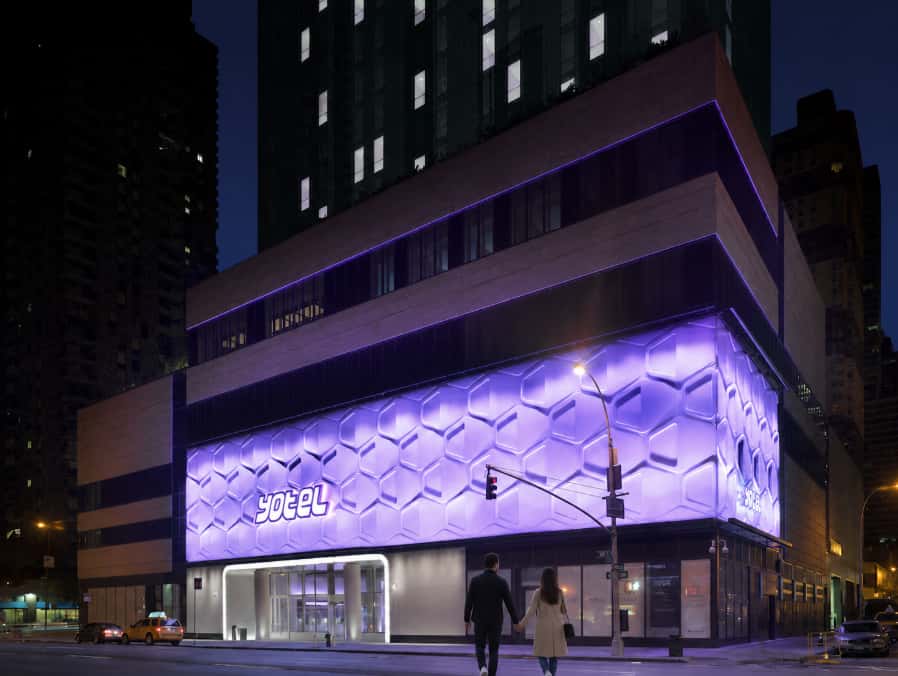
YOTEL New York Times Square delivers strong Midtown convenience, compact smart-room design, and highly variable guest experiences.
New York rewards hotels that make the city easier to move through. YOTEL New York Times Square understands that well. The property was designed around compression, circulation, and keeping guests connected to the city.
Travelers who arrive expecting a compact, tech-forward Manhattan base often leave satisfied. Guests expecting polished lifestyle hospitality can come away frustrated by the gap between branding and execution.
The hotel sits on West 42nd Street near Hell’s Kitchen, Times Square, Port Authority, and the Javits Center. It functions best for people who spend most of the day outside the room and want efficient access to the city without paying traditional full-service Midtown pricing.
The underlying idea still works. The challenge is that the hotel now depends heavily on timing, room assignment, and expectation alignment.
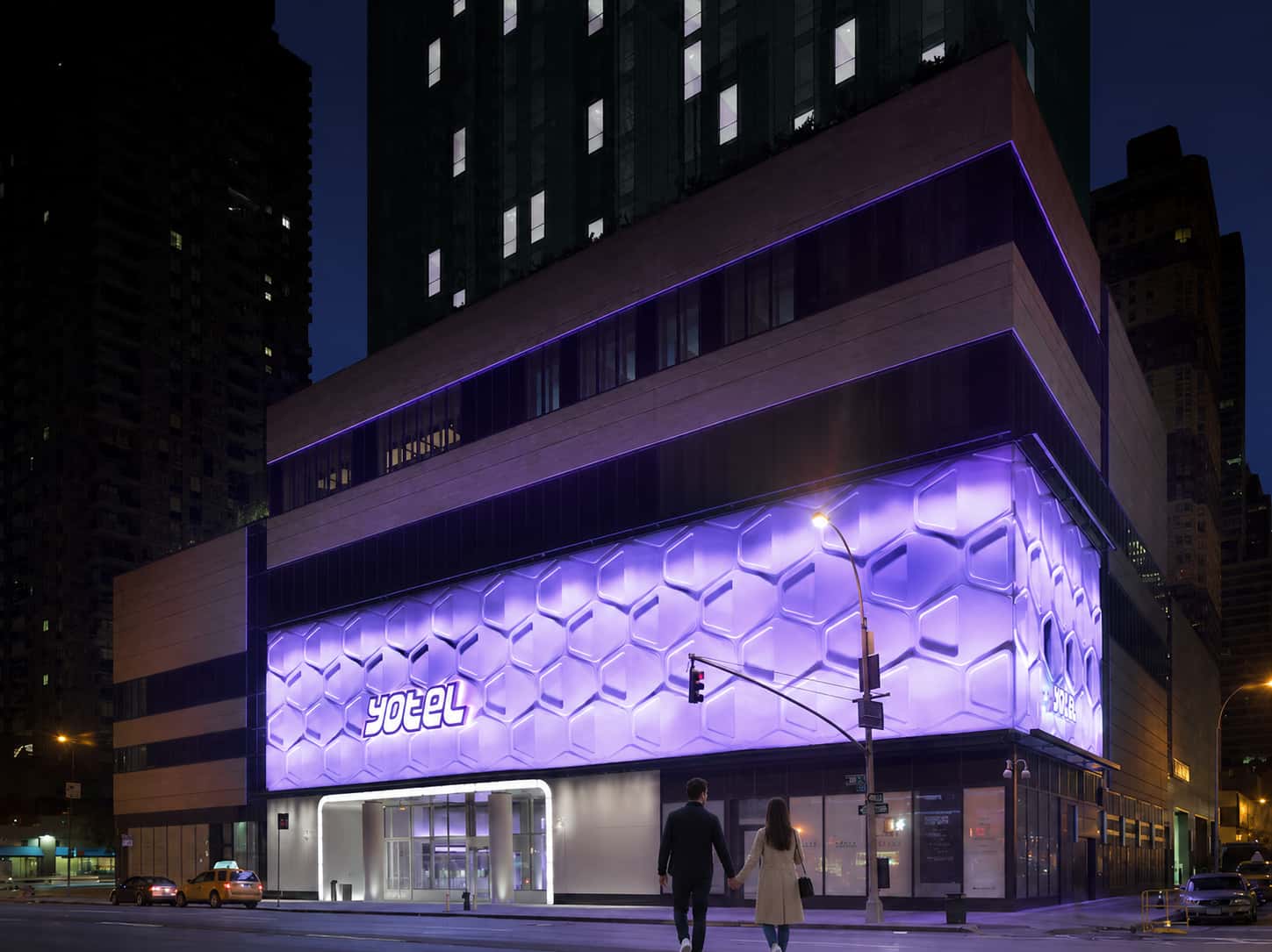
Quick Decision Snapshot
| Category | Insight |
|---|---|
| What defines the hotel | Compact tech-forward Midtown base with strong transit access |
| Best for | Short NYC stays, convention travel, solo travelers, younger city-focused visitors |
| Main strength | Location efficiency and comparatively accessible Manhattan pricing |
| Main trade-off | Small rooms and noticeable variation between stays |
| Best room strategy | Skyline View or higher-floor categories |
| Best value period | Winter weekdays and softer shoulder-season windows |
| Least suitable for | Luxury-focused travelers and guests sensitive to noise |
| Standout operational feature | YOBOT robotic luggage storage system |
| Airport practicality | Strong Midtown access for JFK, Penn Station, and Port Authority connections |
What Kind of Manhattan Hotel This Really Is
YOTEL New York is often marketed visually like a lifestyle hotel, but it behaves more like a high-volume urban transit property with design-forward packaging. The hotel borrows heavily from premium airline cabin design. Rooms are called “cabins,” furniture is space-engineered, and circulation matters more than traditional hospitality pacing.
The hotel opened in 2011 as part of the MiMA development on Tenth Avenue. Rockwell Group and Softroom helped shape the original concept. Traces of that ambition still show through in the lighting systems, compact layouts, rooftop spaces, and futuristic branding language.
More than a decade later, the space-saving logic still feels surprisingly intelligent. In many Manhattan hotels under 250 square feet, rooms simply feel cramped. Here, the layouts at least attempt to solve the problem through integrated storage, movable beds, under-bed luggage space, and simplified furniture.
The hotel also operates with a noticeably different social rhythm than traditional Midtown properties. The lobby is busy. Elevators move constantly. Guests arrive from conventions, Broadway shows, rooftop events, and overnight flights.
For some travelers, that energy feels modern and efficient. For others, it can feel overstimulating before they even reach the room.
Location and How the City Actually Works Around It
The location often carries the experience further than the hotel itself. That sounds harsher than intended, but it explains why so many guests forgive the property’s tradeoffs. Midtown logistics are simply very easy from here.
Times Square sits within walking distance without forcing guests directly into the densest tourist blocks. Hell’s Kitchen restaurants are close enough to make dinner easy without planning subway connections. The Javits Center is reachable on foot. The Port Authority is nearby for regional bus movement. Several subway lines are accessible within minutes. For travelers trying to maximize time in Manhattan, the address works extremely well.
The surrounding blocks do not feel polished in the luxury-hotel sense. This part of Midtown has heavy pedestrian traffic, transportation spillover, delivery movement, and the kind of nonstop urban activity typical around Port Authority. Some guests react strongly to that environment, especially late at night. Others barely notice because they expected Midtown to feel exactly like this.
The hotel makes most sense for travelers comfortable with New York behaving like New York.
Airport Access and Transportation Practicality
JFK access is straightforward by Manhattan standards. A taxi or rideshare typically takes 45 to 60 minutes depending on traffic. The AirTrain and subway combination works well for budget-conscious travelers willing to manage luggage through Midtown stations.
Penn Station and Port Authority proximity also make the property unusually practical for:
- Northeast Corridor rail travel
- convention schedules
- multi-city East Coast itineraries
- quick business trips
Guests arriving after midnight may find rideshare simplicity worth the extra cost compared with subway navigation after long flights.
Rooms, Layout Logic, and Where the Concept Succeeds or Not Really
The rooms are small. That part should never surprise anyone booking here. The better question is whether the compact design still feels intelligent once real-world wear, luggage, noise, and human movement enter the picture. And in many cases, it does.
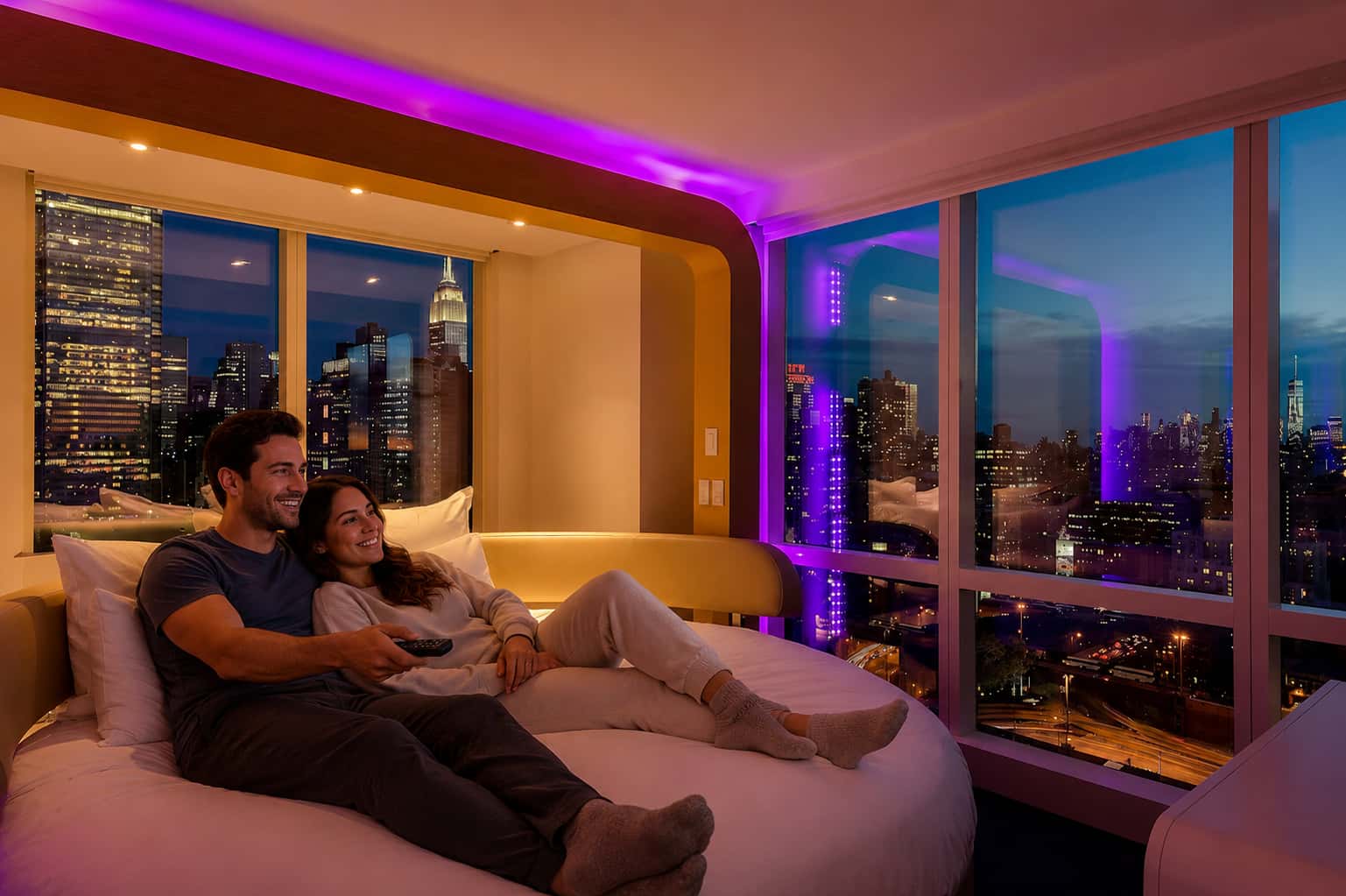
The Premium Queen categories work surprisingly well for one person or couples spending most of the day outside. The beds sit elevated to create luggage storage underneath, desk space stays functional, lighting controls are simple, and the overall room logic feels more deliberate than many older Midtown hotels with equally small footprints. The dividing line is rarely functionality but emotional comfort.
Some guests describe the rooms as efficient, clever, modern enough, and perfectly acceptable for Manhattan. Others feel boxed in almost immediately, especially when maintenance issues or housekeeping inconsistencies appear. Because the rooms are already highly compressed, small flaws become much more noticeable. A loose fixture, weak airflow, stained bathroom grout, or broken lighting system can dominate the experience much faster than it would in a larger hotel room.
The mood-lighting system appears frequently in guest feedback for exactly this reason. When functioning properly, it reinforces the futuristic concept. When partially broken, it makes the room feel older than the branding suggests.
Which Room Categories Make the Most Sense
- The Premium Queen remains the smartest booking for most travelers. It reflects the hotel’s actual identity and usually delivers the strongest value balance.
- Skyline View categories are worth considering because the pricing premium often stays relatively controlled compared with standard rooms. Higher floors improve daylight, visual openness, and sometimes noise exposure.
- Family Connected inventory solves a real Midtown problem by allowing larger groups to stay centrally without traditional suite pricing. Comfort compromises still exist, especially for longer stays, but the categories remain useful for families prioritizing location over spaciousness.
- The top-tier First Class and Penthouse categories create the largest expectation risk in the building. Once pricing moves into premium Manhattan territory, guests naturally expect stronger maintenance standards, calmer service recovery, and a more polished physical environment. Feedback becomes noticeably more mixed at those rates.
Pricing, Fees, and Whether the Value Holds Up
YOTEL New York is not a traditional luxury-rate Midtown property. It operates much more like a demand-responsive urban inventory machine. Rates fluctuate strongly around convention activity, citywide compression, and seasonal demand. The same room can feel like a strong Manhattan value one month and emotionally difficult to justify the next.
Typical Researched Pricing Patterns
| Room category | Low-demand winter weekday | Shoulder-season weekday | Peak summer weekend | Fall convention/compression periods |
|---|---|---|---|---|
| Premium Queen | $260–$340 | $360–$470 | $400–$520 | $500–$700+ |
| Skyline View | $320–$420 | $430–$560 | $500–$650 | $650–$850+ |
| Family Connected | $700–$900 | $950–$1,150 | $1,050–$1,300 | $1,300–$1,700+ |
| First Class / Penthouse tiers | $550–$850 | $700–$1,100 | $1,000–$1,500 | $1,400–$2,000+ |
Indicative researched ranges based on multiple official website and online travel agency pricing checks conducted in mid-May 2026 across selected 2026–2027 booking windows.
The strongest value tends to appear during softer winter weekdays and select shoulder-season periods when Midtown occupancy relaxes slightly. Under those conditions, the hotel’s compact-room tradeoff feels rational because the location savings remain meaningful.
The value calculation changes during convention-heavy periods in September and October. Rates climb sharply, especially around Javits activity, and the same small rooms begin competing psychologically against significantly more traditional hotels nearby.
One of the more interesting findings from the pricing research was how disciplined the Skyline View premium remained across multiple demand windows. The hotel appears to monetize visual openness very deliberately. The extra square footage is limited, but the added daylight and skyline exposure noticeably change how the room feels.
Direct booking vs Booking.com Positioning
Direct pricing through YOTEL’s own website was often materially lower than Booking.com rates during researched periods. Booking.com pricing sometimes inflated entry categories enough to make the hotel feel more upscale than the actual experience supports.
Booked carefully, the hotel can still feel like a smart Midtown buy. Once Booking.com pricing climbs into upper-Midtown territory, the value conversation becomes much harder.
Facility Fees, Luggage Charges, and Hidden Friction Points
The mandatory facility fee currently sits around $42 nightly and includes:
- Broadway discounts
- late checkout
- luggage-storage access
- attraction offers
- parking discounts
Some travelers will use those perks enough to justify the fee. Others will simply experience it as another mandatory Midtown surcharge.
Luggage handling creates particularly mixed reactions because YOBOT is marketed as a futuristic convenience feature but can become frustrating when capacity issues or staffing complications emerge. Guests forced into paid manual luggage storage after robotic-storage problems tend to react negatively.
How the Hotel Actually Functions Day to Day
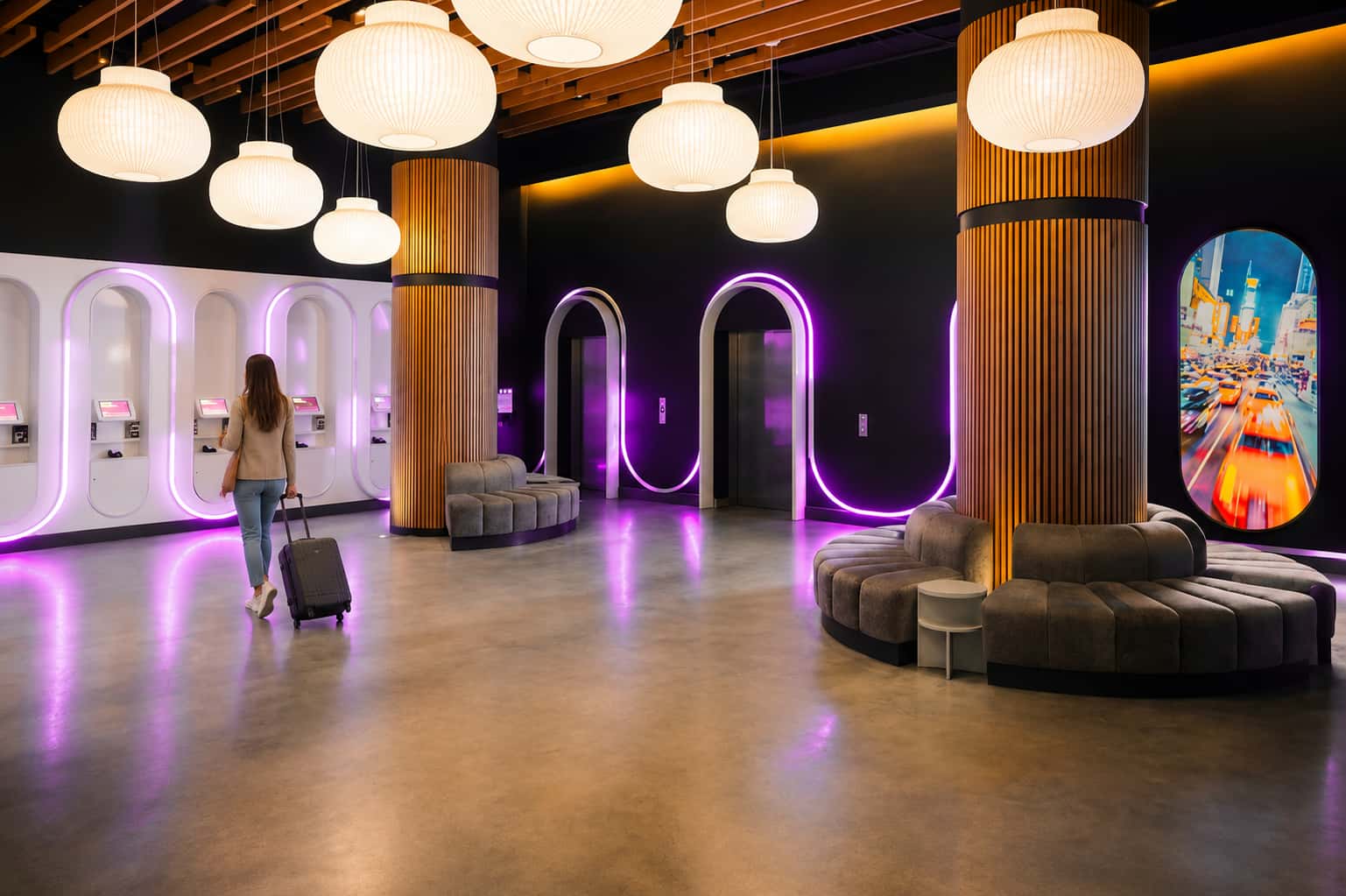
You feel the hotel most intensely downstairs. That sounds obvious for a 600-plus-room Midtown property, but YOTEL amplifies the sensation through its layout and guest mix. The lobby rarely feels still. Conventioneers, international tourists, rooftop-event guests, and short-stay travelers constantly cycle through the elevators and self-check-in areas.
Travelers comfortable with movement-heavy hotels usually adapt quickly. Guests wanting slower-paced hospitality often struggle more.
Arrival Flow and Self Check-In
Self-service check-in generally works well during normal occupancy periods. Many guests specifically praise the speed and simplicity. The stress points appear when rooms are delayed, luggage systems fail, maintenance requests stack, or occupancy surges.
The hotel can feel procedural during those moments. Guests sometimes describe being processed efficiently but not emotionally reassured. That difference shapes much of the polarized feedback.
Where the Tech-First Idea Becomes Less Seamless
YOBOT remains one of the property’s most recognizable features. The robotic luggage-storage system still feels memorable for first-time guests and reinforces the hotel’s tech identity immediately upon arrival. It also appears repeatedly in negative reviews.
When functioning smoothly, guests enjoy it. When overloaded, offline, or operating alongside paid manual storage, frustration escalates quickly because the hotel has already framed the system as frictionless innovation.
Guests usually react less to the fee itself than to the gap between the branding and the experience.
Where Strain Becomes Visible
The hotel appears most vulnerable during heavy occupancy windows. This usually shows up through:
- delayed room readiness
- elevator congestion
- inconsistent housekeeping timing
- noise spillover
- slower maintenance response
- and uneven room-condition quality
The experience can vary noticeably floor to floor. Some guests receive rooms that feel fresh, clean, and fully functional. Others encounter aging fixtures, inconsistent lighting systems, or signs of wear that pull attention away from the concept itself.
Food, Rooftop Spaces, and Social Atmosphere
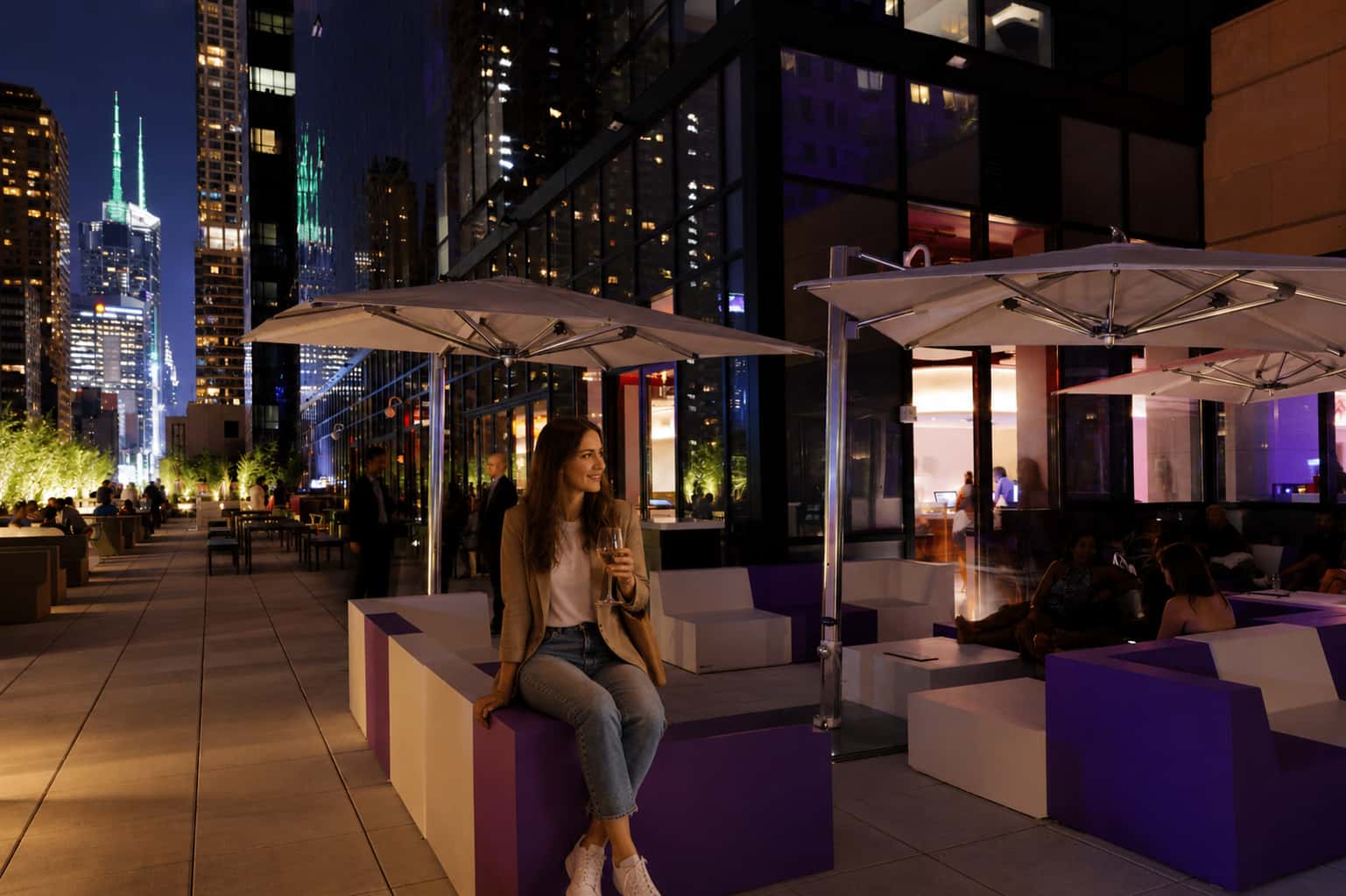
Social Drink and Food operates as both a rooftop venue and a large-scale event space with skyline views and reception capacity. The rooftop helps reinforce the hotel’s energetic Midtown identity, though it functions more convincingly as a social-events platform than as a luxury rooftop escape.
The business and event infrastructure runs deeper than many guests probably expect. Revolve coworking areas, Club Cabins, Green Room 42 partnerships, and the nearby Signature Theatre collaboration make the hotel stronger for conventions, business gatherings, hybrid work travel, and entertainment-industry movement than guest photos alone might suggest.
Business travelers attending events nearby may find the property more strategically useful than leisure reviews imply.
Guest Sentiment Patterns and What Travelers Repeatedly Accept
Guest reactions become much easier to understand once expectations enter the picture.
Travelers who arrive understanding the room size, the self-service structure, and the Midtown pace, often leave reasonably satisfied. The strongest praise repeats around location, convenience, functional layouts, city views, and surprisingly fair Manhattan pricing during softer demand periods
The strongest criticism centers less on the room concept itself and more on execution gaps. Repeated complaints include maintenance inconsistency, smoke or marijuana odor, bathroom wear, noise leakage, delayed room readiness, and premium-category disappointment.
Many guests still acknowledge liking the hotel overall even when describing frustrations. It reads like a hotel whose high-volume operating model becomes uneven under heavier demand.
Who Should Book YOTEL New York Times Square
| Strong fit | Less ideal fit |
|---|---|
| Younger urban travelers | Luxury-focused travelers |
| Convention attendees | Noise-sensitive guests |
| Solo city explorers | Travelers seeking personalized service |
| Budget-conscious Midtown visitors | Families wanting spacious comfort |
| Short NYC stays | Guests expecting calm resort-style pacing |
| Travelers comfortable with self-service | Travelers highly sensitive to maintenance flaws |
The hotel works best for travelers treating Manhattan itself as the primary experience. Guests planning to spend long stretches relaxing inside the room may find the property emotionally tiring after several nights.
How It Compares With Similar Manhattan Hotels
| Hotel | Stronger at | Weaker at |
|---|---|---|
| citizenM Times Square | Emotional polish and room consistency | Group/family flexibility |
| Moxy Times Square | Social atmosphere | Calmness and simplicity |
| Pod Times Square | Ambitious entry pricing | Design ambition |
| YOTEL New York | Transit utility and event infrastructure | Premium-room reliability |
citizenM remains YOTEL’s most revealing comparison because both hotels sell compact tech-forward Midtown living. citizenM generally executes the emotional side of the experience more smoothly. YOTEL compensates through larger inventory variety, event infrastructure, and occasionally stronger value windows.
Final Verdict
YOTEL New York Times Square succeeds most convincingly when approached as an efficient Manhattan operations base instead of a polished lifestyle destination.
The concept itself still works. The location is genuinely useful. The compact-room design often feels smarter than older Midtown hotels charging similar rates. Business and convention practicality are stronger than many first-time guests expect.
The challenge is that the experience depends heavily on timing, pricing, and room-condition luck. During softer occupancy periods, the hotel can feel like a clever Midtown solution. During heavy compression windows, the cracks become more visible.
Travelers who understand the tradeoffs before arrival are far more likely to leave satisfied.
Frequently Asked Questions
Is YOTEL New York Times Square good for first-time visitors to NYC?
Yes, especially for travelers prioritizing subway access, walkability, and Midtown convenience. The hotel works best for visitors planning to spend most of the day exploring the city rather than relaxing extensively inside the room.
Which room category is actually worth upgrading to?
Skyline View categories usually provide the best upgrade balance because higher floors improve daylight, views, and the overall sense of space without the steep pricing jumps attached to penthouse inventory.
How small are the rooms at YOTEL New York Times Square?
Most standard categories are genuinely compact even by Manhattan standards. Guests who expect that beforehand often adapt well. Travelers expecting traditional hotel spaciousness may struggle after multiple nights.
Is YOTEL New York Times Square good for families?
Family Connected categories help solve a difficult Midtown pricing problem by allowing larger groups to stay centrally without booking multiple separate rooms. The tradeoff is tighter overall living space and more public-area activity than calmer family-oriented hotels.
Is YOTEL New York Times Square noisy?
Noise sensitivity varies heavily by room placement, occupancy levels, and neighboring guests. Higher floors generally help, but travelers seeking consistently quiet accommodations may prefer more traditional Midtown hotels.
Is the YOTEL New York Times Square facility fee worth it?
That depends on how much guests use the included benefits such as late checkout, attraction discounts, and parking reductions. Travelers using few of the perks may simply experience it as an additional mandatory Midtown surcharge.
Does YOBOT luggage storage work well?
Usually yes, but guest feedback becomes much more mixed during heavy occupancy periods or when the automated storage system reaches capacity.
Is YOTEL New York Times Square pet friendly?
No. YOTEL New York Times Square generally does not allow pets, with the exception of service animals.
How easy is airport access from JFK to YOTEL New York Times Square?
Taxi and rideshare transfers typically take 45 to 60 minutes depending on traffic. The AirTrain and subway combination also works well for travelers comfortable navigating Midtown transit with luggage.
Why are reviews of YOTEL New York Times Square so mixed?
Most reactions come down to expectation alignment. Guests treating the property as a compact, location-focused Manhattan base often rate it positively. Guests expecting polished lifestyle-hotel consistency tend to react more critically when maintenance or noise issues appear.