
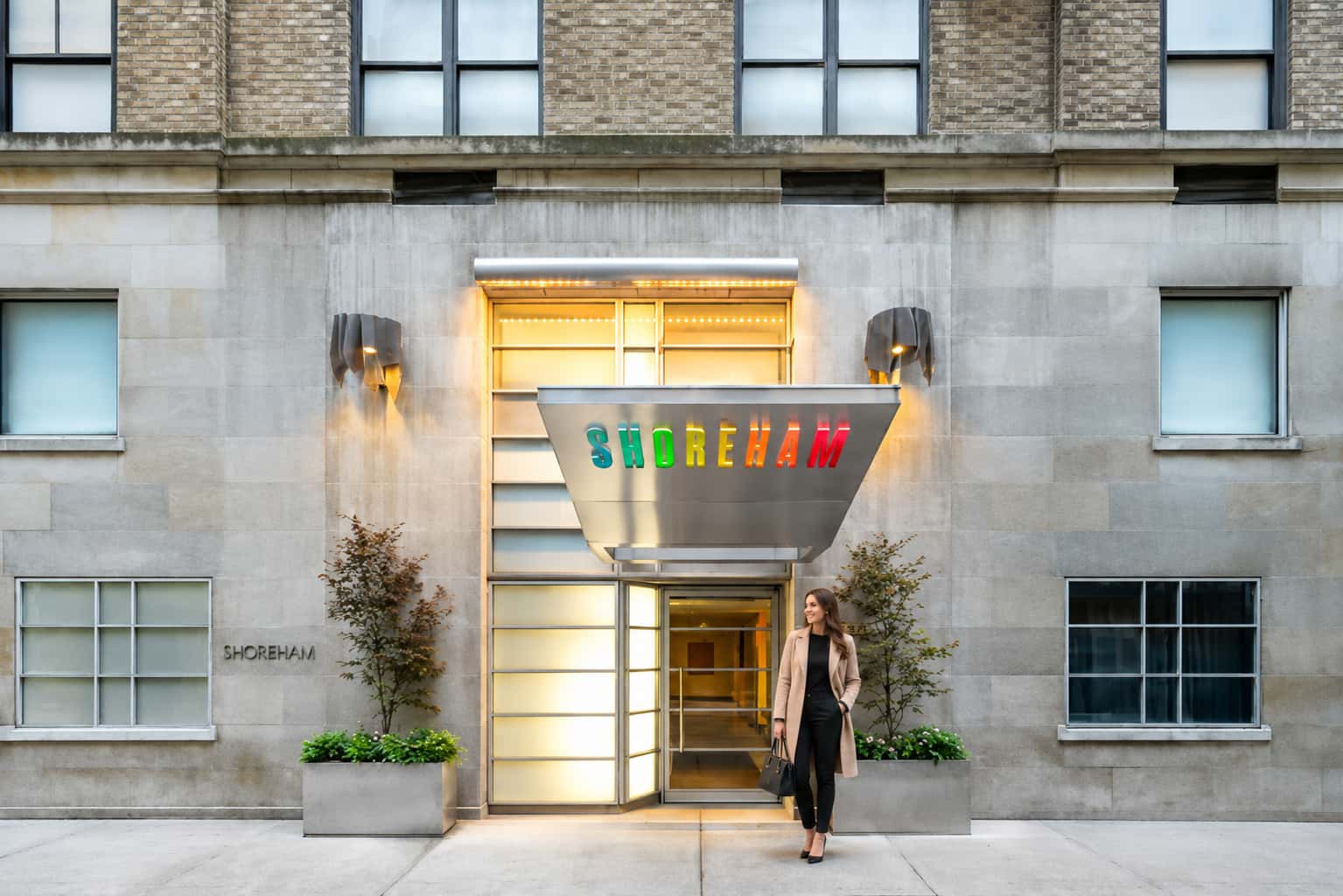
Shoreham Hotel succeeds most clearly as a Midtown base built around location, walkability, and quieter-than-expected sleep quality.
The Shoreham Hotel sits on West 55th Street between Fifth and Sixth Avenue. That’s within walking distance of Central Park, Rockefeller Center, MoMA, Broadway theaters, and some of Manhattan’s most valuable retail streets. In Midtown, location alone can define a hotel. At Shoreham, it largely does.
On paper, the property presents itself as a boutique four-star stay. Think Deco-Moderne styling, upgraded suites, terrace rooms, and a calmer alternative to Times Square-heavy Manhattan hotels.
In practice, the experience is more mixed. Shoreham operates less like a polished luxury boutique hotel and more like a strategically positioned Midtown base built around location, space-driven room hierarchy, and Manhattan demand cycles.
That distinction explains why guest reactions are so polarized.
- Travelers focused on walkability, convenience, and a comfortable place to sleep often leave satisfied, helped by strong bed comfort and relatively quiet rooms for this part of the city.
- Guests expecting a refined upscale experience that matches peak New York pricing tend to react more critically. They point to aging interiors, maintenance inconsistencies, and a noticeable gap between the hotel’s presentation and its physical condition.
What makes the Shoreham interesting is not whether it competes with Manhattan’s true luxury hotels. It does not. The more revealing question is why the property remains commercially relevant in one of the world’s most competitive hotel markets. The answer appears to lie in efficient Midtown positioning, relatively disciplined pricing behavior, and a room structure that prioritizes practical upgrade logic over dramatic luxury differentiation.
Quick Decision Snapshot
| Category | Verdict |
|---|---|
| Best for | Location-first Manhattan travelers |
| Main strength | Midtown positioning |
| Main weakness | Inconsistent room condition |
| Smartest booking | Deluxe King |
| Most interesting room | Deluxe King with Terrace |
| Biggest risk | Paying peak-season rates with luxury expectations |
| Best stay length | 2–4 nights |
| Sleep quality | Better than expected for Midtown |
| Family suitability | Practical but compact |
| Luxury level | Below what some peak pricing may imply |
What Kind of Manhattan Hotel This Really Is
The Shoreham is best understood as a Midtown access product first and a boutique hotel second.
The hotel sits in a part of the city where travelers often spend surprisingly little time inside the property itself. In this part of Midtown, many travelers use the hotel primarily as a base between meetings, restaurants, shopping, museums, and theater evenings. That shifts the priority toward sleep quality, walkability, pricing practicality, and smooth day-to-day functionality.
The Shoreham appears built around exactly that reality.
The property contains 135 rooms and suites spread across East and West Towers inside an 11-floor building originally opened in 1931 and last renovated in 2009. The inventory hierarchy reflects a common Midtown reality: most upgrades are created through additional space, bed configuration, or small experiential differentiators rather than dramatically elevated finishes.
This becomes important once pricing rises. During softer periods, the hotel can feel like a reasonably positioned Midtown base. During autumn compression or busy summer weekends, rates move into territory where guests naturally expect stronger design polish, more consistent upkeep, and a more refined sense of arrival.
That tension defines much of the Shoreham experience.
Location and Midtown Access
The Shoreham sits in one of Manhattan’s most efficient corridors for visitors who want broad access without staying directly inside Times Square congestion. Central Park is roughly five minutes away on foot. Fifth Avenue shopping sits around the corner. Rockefeller Center, Carnegie Hall, MoMA, Radio City Music Hall, and several major subway lines are all within comfortable walking distance.
| Destination | Approximate Walk |
|---|---|
| Central Park | ~5 min |
| Fifth Avenue | ~2 min |
| Rockefeller Center | ~8–10 min |
| MoMA | ~5 min |
| Carnegie Hall | ~7 min |
| Times Square | ~15 min |
For theater-focused visitors, first-time Manhattan travelers, or business travelers moving across Midtown frequently, the positioning works extremely well.
Importantly, the surrounding blocks also feel calmer than Times Square-heavy corridors further south. That contributes to one of the hotel’s more consistent positive patterns: relatively quiet rooms for Midtown Manhattan.
The location rating patterns reflect this clearly. Tripadvisor scores the property strongest in location. Booking.com summaries repeatedly highlight proximity to Central Park, subway stations, and Fifth Avenue as the defining reason many guests choose the hotel.
Airport Access and Transportation
Shoreham sits in a practical position for travelers arriving through New York’s three major airports, particularly for visitors planning to stay primarily within Midtown Manhattan.
| Airport | Approximate Drive Time* | Typical Taxi/Rideshare Cost* |
|---|---|---|
| LaGuardia (LGA) | 30–45 min | ~$45–70 |
| JFK International | 45–75 min | ~$80–120 |
| Newark Liberty (EWR) | 45–75 min | ~$90–130 |
*Traffic conditions can significantly affect travel times and pricing.
For public transportation users, the hotel is within walking distance of several subway connections, making airport transfers manageable without relying entirely on taxis. Travelers arriving through JFK can combine the AirTrain with the subway system. Newark access is generally easiest via NJ Transit and Penn Station connections.
For many Midtown-focused itineraries, the hotel’s central positioning also reduces the need for repeated subway or taxi usage once checked in. That can make arrival friction feel less important over the course of a shorter Manhattan stay.
The hotel itself does not offer dedicated parking or airport shuttle service, which is fairly typical for Midtown Manhattan properties in this category. Guests arriving by car should expect to use nearby third-party garages at standard Manhattan rates.
Arrival, Lobby Experience, and First Impressions
From the outside, the property lacks the visual confidence many travelers associate with boutique Manhattan hotels. Several guests describe the building as looking closer to an older office structure than a polished lifestyle property. Inside, the lobby feels functional and partially modernized. However, it lacks the visual confidence or atmosphere many travelers now associate with boutique positioning in Manhattan.
Check-in experiences appear highly inconsistent. Some guests specifically praise individual front desk employees for attentiveness and professionalism. Names like Flor, Abel, and Tatyana appear repeatedly in positive reviews. Others describe colder interactions, particularly during busy arrival or departure periods.
This distinction matters. The feedback does not suggest universally poor service. It suggests uneven service culture, where strong individual hospitality is not always supported by equally strong operational consistency.
The hotel does function well in practical terms:
- 24-hour front desk
- luggage storage
- package handling
- ticket assistance
- transport arrangements
- business center access
Rooms and Inventory Hierarchy
Understanding the Room Categories
Shoreham's room hierarchy is more practical than aspirational.
| Tier | Room Type | What Actually Changes |
|---|---|---|
| Entry | Standard Queen | Compact Midtown base |
| Smart upgrade | Deluxe King | Better comfort balance |
| Family layer | Deluxe Two Queens | Occupancy flexibility |
| Signature room | Deluxe King with Terrace | Emotional differentiation |
| Practical suite | One Bedroom Suite | Real spatial separation |
| Premium ceiling | Junior Penthouse Suite | Larger footprint, limited luxury escalation |
Most rooms share similar core amenities:
- pillow-top mattresses
- flat-screen TVs
- blackout blinds
- workspace areas
- Wi-Fi
- standard bathroom layouts
The real differences come from layout, occupancy, terrace access, living-room separation, and floor positioning. This also means perceived value can narrow quickly once rates rise into higher Manhattan pricing tiers.
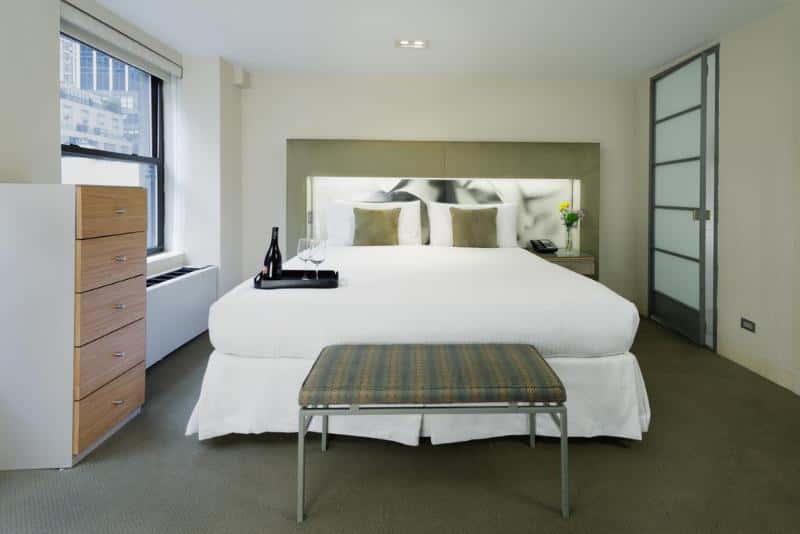
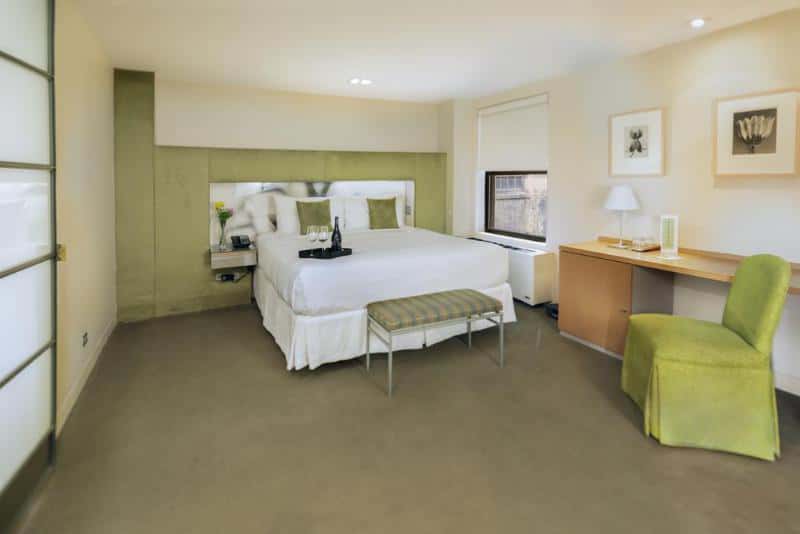
What the Rooms Actually Feel Like
Room condition appears to vary noticeably.
The strongest recurring positives:
- comfortable beds
- decent sleep quality
- quieter-than-expected nights
- practical layouts in upgraded categories
The strongest recurring negatives:
- stained carpets
- dated furniture
- aging bathrooms
- weak ventilation
- worn finishes
- inconsistent housekeeping detail
Bathrooms are a particularly common friction point. Multiple guests describe them as very small, with limited sink space and older fixtures. Several reviews also mention poor ventilation and signs of wear around tubs or shower areas.
Importantly, Manhattan travelers often tolerate compact rooms. What they tend to tolerate less well is visible aging at rates associated with upscale positioning.
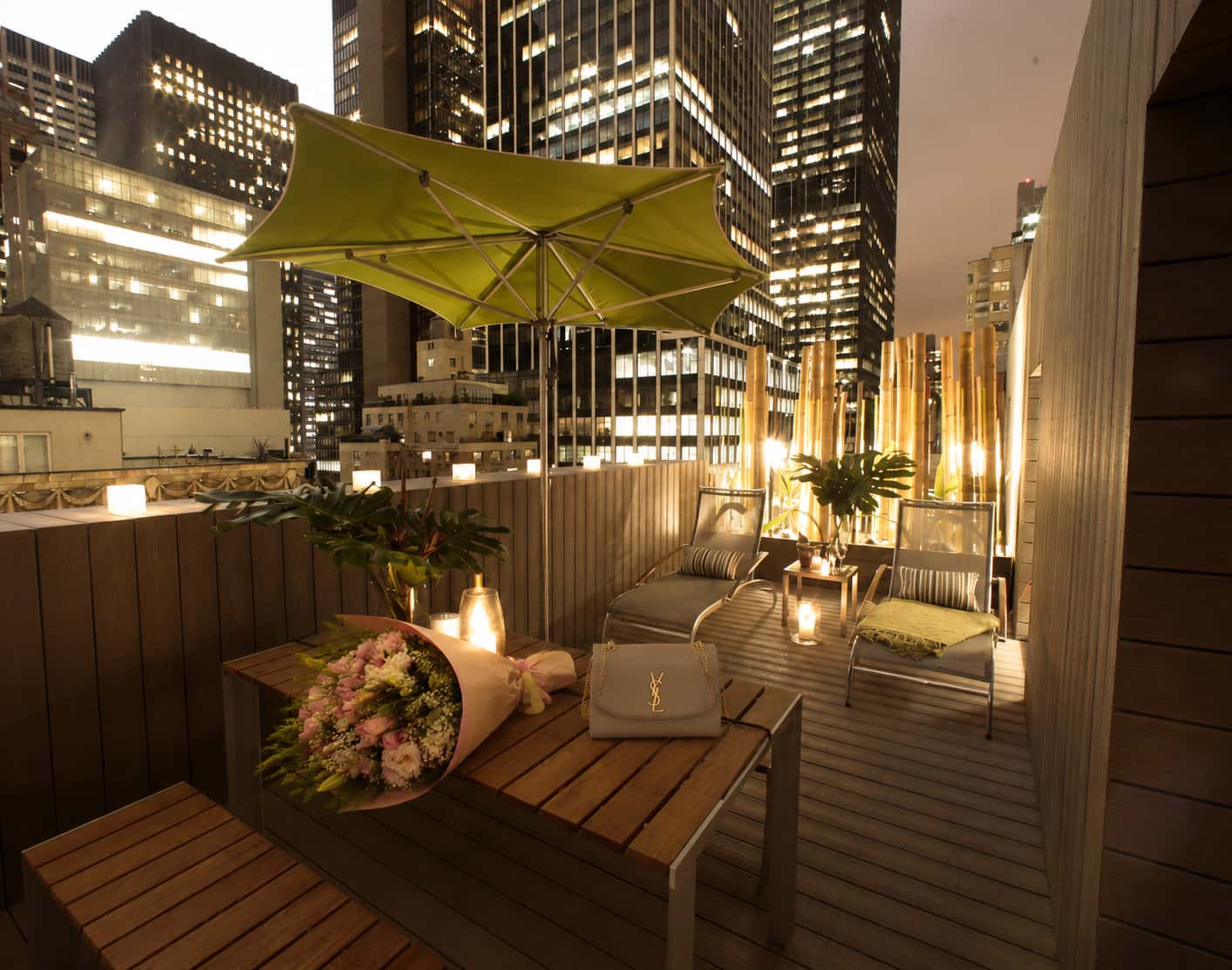
The Terrace Rooms: The Most Interesting Inventory in the Hotel
The Deluxe King with Terrace is the most strategically interesting room category in the building.
In Manhattan, outdoor space changes perception quickly. A terrace creates a sense of rarity that often outweighs the actual increase in room quality. Shoreham appears to understand this very clearly.
Across multiple seasonal pricing checks, the terrace category consistently maintained a roughly fixed premium over standard Deluxe King rooms, even when other inventory compressed more dramatically.
They also appeared absent from sampled Booking.com inventory during multiple searches, which may indicate limited online travel agency allocation or simply lower inventory visibility.
For couples or shorter leisure stays, these rooms likely create a stronger experiential value than many of the hotel’s more expensive suite categories.
Pricing Intelligence and Real Value
Midtown pricing behavior is often less tied to tourism seasonality than many visitors expect. Corporate travel demand, conferences, holiday retail traffic, and autumn business activity can push weekday Manhattan pricing above peak summer leisure periods.
Shoreham's pricing structure is more disciplined than many comparable Midtown hotels.
Rather than creating chaotic seasonal jumps across all inventory, the hotel maintains a surprisingly stable room ladder. Standard rooms compress aggressively during high-demand periods, while higher categories maintain more controlled spacing.
How the Hotel Prices Itself Across Seasons
| Room | Jan Weekday | July Weekday | Aug Weekend | Oct Weekday | Nov Weekday |
|---|---|---|---|---|---|
| Standard Queen | ~$229 | ~$219 | ~$339 | ~$419 | ~$239 |
| Deluxe King | ~$259 | ~$249 | ~$369 | ~$449 | ~$269 |
| Deluxe Two Queens | ~$429 | ~$419 | ~$539 | ~$619 | ~$439 |
| Terrace King | ~$479 | ~$469 | ~$589 | ~$669 | ~$489 |
| One Bedroom Suite | ~$529 | ~$519 | ~$639 | ~$719 | ~$539 |
Several important patterns emerge:
- October compression is far stronger than summer weekday demand
- Two-bed inventory carries unusually aggressive premiums
- Terrace rooms maintain highly stable emotional pricing
- One Bedroom Suites remain relatively attainable compared with the rest of the ladder
The pricing structure suggests the hotel understands Midtown demand cycles extremely well, particularly around business-heavy autumn periods.
All pricing referenced in this review was checked in mid-May 2026 and should be viewed as indicative. Manhattan hotel rates can shift sharply based on season, occupancy, events, and booking timing.
The Smartest Rooms to Book
| Traveler Type | Best Choice |
|---|---|
| Solo traveler | Deluxe King |
| Couple | Deluxe King or Terrace King |
| Weekend leisure stay | Terrace King |
| Family/group | Deluxe Two Queens |
| Longer stay | One Bedroom Suite |
The Deluxe King is the cleanest value upgrade in the building. Pricing spreads above entry inventory usually remain small, while comfort perception improves meaningfully.
The One Bedroom Suite may offer the strongest overall value during compression periods. The additional space changes the experience more substantially than many travelers may expect from the pricing gap alone.
The Terrace King, meanwhile, delivers the hotel’s clearest sense of individuality.
When Pricing Stops Matching the Experience
Shoreham becomes harder to justify during aggressive compression windows.
In October, entry rooms climbed above $400 nightly during sampled weekday searches. Suite categories approached or exceeded pricing associated with considerably more polished Manhattan hotels.
That does not automatically make the hotel overpriced. Midtown Manhattan often behaves irrationally during heavy demand periods. But it does increase expectation risk significantly.
Travelers booking during these periods should calibrate carefully: the premium is often paying for Midtown positioning rather than elevated hotel quality.
Guest Feedback Patterns: What People Consistently Praise and Criticize
What Guests Consistently Like
Several themes appear repeatedly across Tripadvisor, Booking.com, and Google reviews:
- excellent Midtown location
- comfortable beds
- relatively quiet rooms
- walkability
- helpful individual staff members
Specific employees receive unusually warm praise in several reviews, particularly around guest assistance and communication.
Many satisfied guests also describe the hotel as practical rather than luxurious, which aligns closely with the property’s strongest operational reality.
The Most Repeated Complaints
The most common criticism patterns include:
- dated interiors
- stained carpets
- small bathrooms
- maintenance inconsistency
- aging fixtures
- deposit/refund confusion
- mismatch between expectations and physical condition
Several negative reviews also describe cleanliness or maintenance failures. While individual experiences vary significantly, the consistency of certain themes suggests condition management remains one of the property’s weakest operational areas.
The incidental hold process also appears to create confusion for some guests, particularly international travelers using debit cards.
The Real Expectation Gap
Guests focused primarily on location and practicality tend to evaluate the stay more positively than travelers expecting a stronger sense of refinement. Those who expect a refined upscale experience often react much more negatively. That gap explains much of the hotel’s review polarization.
Shoreham performs best when treated as:
- a Midtown access strategy
- a sleep-focused Manhattan base
- a location-driven short-stay hotel
It performs less convincingly when evaluated against the emotional standards of modern upscale boutique hospitality.
Fitness Center, Amenities, and Functional Convenience
The amenity profile is limited but functional.
The hotel includes:
- fitness center
- business center
- luggage storage
- package acceptance
- transport and ticket assistance
- pet-friendly accommodations
- accessibility features
The gym is small and receives mixed feedback. Several guests describe aging equipment and minimal facilities.
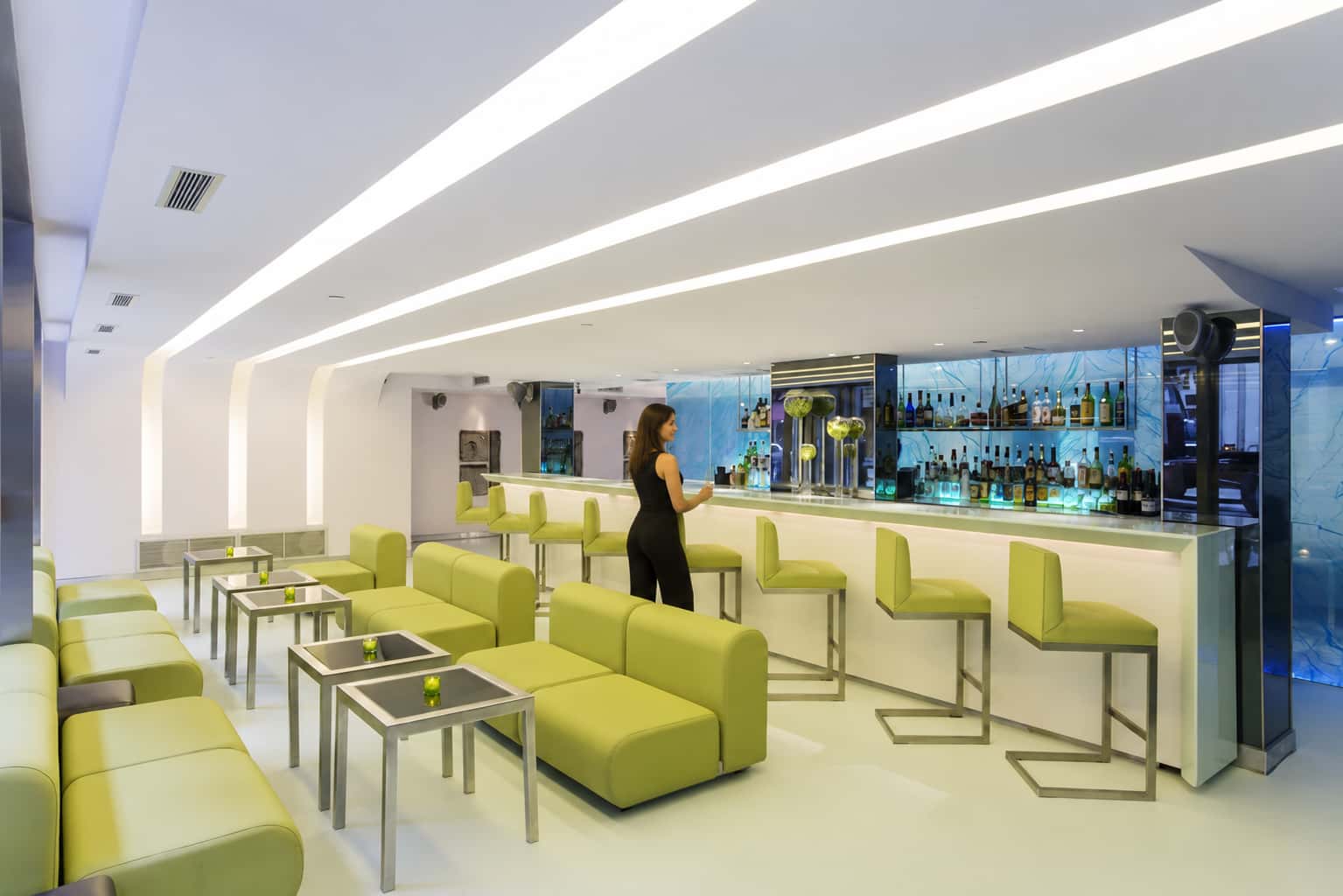
White Olive, the hotel’s attached Mediterranean restaurant, appears positioned more as a practical dining and private-event option than as a defining culinary destination.
Overall, the Shoreham succeeds more through operational convenience than amenity depth.
Who This Hotel Is Best For
| Strong Fit | Weak Fit |
|---|---|
| Theater-focused travelers | Luxury-focused travelers |
| Short Manhattan stays | Design-sensitive travelers |
| Business travelers | Wellness-focused guests |
| Location-first visitors | Travelers spending long hours in-room |
| Guests prioritizing walkability | Resort-style travelers |
Final Verdict
The hotel is at its best when approached pragmatically. Travelers booking primarily for location, convenience, and a comfortable place to sleep may find real value here, particularly in Deluxe King or Terrace categories. Travelers expecting a fully realized upscale boutique experience at premium Manhattan rates are more likely to feel the property’s inconsistencies.
Shoreham works best as a well-positioned Midtown base for travelers prioritizing location, walkability, and sleep comfort over polished luxury execution. In the right room category and at the right price, the hotel can deliver solid practical value. The experience becomes harder to justify only when rates rise into territory where Manhattan travelers naturally begin expecting stronger physical refinement and operational consistency.
Frequently Asked Questions
Does the Shoreham Hotel feel quiet for Midtown Manhattan?
Surprisingly often, yes. Multiple guests specifically mention quieter rooms than expected for this part of Midtown, especially compared with hotels closer to Times Square’s busiest corridors. Noise sensitivity can still vary by room placement and floor level.
Which room category changes the experience most noticeably?
The Terrace King and One Bedroom Suite create the biggest experiential shift. The Terrace category adds emotional value through outdoor space, while the One Bedroom Suite changes the stay more practically through layout separation and additional living space.
Why are Shoreham Hotel reviews so mixed?
Most polarized feedback comes from expectation differences. Guests booking primarily for location and convenience often rate the hotel more positively than travelers expecting a polished upscale boutique experience consistent with peak Manhattan pricing.
Does the hotel work well for first-time New York visitors?
Yes, particularly for travelers wanting a highly walkable Midtown base near major attractions without staying directly inside the busiest Times Square zones.
Is Shoreham a good hotel for longer stays?
Only selectively. Standard rooms may feel compact for extended stays, especially for multiple guests. One Bedroom Suites are considerably better suited for longer visits due to the added separation and living space.
Does it make more sense to book directly or through Booking.com?
The hotel’s direct website occasionally shows room categories and pricing structures not visible through sampled online travel agency inventory, particularly around terrace inventory and package-style offers. Compare both before booking.
Is this a hotel where room choice matters?
Very much so. The difference between entry inventory and the hotel’s more differentiated categories is larger emotionally than the naming structure initially suggests. Choosing the right room type affects the experience significantly more than at many similarly sized Midtown hotels.
Does Shoreham behave more like a business hotel or a leisure hotel?
Operationally, it behaves closer to a business-oriented Midtown property with selective leisure appeal. Its strongest demand periods align more closely with Manhattan compression patterns than with traditional resort-style seasonal travel.