
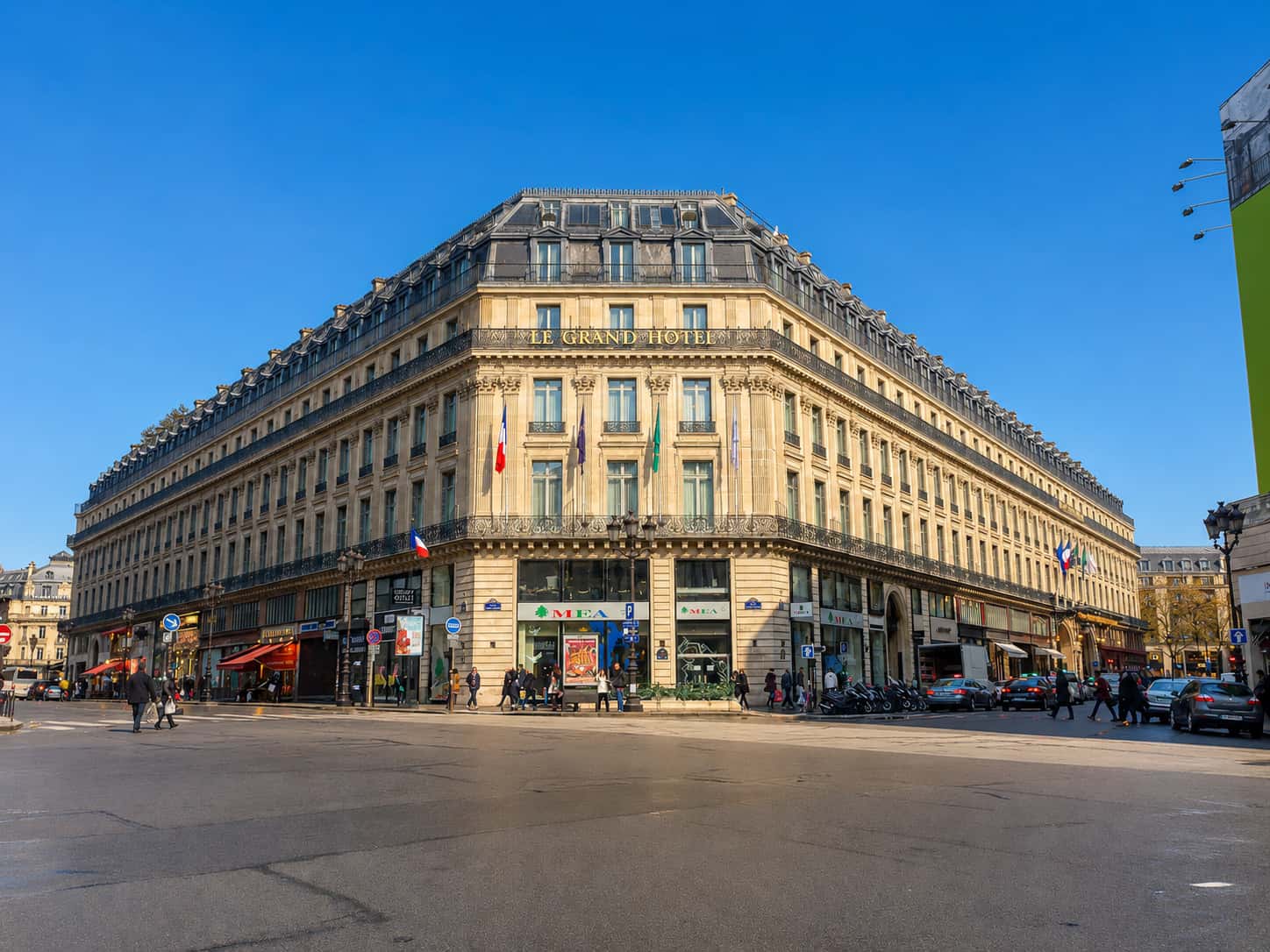
InterContinental Paris Le Grand remains one of Paris's defining hotels, where heritage, convenience, and scale shape the guest experience.
InterContinental Paris Le Grand occupies one of the most recognizable addresses in Paris. Facing the Palais Garnier and surrounded by department stores, corporate offices, cafés, and historic boulevards, it remains one of the city's most strategically positioned luxury hotels.
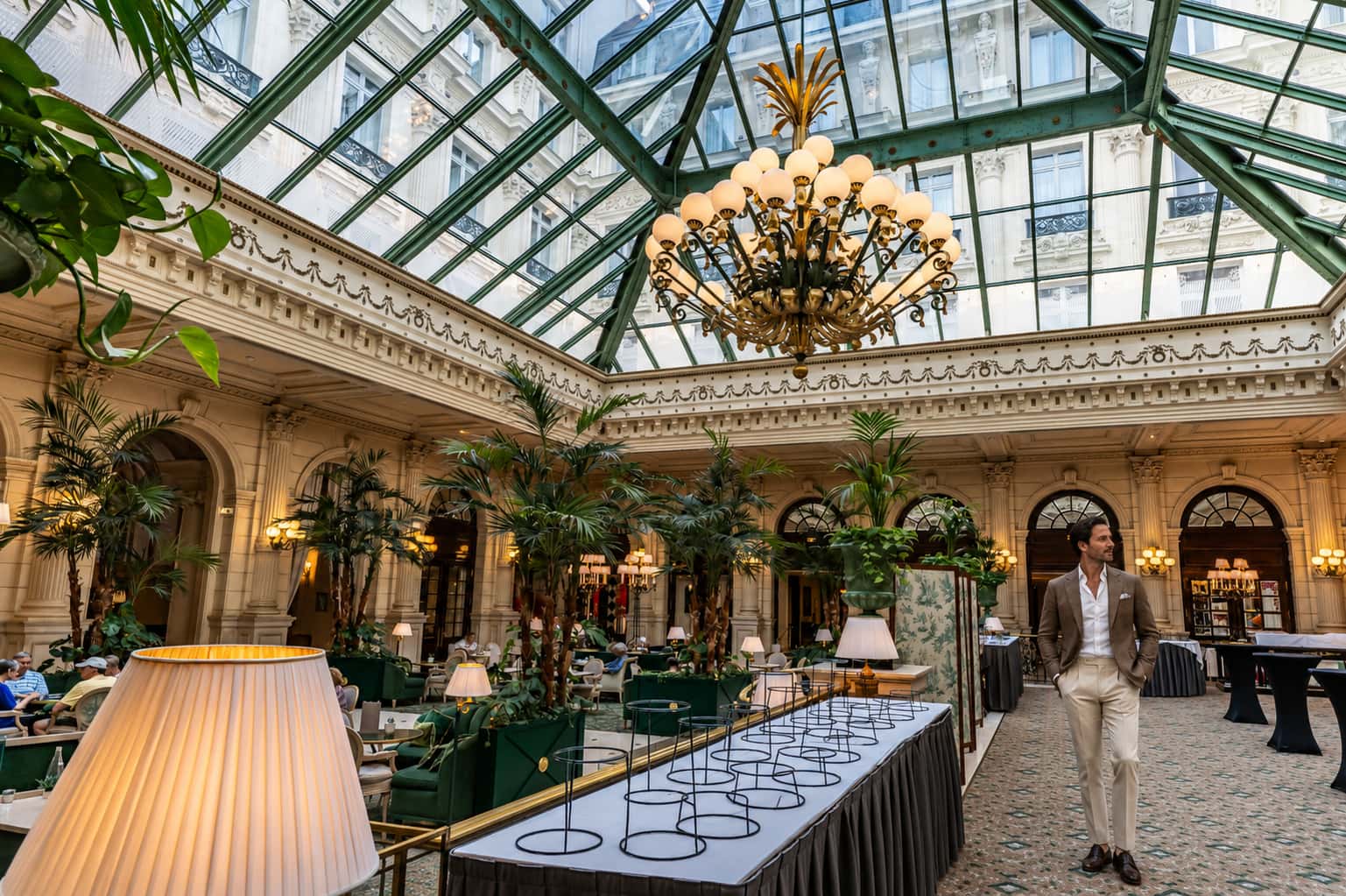
Few Paris hotels combine this level of historical significance, conference infrastructure, global brand recognition, and centrality. The public spaces are among the most impressive in the city. Café de la Paix within the hotel remains a destination in its own right. The winter garden beneath La Verrière's glass roof continues to deliver one of the most memorable breakfast settings in Paris.
However, guests who book smaller entry-level categories often discover a different reality from the one suggested by the grand lobby. Rooms can feel compact relative to price, some inventory shows its age more than others, and the experience depends heavily on room selection, occupancy levels, and expectations. Travelers who arrive understanding this distinction tend to leave satisfied. Those expecting palace-scale accommodations in every category sometimes struggle with the value equation.
Guests who value location, heritage, and access to the city's commercial and cultural core often find Le Grand difficult to replace.
The Property At A Glance
| Attribute | Details |
|---|---|
| Location | Opéra District, Paris |
| Address | 2 Rue Scribe, 75009 Paris, France |
| Opened | 1862 |
| Brand | InterContinental Hotels & Resorts |
| Loyalty Program | IHG One Rewards |
| Historic Landmark | Café de la Paix |
| Wellness Facilities | Fitness facilities, sauna areas, beauty and wellness treatments |
| Pool | No |
| Pet Friendly | No |
| Parking | Valet parking available |
| Primary Markets | Business travelers, conferences, luxury leisure travelers |
| Room Categories | Entry-level Cosy Rooms through One-Bedroom Suites, with additional premium specialty accommodations available via direct booking |
More than 160 years after opening, InterContinental Paris Le Grand continues to operate as both a luxury hotel and a Paris institution. It functions as a conference venue, dining destination, meeting place, and historical landmark that happens to contain guestrooms.
Best For
- First-time luxury visitors to Paris
- Business travelers
- Conference attendees
- IHG One Rewards members
- Travelers who prioritize location over room size
- Guests interested in Parisian history and architecture
Less Ideal For
- Travelers seeking a quiet residential setting
- Guests who prioritize oversized rooms
- Boutique-hotel enthusiasts
- Travelers expecting a resort-style property
- Families requiring extensive leisure facilities
A Paris Landmark Since 1862
Opened in 1862 and inaugurated by Empress Eugénie, it was conceived during Baron Haussmann's transformation of Paris and became one of the city's original grand hotels.
The property occupies an entire triangular city block and remains closely tied to the architectural identity of the Opéra district. Much of the hotel's public character still comes from this period, particularly within its grand reception areas, historic event spaces, and Café de la Paix, which has operated continuously on the ground floor since the hotel's opening.
Over its long life, the hotel has welcomed royalty, heads of state, artists, writers, and international business leaders. Although many Paris luxury hotels can claim historic significance, few remain as closely connected to both the city's social history and its modern business life.
Location: Why So Many Guests Forgive The Flaws
The hotel sits directly in the heart of the Opéra district. Galeries Lafayette and Printemps are only minutes away. Multiple metro lines intersect nearby. Many visitors spend an entire stay exploring central Paris without needing a taxi.
For leisure travelers, the location removes friction. The Louvre, Place Vendôme, the Tuileries, and much of central Paris can be reached on foot. For business travelers, access to offices, meeting venues, and transportation networks remains exceptionally convenient.
The surrounding area is undeniably busy. Traffic, shoppers, tourists, office workers, and theatergoers create constant movement. Guests seeking a quiet Left Bank atmosphere may prefer a different neighborhood. Those wanting maximum convenience generally appreciate the tradeoff.
| Airport | Typical transfer time |
|---|---|
| Charles de Gaulle Airport (CDG) | 40–60 minutes |
| Paris Orly Airport (ORY) | 35–50 minutes |
Taxi access is straightforward, though traffic conditions can significantly affect travel times.
Public transportation is excellent. The nearby Opéra station connects travelers to multiple metro lines, and airport rail connections are relatively easy compared with many luxury hotels in Paris.
Industry Recognition And Market Standing
The property has repeatedly been named among France's leading business and conference hotels while also receiving luxury hospitality awards in recent years.
The last include France's Leading Business Hotel 2025, France's Leading Conference Hotel 2025, and France's Leading Luxury Hotel 2025 by World Travel Awards.
More significant than any individual trophy is the consistency of these recognitions over time.
Rooms And Suites: Where Expectations Become Complicated
Arrival immediately establishes expectations. Guests enter a world of marble, elaborate detailing, historic salons, grand staircases, and dramatic public spaces.
But the room experience depends heavily on category selection and this is not unusual in Paris. Historic buildings often impose limitations that newer luxury developments avoid. The difference at Le Grand is that the contrast between public grandeur and private accommodations can be particularly noticeable in lower categories.
Room Categories, Space, and Value Hierarchy
Looking at a single room category only tells part of the story. InterContinental Paris Le Grand's pricing strategy becomes much clearer when viewed across its inventory hierarchy. We selected the categories below because they represent the hotel's main upgrade decisions: entry-level accommodation, the core premium room offering, the signature Opéra-view experience, and the point at which the hotel transitions into true suite pricing.
| Room category | Jan 2027 | Nov 2026 | Sep 2026 weekday | Sep 2026 weekend |
|---|---|---|---|---|
| Cosy Room | €580–724 | €731 | €719 | €675 |
| Premium Room | €692–857 | €794–1,069* | €818–1,069* | €805–966* |
| Premium Opera View Balcony | €750–927 | €855–1,221* | €876–1,103* | €863–1,036* |
| One-Bedroom Suite | €1,215–1,486 | €1,263–1,515 | Not available | €1,310–1,571 |
* Availability varied by channel and rate plan.
Prices were collected across the official hotel website and Booking.com using multiple booking dates in 2026 and 2027. Comparisons focus on two-adult occupancy and reflect publicly available rates observed across winter, autumn, and high-demand September Paris periods. Rather than presenting isolated prices, the table illustrates recurring pricing patterns visible across room categories and booking channels.
| Category | Size | Editorial assessment |
|---|---|---|
| Cosy Room | Approx. 20 m² (215 sq. ft.) | Best suited to travelers prioritizing location over room space |
| Premium Room | Approx. 34 m² (366 sq. ft.) | Strongest overall value in the inventory |
| Premium Balcony Room | Approx. 34 m² (366 sq. ft.) | Similar space to Premium Rooms, with added emotional appeal from private outdoor space |
| One-Bedroom Suite | Approx. 50 m² (538 sq. ft.) | Most aligned with luxury pricing expectations |
Reading The Pricing Ladder
InterContinental Paris Le Grand operates with a notably disciplined pricing ladder. The largest distinction is not between entry-level and premium rooms, but between standard accommodations and suites.
The move from a Cosy Room to a Premium Room is often less dramatic than many travellers expect. In most observed periods, the additional space and improved room positioning required a relatively modest premium. The same pattern continues with Premium Opera View Balcony rooms, where the emotional value of a private balcony overlooking the Opéra district is frequently priced closer to Premium Rooms than to suites.
The real pricing separation begins at the One-Bedroom Suite level. Across every observed period, suite pricing moves into a distinctly different bracket, often adding several hundred euros per night compared with the hotel's upper standard-room categories.
Another notable characteristic is how resilient pricing remains throughout the year. Mid-winter rates offer the best value opportunities, but the hotel does not experience the deep seasonal discounts often seen in resort destinations. Demand is supported by Paris' year-round appeal.
September emerged as one of the strongest pricing periods in the data set. Rates frequently matched or exceeded those observed during other traditionally busy periods, reflecting the return of corporate travel, major events, and strong leisure demand after the summer holiday season.
The September comparison is particularly interesting because weekday pricing was often equal to or higher than weekend pricing. This reflects Le Grand's substantial exposure to business travel, conferences, and corporate events, which can keep midweek demand exceptionally strong in central Paris.
Official Website vs Booking.com
The direct booking channel consistently produced lower entry-level pricing than Booking.com across the dates reviewed. The differences were not enormous, but they were frequent enough to suggest that travellers should compare direct rates before booking through an online travel agency.
The gap becomes particularly relevant in higher room categories. Premium Rooms, Opera View Balcony Rooms, and suites often showed greater divergence between channels, creating opportunities for meaningful savings when booking directly.
The data also revealed another practical advantage of checking the hotel's own website. Certain room categories and specialty accommodations appeared to be unavailable through some public booking channels despite remaining part of the hotel's inventory. The most exclusive suites seem to be distributed selectively and may require direct contact with the hotel or specialised booking assistance.
For most travellers, the strongest value proposition sits within the Premium Room category. It captures much of the hotel's residential feel and additional space without entering the significantly higher suite pricing tier.
Room Design And Daily Living
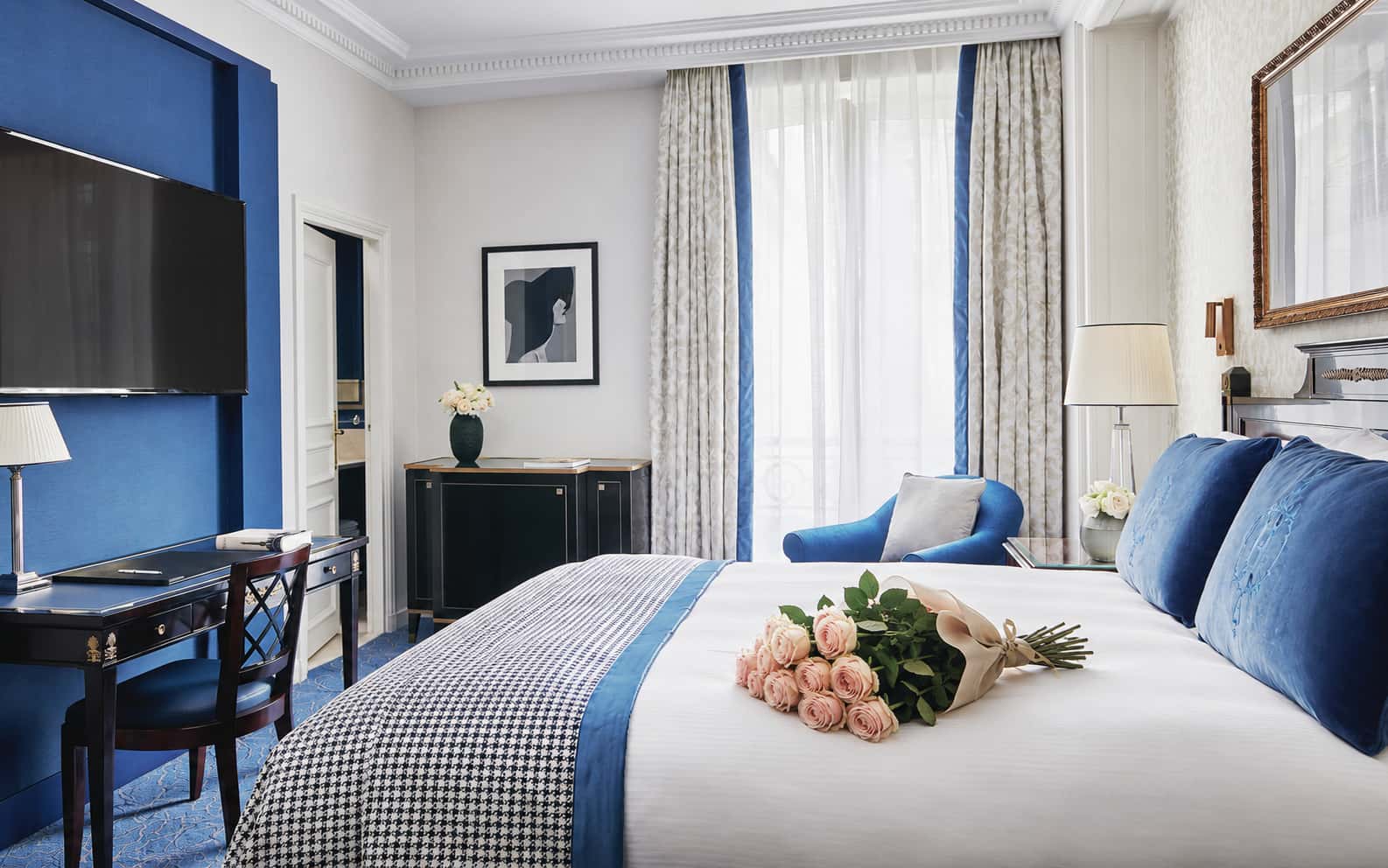
Room layouts generally reflect the building's historic origins. Storage is usually adequate and work surfaces are functional. Bathrooms vary more noticeably between categories.
Several guest reviews suggest that maintenance quality can feel uneven across the inventory. Most guests report clean accommodations, though recurring comments indicate that certain rooms show their age more clearly than others. This appears less like a systemic deterioration issue and more like a challenge associated with maintaining a large historic inventory over time.
How The Hotel Actually Operates Day To Day
Le Grand functions differently from many luxury competitors. This is not primarily a boutique hotel but a large urban luxury property serving multiple audiences simultaneously.
On any given day, the guest mix may include conference delegates, business travellers, international tourists, loyalty-program members, organised groups, and guests attending private events.
The hotel rarely feels small. Some guests appreciate the energy. Others notice it most during breakfast, check-in, or busy conference periods.
Where Friction Usually Appears
Guest reviews reveal several recurring pressure points.
- Check-in delays appear periodically during busy periods.
- Room readiness occasionally becomes an issue during high occupancy.
- Housekeeping experiences receive overwhelmingly positive feedback overall but can feel less predictable than in smaller luxury hotels.
- Breakfast crowds emerge repeatedly in guest commentary.
None of these patterns appear severe enough to define the property and are better understood as consequences of volume.
Why Service Experiences Vary
Service receives some of the strongest praise in the review data. Front desk teams, concierge staff, breakfast teams, and guest-facing employees are frequently mentioned by name. Yet a smaller group of guests describe interactions that feel rushed, impersonal, or less attentive than expected.
The most plausible explanation lies in the property's operating model. During quieter periods, service often feels highly personalized. During peak periods, guests may experience a more structured, large-hotel style of hospitality.
Dining: Café De La Paix, Breakfast, And The Food Reality
Café De La Paix
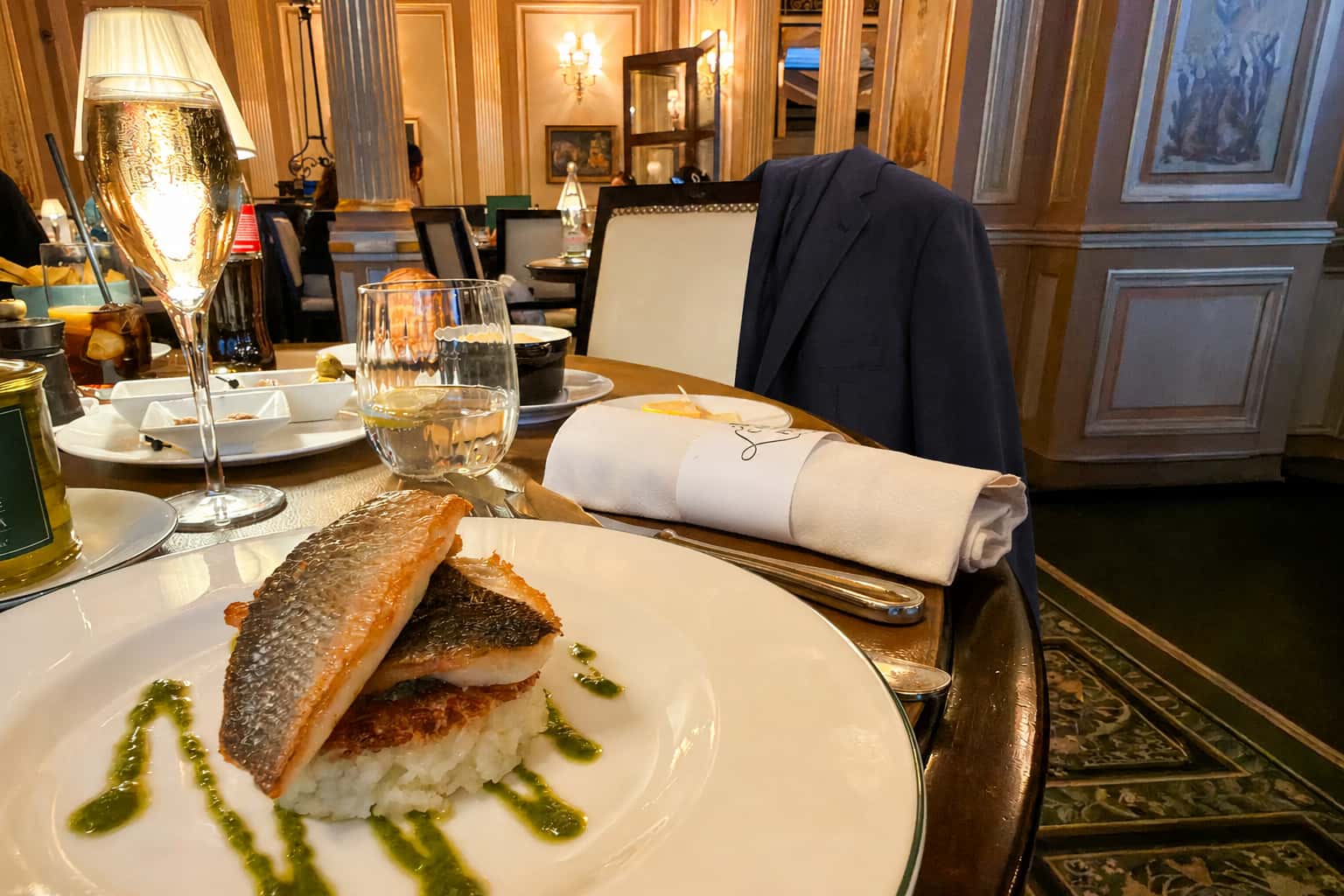
Since opening alongside the hotel in 1862, Café de la Paix has become one of Paris's most recognizable dining venues. Writers, politicians, artists, visitors, and locals have passed through for generations. Guests consistently mention the experience of dining here, even when they express mixed views about pricing.
Breakfast Under La Verrière
Breakfast receives unusually consistent praise. The food itself is generally described as high quality, varied, and generous. The setting often receives equal attention. Eating beneath the glass-roofed winter garden transforms breakfast into part of the hotel's identity rather than a routine meal.
Spa And Wellness
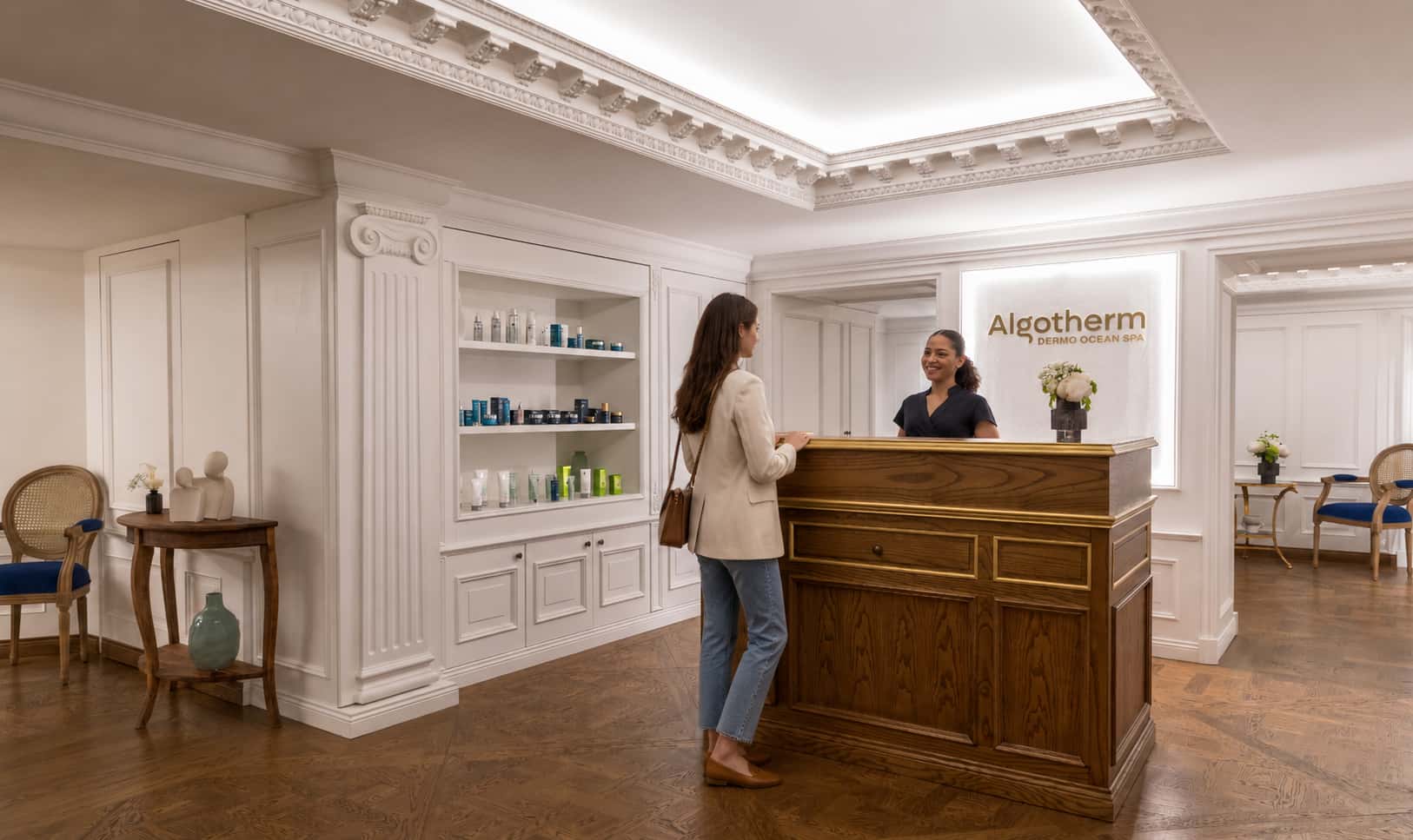
The wellness facilities are best viewed as a supporting amenity rather than a primary reason to choose the hotel. Guests have access to treatment rooms, fitness facilities, sauna areas, and a range of beauty and wellness treatments.
Most guests are likely to spend more time exploring the Opéra district, shopping around Place Vendôme, or enjoying the hotel's historic public spaces than treating the property as a dedicated wellness retreat.
What Guest Reviews Reveal After Thousands Of Stays
Platform scores remain strong:
- Booking.com score is 8.6 (excellent).
- Google rating is 4.5./5.
- Tripadvisor rating is 4.3/5.
What Guests Consistently Love
- Location dominates guest praise.
- Staff receive substantial recognition.
- Breakfast performs exceptionally well.
- Public spaces generate strong emotional reactions.
- The building's historical character remains a significant asset.
What Guests Repeatedly Criticize
- Room size appears most often.
- Noise affects a meaningful minority of guests.
- Dissatisfaction most often stems from room expectations rather than service failures.
How Le Grand Compares With Other Paris Luxury Hotels
| Hotel | Relative strengths | Areas where Le Grand retains an advantage |
|---|---|---|
| Ritz Paris | Exclusivity, privacy, ultra-luxury positioning | Business travel practicality, conference facilities, loyalty-program benefits |
| Four Seasons Hotel George V Paris | Service depth, personalized guest recognition, resort-style luxury experience | Central Opéra location, meeting and event infrastructure |
| Le Meurice | Intimacy, residential atmosphere, artistic character | Conference capability, business-travel appeal, room inventory scale |
| Park Hyatt Paris-Vendôme | Contemporary room design, modern luxury aesthetic | Historic significance, landmark status, event spaces |
| Lutetia Paris | Contemporary design, Left Bank identity, wellness facilities | Historic prominence, Opéra district location, international recognition |
Best Room Choices By Traveler Type
| Traveler Type | Recommended Category |
|---|---|
| First-time Paris visitor | Premium Opera View Balcony Room |
| Business traveler | Premium Room |
| Couple seeking a special stay | Premium Opera View Balcony Room |
| Family | One-Bedroom Suite |
| Value-focused luxury traveler | Premium Room |
InterContinental Paris Le Grand remains one of Paris's defining luxury hotels. Not because every room is perfect and the hotel delivers the most exclusive experience in the city.
History feels tangible here and the location works effortlessly. Café de la Paix remains relevant, the public spaces still impress, and the building continues to function as part hotel, part Paris landmark.
Le Grand is not the most intimate luxury hotel in Paris and it does not attempt to be. Its strengths lie elsewhere: an extraordinary address, remarkable public spaces, deep business-travel credentials, and a sense of continuity that few competitors can match. For travellers who understand what the hotel does best, it remains one of the most compelling stays in the city.
Frequently Asked Questions
Which room category offers the best value?
The Premium Room generally provides the strongest balance between space, comfort, and price.
Is the hotel quiet?
Not always. The central location means some rooms may experience street or city noise.
How far is the hotel from Charles De Gaulle Airport?
Typically 40 to 60 minutes by taxi depending on traffic conditions.
Is it better for business or leisure travelers?
The hotel performs particularly well for both, which is unusual. Business infrastructure and leisure convenience are equally strong.
What is the best time to book?
January, February, and November often provide the strongest value relative to peak-season pricing.