
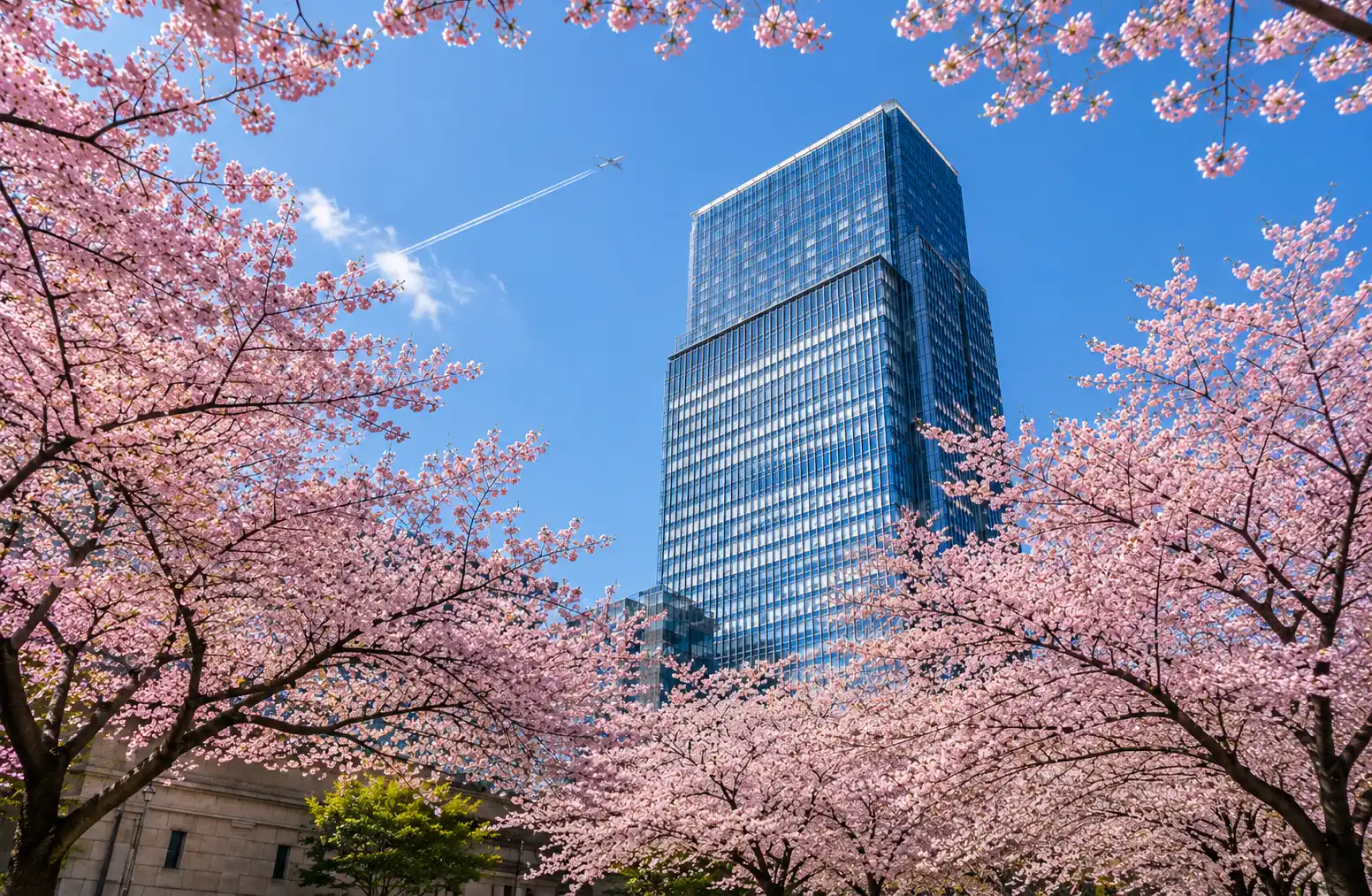
Spacious rooms and high-floor views remain the draw. We test Mandarin Oriental, Tokyo on service, dining, wellness, pricing, and competitor value.
Mandarin Oriental, Tokyo earns its place on a crowded luxury shortlist through unusually large rooms, high-floor views, and a Nihonbashi address that works for both business and leisure. The entry Deluxe Room measures 50 sqm, and the hotel's substantial wellness and dining facilities give guests reasons to spend time on property.
Price makes the decision harder. Newer Tokyo rivals compete for the same luxury budget. Four-figure room rates magnify any lapse in concierge follow-through, room allocation, or coordination between departments.
At more favorable rates, the rooms and views remain persuasive. Once standard rooms climb deep into four figures, Four Seasons Hotel Tokyo at Otemachi becomes the comparison to make.
BusinessClass research was completed in August 2026. Operating details, offers, policies, and prices can change.
At a Glance
| Attribute | Details |
| Hotel | Mandarin Oriental, Tokyo |
| Location | Nihonbashi, Chuo-ku, Tokyo |
| Address | 2-1-1 Nihonbashimuromachi, Chuo-ku, Tokyo, Japan |
| Setting | High-rise hotel occupying the upper floors of Nihonbashi Mitsui Tower |
| Rooms | 179 accommodations, with 157 rooms and 22 suites |
| Best Understood As | An established central Tokyo hotel built around unusually generous rooms, elevated city views, serious wellness facilities, dining depth, and strong business and leisure use |
| Key Room Categories Used in This Review | Deluxe Room, Deluxe Premier Room, Mandarin Grand Room, and Premier Suite. BusinessClass uses these key categories to explain the meaningful room and price steps rather than reproducing every category in the hotel's inventory. |
| Key Room Sizes | Deluxe Room: 50 sqm / 538 sq ft; Deluxe Premier: 50 sqm / 538 sq ft; Mandarin Grand: 60 sqm / 646 sq ft; Premier Suite: 90 sqm / 969 sq ft on the direct site |
| Strongest Feature | The combination of large central Tokyo rooms and exceptional high-floor views |
| Main Limitation | Very high rates magnify occasional concierge, follow-up, allocation, and service coordination problems reported by a minority of guests |
| Best For | Couples, business travelers, repeat Tokyo visitors, wellness-focused stays, and travelers who will use the room, view, dining, and spa infrastructure |
| Weak Fit For | Travelers prioritizing Tokyo's newest physical product, immediate nightlife outside the hotel, faultless concierge orchestration, or easy value at any rate |
| Location Character | Central and refined, with strong business, shopping, and transport convenience; quieter and less nightlife-led than Shibuya or Shinjuku |
| Dining | Broad on-site dining ecosystem. K'shiki appears as the breakfast venue; Signature, Sense, Mandarin Bar, and Sense Tea Corner |
| Wellness | Spa, Heat & Water facilities, vitality pool, fitness center, and specialist wellness programming |
| Fitness | 38th-floor Technogym facility; 24-hour access for hotel guests |
| Business And Events | Dedicated events floor with 16 venues and meeting rooms |
| Airport Access | Haneda: 22–40 minutes by taxi/car; 30–45 minutes by train or bus. Narita: 55–90 minutes by taxi/car; about 52–60 minutes by train, including roughly 53 minutes on the Narita Express to Tokyo Station. Airport Limousine Bus services take around 90 minutes. |
| Pet Policy | Dogs are allowed on request with advance reservation, one dog per room up to 15 kg, a JPY 12,650 (~$70) nightly charge including tax and service, and a vaccination certificate. Dogs are excluded from the lounge, bar, spa, fitness center, and meeting rooms. |
| Guest Feedback | Booking.com: 9.3/10 from 527 reviews; Tripadvisor: 4.7/5 from 2,913 reviews; Google: 4.5/5 from 4,748 reviews |
| Notable Recognition | A Travel + Leisure Tokyo hotel ranking score is 96.00. Inclusion in Condé Nast Traveler's 2026 Triple Crown Asia collection. A MICHELIN Guide Hotels one key listing. World Travel Awards material showed historic suite wins in 2023, 2022, and 2014. |
| Review Verdict | A formidable room, view, location, and wellness proposition whose premium is easiest to justify when those strengths outweigh the desire for newness and perfectly polished execution at every touchpoint. |
Why Mandarin Oriental, Tokyo Still Holds Its Ground
Mandarin Oriental, Tokyo now competes on established strengths, not novelty. Space, elevation, room comfort, skyline views, wellness facilities, and the scale of its in-house operation form the case against Tokyo's newer luxury arrivals.
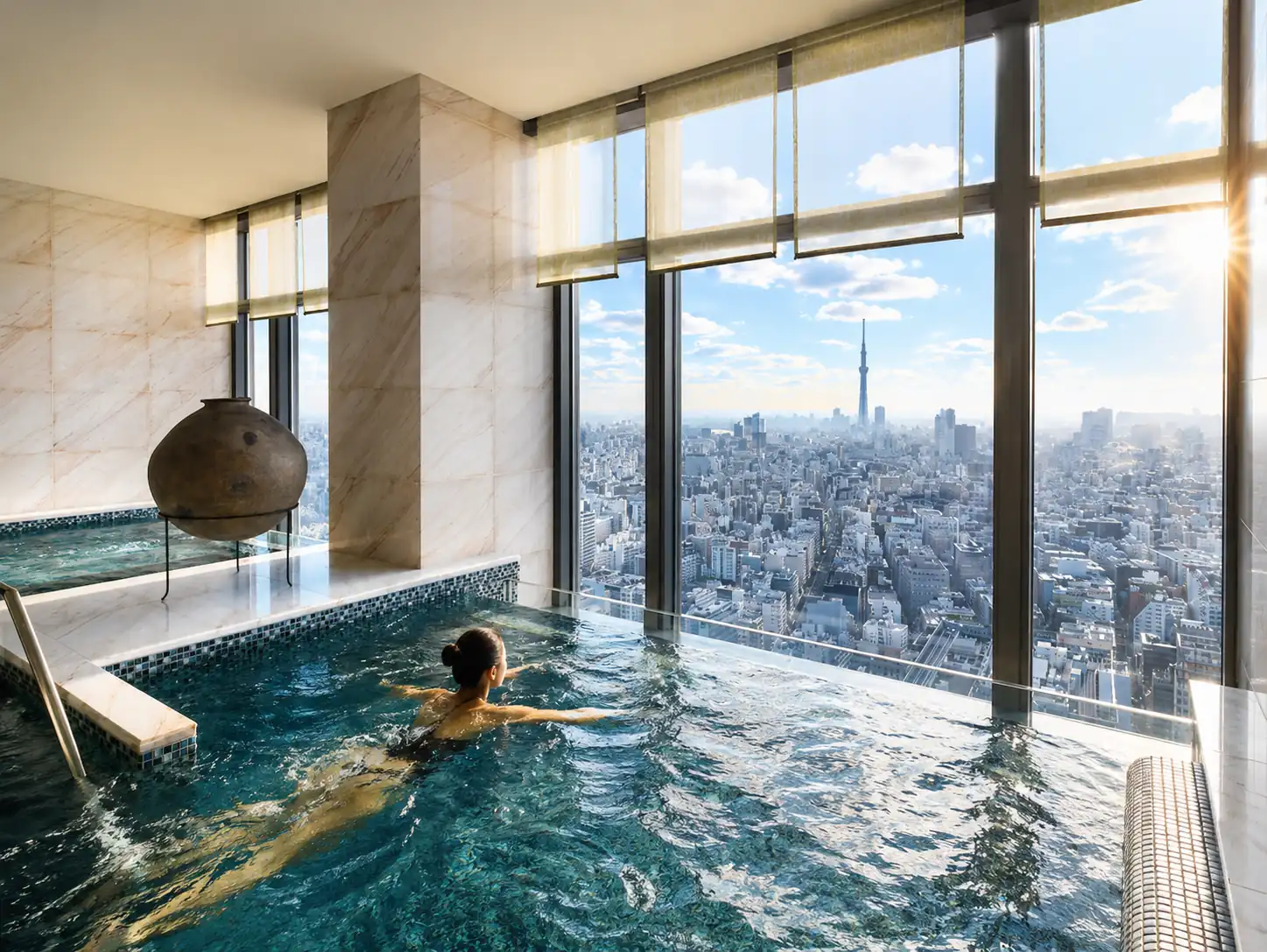
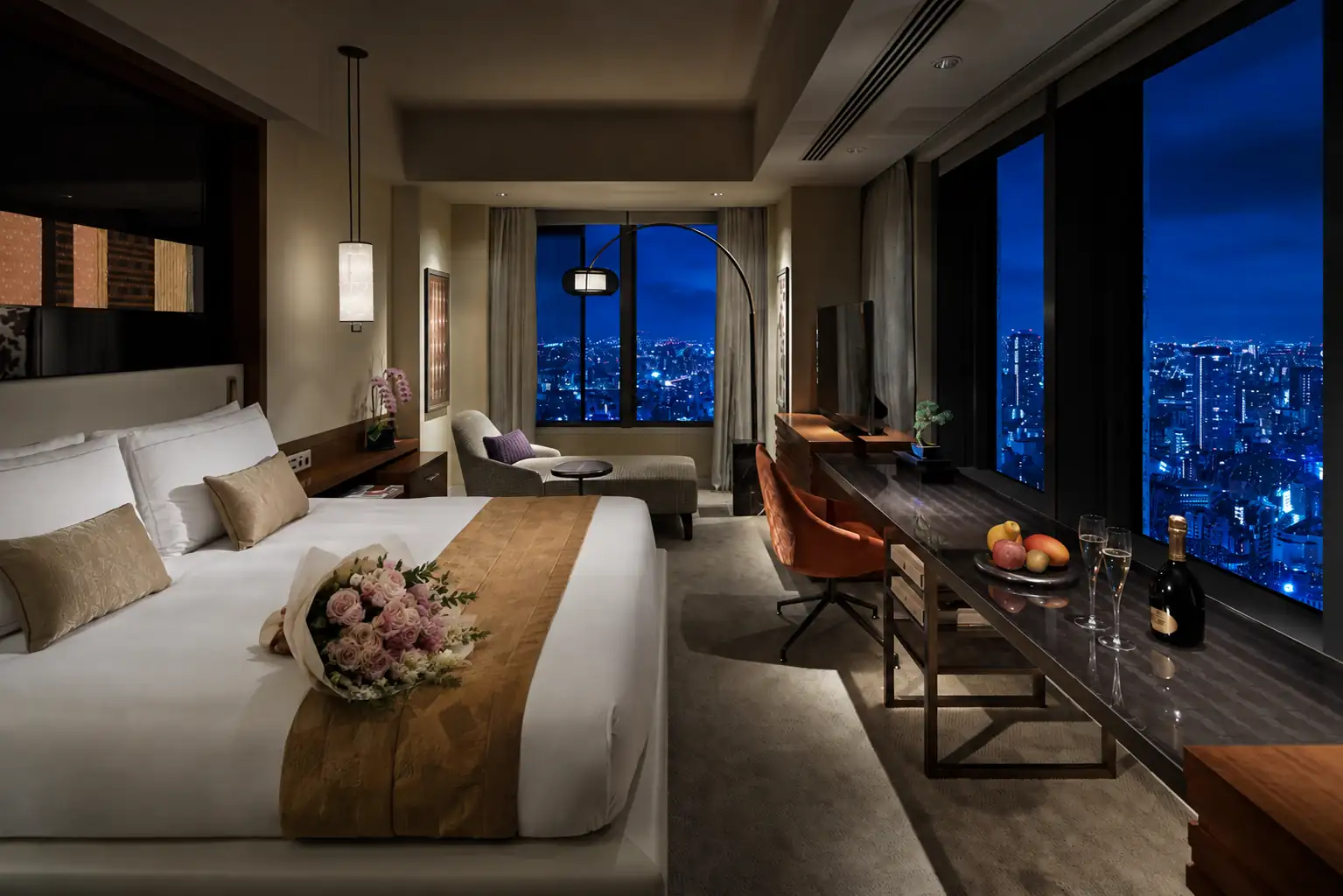
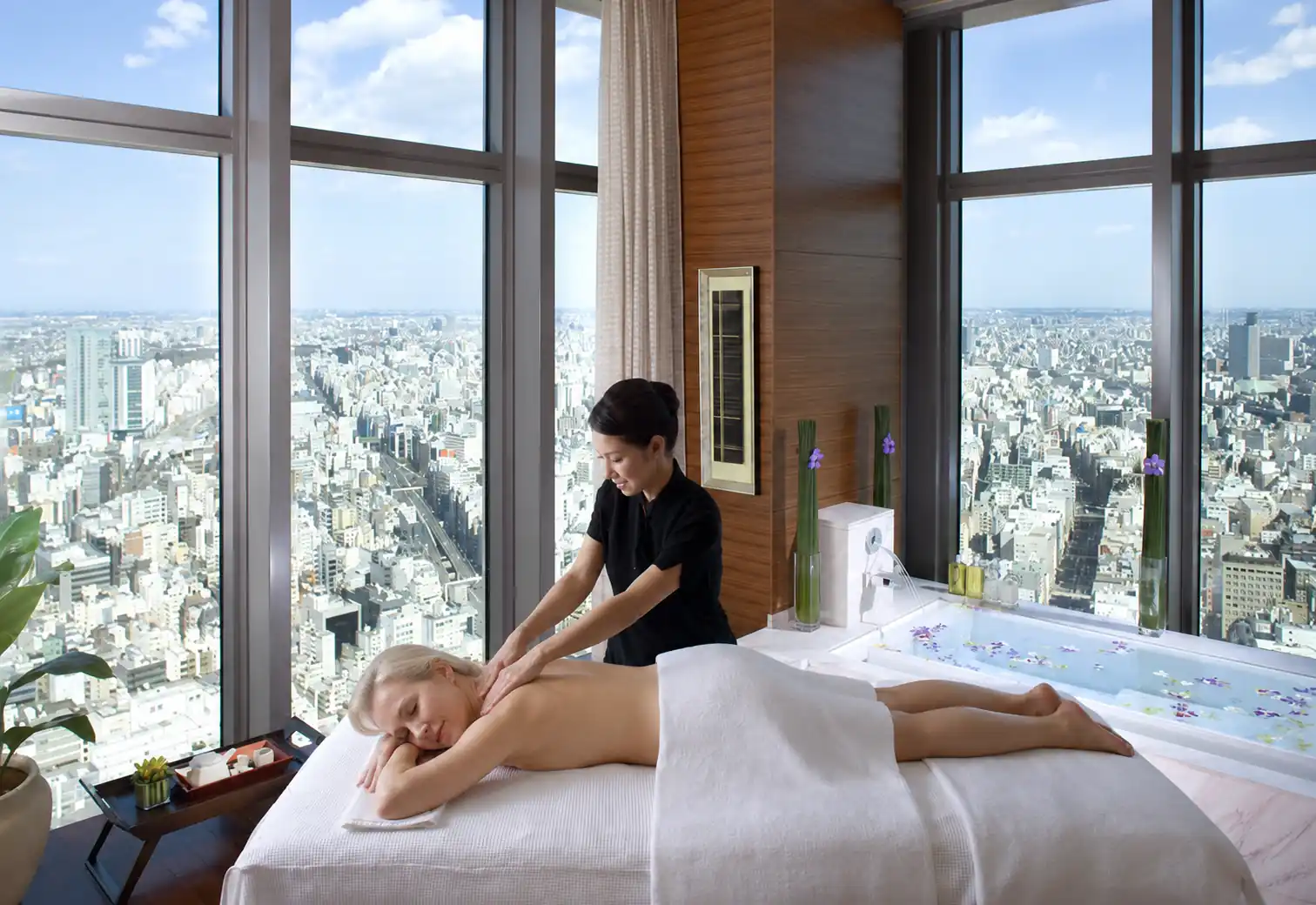
Floor-to-ceiling windows and the hotel's position high in Nihonbashi Mitsui Tower put Tokyo's skyline at the center of the stay. Guest reports repeatedly praise the panoramas, with Mount Fuji visibility appearing in some individual accounts.
The Rooms Remain the Strongest Argument
Deluxe Rooms combine 50 sqm of floor area with a lounge area, bath and walk-in shower, floor-to-ceiling windows, valet closet, and city outlook. The footprint leaves enough separation between sleeping, sitting, and working zones to support a multi-night stay without moving into suite territory.
Captured ratings remain strong: Booking.com scored comfort 9.7 and cleanliness 9.6, while Tripadvisor showed 4.8 for rooms and 4.8 for sleep quality.
Several recent guests described finishes or technology as dated beside newer hotels. The high room, comfort, cleanliness, and sleep scores argue against treating those comments as evidence of a broadly failing hard product.
The View Is Part of the Product
Deluxe Premier keeps the same 50 sqm footprint as Deluxe and chiefly buys stronger skyline placement, not additional floor area. Across the four retained Best Available Rate samples, the premium over Deluxe stayed at roughly $31 to $32.
Anyone booking primarily for the view should check Deluxe Premier before settling on the entry category. Mandarin Grand is the first meaningful space step, increasing the footprint to 60 sqm.
Prefer a more secluded urban sanctuary? Explore Aman Tokyo, where expansive rooms, minimalist design, and exceptional wellness place privacy and tranquillity ahead of a livelier luxury-hotel experience.
Which Room Should You Book?
The review focuses on four categories that best reveal the meaningful jumps in space, view, and price rather than reproducing the hotel's full room list.
| Key Category | Size Captured | What the Upgrade Buys | Value Logic |
| Deluxe Room | 50 sqm / 538 sq ft | Generous entry room, high-floor city outlook, lounge area | Strong benchmark when rates are attractive |
| Deluxe Premier Room | 50 sqm / 538 sq ft | Stronger skyline emphasis | Check first when the premium over Deluxe is small |
| Mandarin Grand Room | 60 sqm / 646 sq ft | 10 sqm more floor area plus Japanese craft-led detailing | First significant space upgrade; premium varies by date |
| Premier Suite | 90 sqm / 969 sq ft direct | Corner layout and panoramic vistas | Separate luxury purchase with its own pricing behavior |
For most couples and business travelers, the first decision is Deluxe versus Deluxe Premier. Mandarin Grand becomes more compelling on longer stays, when the additional 10 sqm is likely to earn its keep.
Premier Suite sits outside the normal room ladder. The direct site showed 90 sqm / 969 sq ft, while Booking.com displayed a 100 m² Premier Suite variant in the retained evidence. The official direct figure should lead unless the discrepancy is resolved before publication.
Bedding and view allocation deserve an advance check regardless of category. Supplied guest reports included king-to-twin or two-double mismatches and room changes that affected the outlook. A higher category name does not remove the need to confirm the exact configuration.
Nihonbashi Favors Access Over Nightlife
Nihonbashi suits travelers who want central Tokyo without choosing their hotel primarily for nightlife. Guest feedback repeatedly praised location, metro access, nearby shopping and restaurants, and ease of moving around the city.
Service Has a High Ceiling, With Some Execution Risk
Service scores are strong: Booking.com recorded 9.5 for staff and Tripadvisor 4.8/5 for service, with numerous guest accounts praising attentive, professional staff.
A recurring minority reports conflicting information, repeated follow-up, concierge friction, reception problems, or handoff failures between departments. Service can be excellent, but some stays expose weaknesses in coordination.
At four-figure rates, a missed follow-up or wrong room allocation carries more weight. Several complaints frame those lapses against both the nightly price and the expectations attached to the Mandarin Oriental name.
The 2026 sample shows no clear decline: perfect 10/10 stays sit alongside newer mid-scoring reviews that repeat the same age and service concerns.
A Serious Wellness Program
Official August 2026 material documented the Spa, Heat & Water facilities, vitality pool, a 38th-floor Technogym fitness center, and specialist programming including four-hour Sleep Support and Holistic Wellness sessions, private Yoga, Pilates, Aroma Stretch, and fitness training.
Captured fitness information showed 6:30 a.m. to 10 p.m. staffed hours and 24-hour access for hotel guests. Spa material also contained 24-hour hotel-guest access wording, although the exact relationship between facility and concierge hours needs a live check before travel.
Dining Is Woven Into the Stay
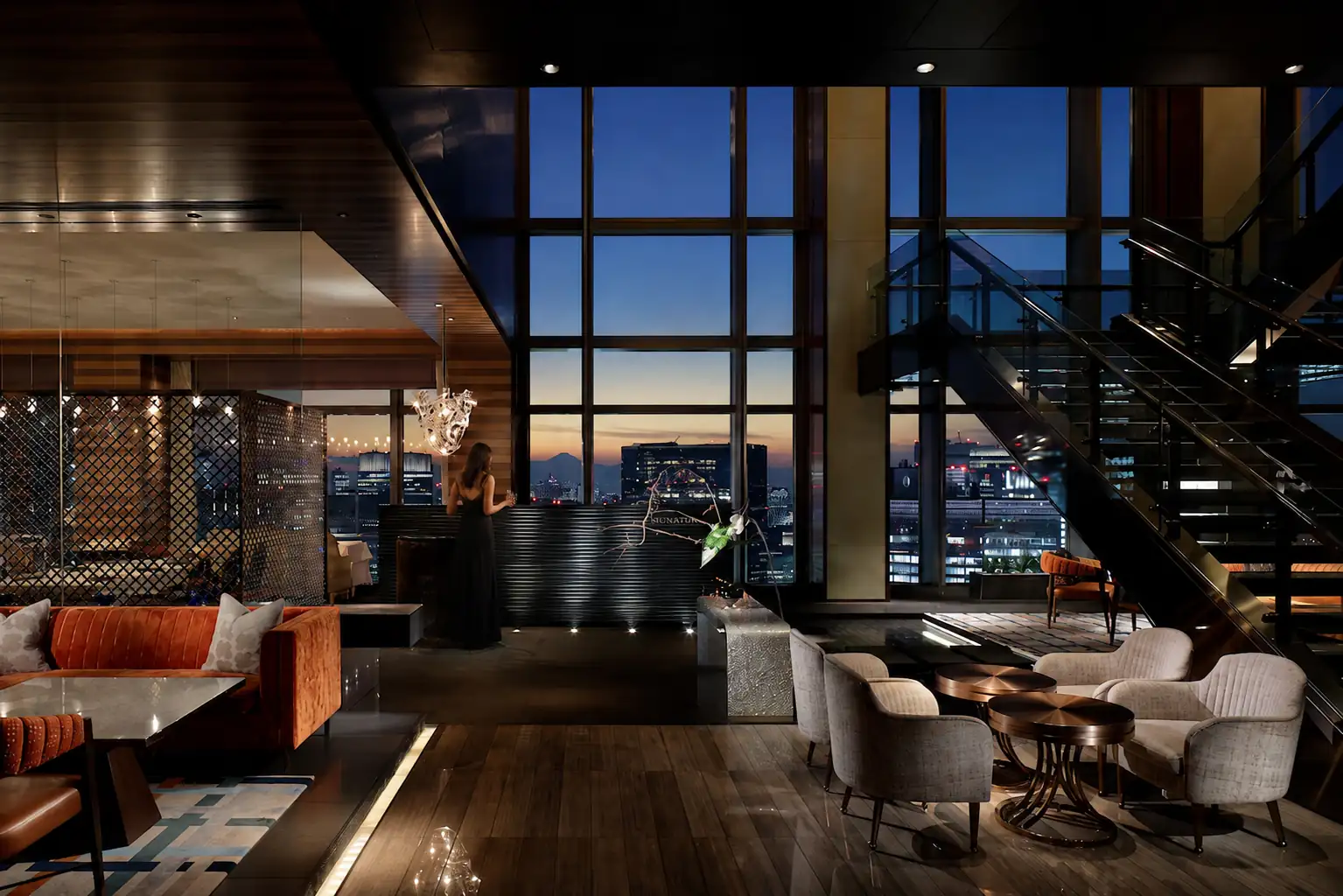
K'shiki is the designated breakfast venue in the Bed and Breakfast rates captured during our research, while Signature, Sense, Mandarin Bar, and Sense Tea Corner also appeared across the hotel's official offers and wellness material.
Several of those venues are woven directly into room booking packages: the Japan Residents' Summer Escape included guaranteed window seating at Signature. Totally Tokyo included two cocktails at Mandarin Bar alongside other hotel benefits.
Sense Tea Corner also appears inside the four-hour Holistic Wellness itinerary, which combines fitness, massage, Heat & Water facilities, and a meal.
Breakfast draws the most mixed dining feedback. Some guests rated it highly. Recurring criticism centered on variety, value, queues, coffee waits, and pacing. Longer stays may make repetition more noticeable, particularly when room rates are already elevated.
What Mandarin Oriental, Tokyo Costs and When It Makes Sense
The rates below are direct Best Available Rate headlines before taxes and fees, not current prices. Hotel pricing is highly volatile, and the samples demonstrate how little a simple "weekday," "weekend," or "season" label can explain.
Observed Pricing Across Four Travel Dates
| Arrival Date | Deluxe | Deluxe Premier | Mandarin Grand | Premier Suite |
| August 25, 2026, Tuesday | $783 | $814 | $895 | $2,185 |
| October 20, 2026, Tuesday | $1,396 | $1,428 | $1,622 | $2,567 |
| November 17, 2026, Tuesday | $1,447 | $1,478 | $1,819 | $2,821 |
| November 28, 2026, Saturday | $1,218 | $1,249 | $1,381 | $2,652 |
August 25 produced the lowest retained standard-room pricing by a wide margin. October 20 and November 17 moved into substantially higher bands, with Deluxe reaching $1,396 and $1,447 before taxes and fees.
A Saturday Deluxe rate of $1,218 on November 28 undercut the $1,447 Tuesday rate on November 17. The four-date sample therefore does not support a simple “weekends cost more” or “November is peak season” rule; inventory and yield controls can outweigh calendar labels.
Premier Suite remained $2,652 on November 28 even as standard-room prices eased from November 17, showing that suite pricing can move independently of the entry-room ladder.
What the Headline Rate Leaves Out
Direct booking terms captured a 15 percent service charge and 10 percent consumption tax applied to the room and service charge, plus accommodation tax. The retained terms showed JPY 200 (~$1.25) per person per night for the latter, subject to current verification.
August 25 demonstrates how dramatically the first screen can differ from the payable amount. Deluxe best available rate appeared at $783 before charges, but the expanded direct booking summary reached $993.
Compare final totals only after aligning taxes, breakfast, cancellation, and payment terms.
Direct vs. Booking.com: Match the Terms First
Booking.com displayed $993 for a comparable flexible room-only Deluxe rate on August 25. The hotel's direct Best Available Rate also totaled $993 after disclosed charges. October 20, November 17, and November 28 were likewise at or very near parity once we aligned flexible products and estimated direct taxes on the same basis.
Direct value came instead from proprietary packages. Totally Tokyo combined a discounted rate with selected dining, cocktails, treatment-related benefits, and other privileges. Plan Ahead required full prepayment and allowed no refund or amendments.
Breakfast also needs matching. The direct Bed and Breakfast headline sat about $50 above best available rate in the retained sample, with taxes pushing the comparable online travel agency package difference into roughly the low $60s. Booking.com's displayed "$56" breakfast badge should not be treated as the complete package increment.
When the Premium Becomes Harder to Defend
A $783 Deluxe headline and a $1,447 Deluxe headline buy essentially the same physical category. Value therefore changes much faster than the underlying product.
The highest-rate dates are hardest to justify for guests who will barely use the large room, views, spa, or dining program.
Deep into four figures, newer central competitors deserve a direct rate comparison, especially for travelers who prioritize fresher design.
Mandarin Oriental, Tokyo Versus Four Seasons Otemachi
Four Seasons Hotel Tokyo at Otemachi is the closest decision comparator. Both combine a central high-rise setting, large rooms, skyline views, wellness facilities, and access to Tokyo's business core.
Mandarin Oriental brings a longer-established Nihonbashi presence and extensive dining, wellness, and events facilities. Four Seasons Otemachi offers the newer physical product.
- Aman Tokyo belongs in the conversation for travelers seeking a more retreat-led ultra-luxury stay.
- Palace Hotel Tokyo is relevant for palace-side centrality and a more explicitly Japanese hospitality tone.
- The Peninsula Tokyo suits travelers who place greater value on Hibiya and Ginza street life.
- HOSHINOYA Tokyo offers a fundamentally different urban-ryokan model.
Prefer a more rounded international luxury experience? Explore Four Seasons Otemachi, where polished service, contemporary accommodations, and strong dining create an appealing alternative for travelers who value familiar five-star hospitality.
Who Should Book Mandarin Oriental, Tokyo?
- Couples: Large rooms, skyline views, spa facilities, and several in-house dining options make it easy to spend an evening on property.
- Business travelers: Nihonbashi access, generous work-and-rest space, 24-hour hotel-guest fitness access, and a dedicated events floor with 16 meeting/event venues support meetings-heavy trips.
- Repeat Tokyo visitors: Travelers who do not need Shibuya or Shinjuku outside the door may prefer Nihonbashi's calmer central base.
- Wellness-focused guests: Heat & Water facilities, fitness access, and specialist programming give this group a concrete reason to choose the hotel.
Travelers demanding Tokyo's newest rooms should compare. The same applies to guests who will measure value primarily through perfectly anticipated service or who expect four-figure pricing to remove nearly all operational friction.
Before You Book
- Confirm the room category and bedding before arrival. Guest evidence included allocation mismatches, and a room move can alter both configuration and view.
- Check Deluxe Premier against Deluxe. Equal floor area means the decision is about the outlook. Historical best available rate gaps of roughly $31 to $32 made the upgrade unusually easy to consider.
- Price Mandarin Grand separately. An extra 10 sqm may be valuable for a multi-night stay, but historical premiums widened sharply on some dates.
- Compare like with like. Align the final total, breakfast inclusion, cancellation deadline, and payment terms before judging directly against Booking.com.
- Recheck time-sensitive details. Spa and Heat & Water access, tattoo rules, pet terms, parking, airport transfers, accessibility, restaurant schedules, and renovation status all require current confirmation.
Looking for a more distinctly Japanese stay? Discover HOSHINOYA Tokyo, where tatami-floored rooms and a contemporary ryokan concept offer deeper cultural immersion than conventional international luxury.
Verdict
Mandarin Oriental, Tokyo still makes its strongest case through room size, elevation, and a wellness program substantial enough to shape the stay. Age criticism exists, but the captured comfort, cleanliness, room, and sleep scores remain strong.
The deciding variable is the rate. Lower pricing or a useful package makes the hotel's established strengths persuasive. Deep into four figures, Four Seasons Otemachi deserves a direct comparison, particularly for travelers who place a premium on a newer hard product.
Frequently Asked Questions
Is Mandarin Oriental, Tokyo worth it?
Yes, when room size, skyline views, Nihonbashi, and the wellness facilities are priorities. At deeply compressed rates, compare newer central competitors before paying the premium.
Which room category is best?
Deluxe is the strong baseline at 50 sqm. Deluxe Premier deserves an immediate price check because it keeps the same floor area but historically carried only a small premium for stronger view positioning. Mandarin Grand is the first key category with more space at 60 sqm. Premier Suite belongs in a separate budget decision because suite pricing behaves differently from standard rooms.
Is booking direct cheaper than Booking.com?
Not necessarily. On August 25, matched flexible Deluxe totals were exactly $993 direct and on Booking.com. The other sampled dates were at or near parity after comparable terms were aligned. Compare the final total first, then weigh any direct-only package benefits.
Is Nihonbashi a good area for a Tokyo stay?
Nihonbashi works particularly well for business travelers, repeat visitors, shoppers, and guests who prefer a calmer central district. Guest feedback strongly supports convenience and transport access. Travelers seeking immediate Shibuya or Shinjuku nightlife may prefer to stay elsewhere.
Do the rooms at Mandarin Oriental, Tokyo feel dated?
Some recent guests described elements of the rooms or public areas as dated. Booking.com's 9.7 comfort and 9.6 cleanliness scores, alongside Tripadvisor's 4.8 room and 4.8 sleep-quality ratings, argue against treating age as a hotel-wide product failure.