
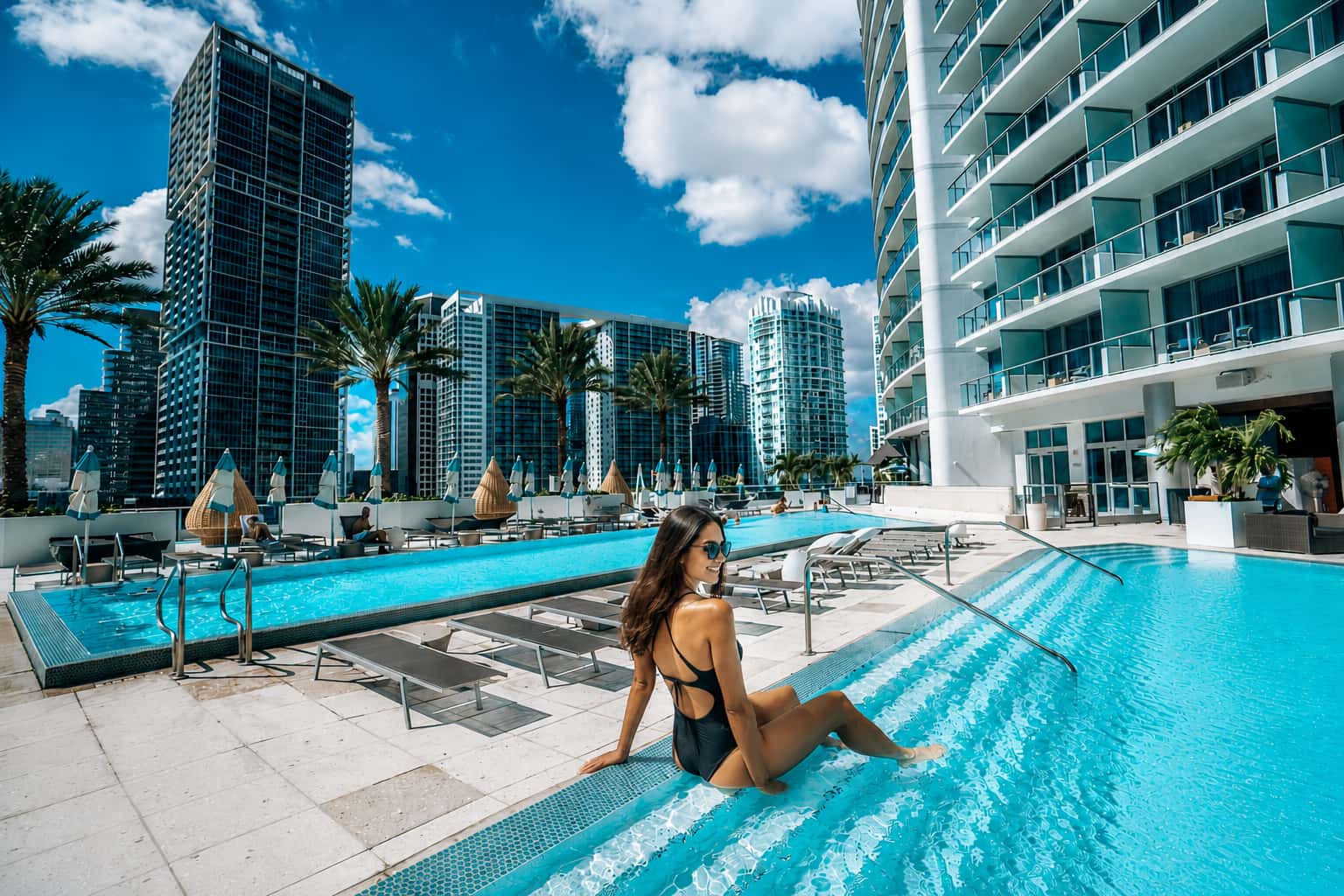
A waterfront lifestyle hotel where balconies, rooftop pools, and skyline views matter more than traditional luxury quietness.
Miami has no shortage of hotels selling sunshine, rooftop pools, and skyline views. Kimpton EPIC succeeds because the city feels physically woven into the stay. Water taxis drift beneath the balconies. Yachts idle beside the marina. Across the river, glass towers reflect sunlight back into the rooms by late afternoon. Most of the hotel’s social life unfolds high above the streets on a terrace that behaves almost like a suspended waterfront club.
Not insulated luxury. Not a quiet retreat. More a high-rise lifestyle hotel where elevation, movement, and visibility become part of the appeal.
Quick Decision Snapshot
| Category | Insight |
|---|---|
| Best For | Couples, short upscale Miami stays, lifestyle-focused travelers |
| Not Ideal For | Quiet-luxury seekers or highly privacy-oriented guests |
| What Defines It | Balconies, rooftop leisure deck, waterfront skyline immersion |
| Main Strength | Strong sense of place and outdoor social infrastructure |
| Main Tradeoff | Public energy occasionally reduces calmness |
| Smart Booking Move | Book a higher-floor balcony room facing the bay or river |
| Best Stay Length | 2 to 4 nights |
| Loyalty Angle | IHG elite status noticeably improves value |
| Atmosphere | Modern, energetic, outward-facing |
What Kind of Miami Hotel This Actually Is
Kimpton EPIC sits in a category Miami does particularly well: the upscale urban lifestyle hotel that borrows some resort DNA without fully becoming a resort.
The location immediately separates it from South Beach properties. You are not stepping into a beachfront fantasy here. The hotel rises from downtown Miami’s riverfront business district, surrounded by residential towers, bridges, marinas, and financial-sector high-rises. The setting feels more connected to yachts, rooftop dinners, and late-afternoon cocktails than beach loungers and sand.
- Travelers expecting a serene five-star retreat often focus on the hotel’s busier edges: valet traffic, nightlife spillover, elevator dependence, or occasional housekeeping inconsistency.
- Guests who arrive wanting skyline views, outdoor dining, marina energy, and a socially active Miami base usually leave far happier.
Compared with nearby competitors, the positioning becomes clearer.
- Four Seasons Hotel Miami feels calmer and more polished.
- EAST Miami leans more contemporary and tech-forward.
- W Miami pushes further into nightlife territory.
- Kimpton EPIC lands somewhere between those worlds: stylish but approachable, urban but leisure-oriented, polished but not overly formal.
Michelin’s hotel guide describes the property as modern and lively, which is probably the cleanest summary possible.
Arrival, First Impressions, and How the Property Flows
The arrival experience starts strong.
Cars sweep into a broad porte-cochère framed by tall columns and waterfront towers. Luxury SUVs, exotic rentals, rideshares, and valet staff create the kind of visual rhythm Miami hotels often rely on to establish immediate status. The marina nearby reinforces that impression. Few downtown hotels integrate yacht access this directly into the property identity.
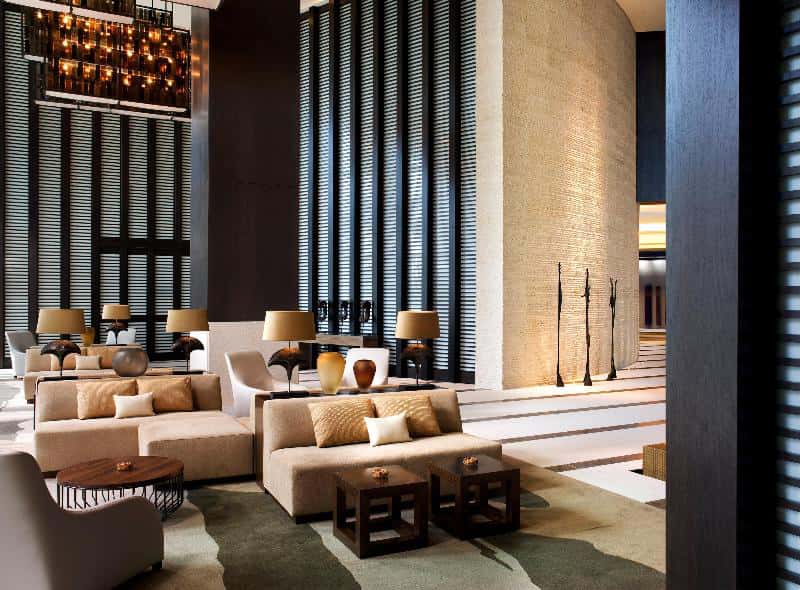
Inside, the lobby is dramatic without becoming theatrical. High ceilings, large glass walls, dark vertical accents, and clean stone flooring give the space scale and brightness. It feels efficient first, intimate second.
The building’s layout quickly reveals itself afterward. EPIC functions vertically. Much of the emotional life of the hotel is concentrated above ground level, especially around the sixteenth-floor leisure deck where the pools, Area 31 restaurant, terraces, and lounge activity merge into a single elevated social zone.
That organization works well for atmosphere and views. It also means the hotel rarely feels isolated from itself. Guests are constantly moving between elevators, restaurants, pools, balconies, and outdoor circulation areas.
Rooms, Balconies, and Why Views Matter So Much Here
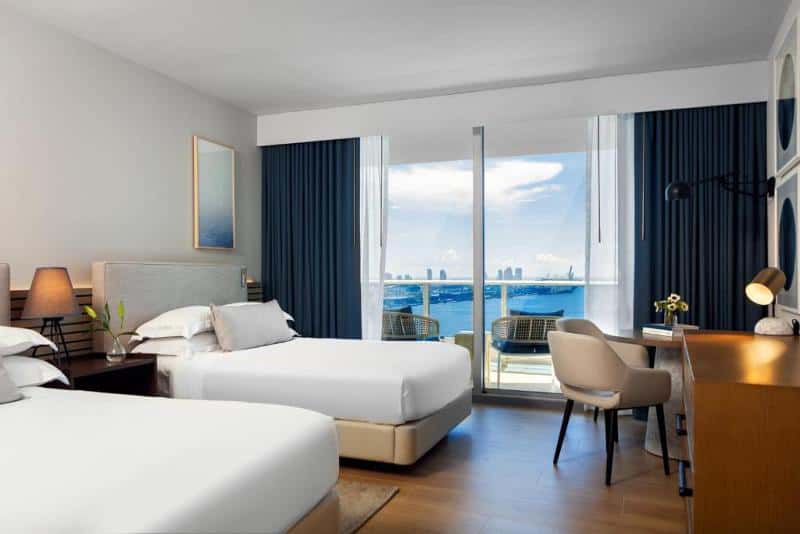
The rooms lean modern and understated rather than heavily decorative. Light woods, pale fabrics, oversized windows, and neutral tones keep attention pointed outward toward the city and water.
Most guests will remember the balconies more than the furniture, which is not criticism but the core design logic of the hotel.
Open the sliding doors and the experience changes immediately. Boats move through the Miami River below. Downtown towers reflect sunlight across the bay. Pools and terraces glow at sunset. Even standard balcony rooms gain emotional value from that exposure.
Without a balcony, the differentiation weakens considerably.
The Balcony Effect
Miami rewards outdoor access more than many cities because the climate allows the hotel itself to spill into the skyline. EPIC understands that well. Balconies here are large enough to actually use, not decorative ledges squeezed against glass towers.
Morning coffee works better outside. Evening drinks work better outside. Even brief pauses between plans feel more cinematic with the river and bay below.
Higher floors improve the effect substantially. Lower balcony rooms can feel more enclosed by neighboring towers.
Which Rooms Actually Make Sense
Entry-level rooms function adequately but are not the hotel’s strongest value proposition. The experience becomes more compelling once the room category includes meaningful water exposure and a balcony large enough to spend time on.
The sweet spot for most travelers is a higher-floor balcony room facing the river or bay.
Suites improve the experience further because the extra living space softens the tower-like feel of the building. They also work well for mixed work-and-leisure stays. Some include genuinely impressive corner exposures that make downtown Miami feel almost wrapped around the room.
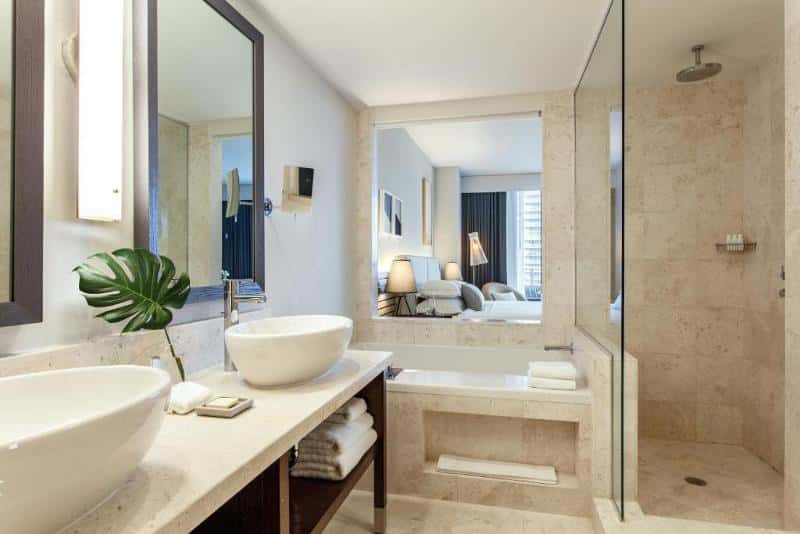
Bathrooms are stronger than expected across much of the inventory. Dual vanities, generous showers, bright lighting, and clean marble surfaces give them a more premium feeling than some of the sleeping areas themselves.
Noise, Exposure, and Floor Positioning
Guests staying closer to the leisure deck or restaurant activity occasionally mention nighttime noise, especially on weekends. Some balcony rooms also face directly into neighboring towers, which can reduce privacy and amplify the sense of urban closeness.
This is not a hotel where every room delivers the same emotional experience. The better rooms are meaningfully better.
Typical Room Positioning and Pricing Logic
| Room Type | Experience Difference | Typical Value Position |
|---|---|---|
| Entry Rooms | Comfortable but less immersive | Weakest value |
| Balcony Bay View Rooms | Strong Miami identity payoff | Best overall balance |
| Higher-Floor Premium Rooms | Better openness and skyline immersion | Worth upgrading for longer stays |
| Suites | Most spacious and emotionally complete | Strong for work/leisure stays |
The Rooftop Deck: The Real Center of the Experience
The sixteenth-floor pool terrace is where the hotel fully becomes itself.
Two rooftop pools stretch across a broad elevated deck surrounded by towers, palms, loungers, cabanas, and water views. The space feels less like a secluded resort pool and more like a suspended urban leisure platform floating above downtown Miami.
The visual impact is excellent. Sunlight reflects across the water and glass towers all afternoon. The skyline wraps around the deck. Guests move naturally between loungers, drinks, pool access, and terrace dining. By sunset, the entire floor develops a distinctly Miami rhythm that many competing downtown hotels struggle to create.
USA Today’s 10Best awards repeatedly recognized the rooftop pool complex, and the recognition makes sense once you see how central the terrace is to the property identity.
Still, travelers expecting a sprawling tropical resort pool should recalibrate slightly. The deck is active, social, and visibly urban. During peak weekends it can feel crowded. Tower shadows move across the space during parts of the day. Privacy is limited.
The hotel performs best when approached as an elevated city leisure experience, not a beach resort substitute.
Food, Nightlife Energy, and the Zuma Effect
Zuma changes the energy of the building.
Many hotel restaurants primarily serve guests. Zuma attracts Miami itself, affecting nearly every part of the property after dark. Valet demand rises, lobby traffic increases, elevators stay active longer, and the hotel takes on a stronger nightlife pulse.
For many travelers, that liveliness improves the stay. For others, it becomes the moment where the property feels more commercially social than quietly luxurious.
The restaurant itself remains one of downtown Miami’s strongest dining anchors. Its modern Japanese menu and waterfront positioning continue to draw both locals and visitors years after opening.
Area 31 serves a different purpose. It is less destination-driven but deeply integrated into the hotel experience. Breakfast flows into pool traffic. Evening wine hour feeds terrace activity. Outdoor seating ties the restaurant visually into the skyline and marina.
The terrace works particularly well in the morning when the building still feels calmer and the riverfront light softens the surrounding towers.
Location Intelligence: Who Benefits Most From Staying Here
EPIC works best for travelers who actually want to use downtown Miami.
The location is highly practical for:
- Brickell business meetings
- PortMiami departures
- short luxury weekends
- travelers splitting time between downtown and Miami Beach.
Miami International Airport is usually about 15 to 20 minutes away in normal traffic. PortMiami is extremely close, making the hotel especially useful for pre-cruise or post-cruise stays. Rideshares are easy. Walkability around Brickell and the riverfront is strong by Miami standards.
South Beach is accessible but not immediate. Guests primarily interested in beach culture may prefer staying directly on Miami Beach instead of commuting back and forth.
Service, Operations, and Where Friction Appears
Service at EPIC generally feels warm and approachable in the way Kimpton properties often do. Staff interactions rarely feel robotic or overly scripted. The hotel’s challenges tend to emerge from scale and activity levels more than attitude problems.
Housekeeping feedback across review platforms shows occasional unevenness. Some guests describe spotless rooms and attentive service. Others mention delayed refreshes or less precise upkeep than expected for the price level. Similar patterns appear around valet timing during busy periods.
Most of the friction feels manageable until rates climb into Miami luxury-hotel territory. It feels like a heavily used lifestyle property occasionally showing strain during peak occupancy.
The hotel still maintains strong aggregate guest scores across Tripadvisor, Booking.com, and Google. Most guests clearly enjoy the experience overall. The friction points simply become more visible once pricing enters higher luxury territory.
Pricing, Fees, and Whether the Value Holds Up
Views, balconies, and higher floors cost more. The hotel understands exactly which parts of the experience generate emotional value and prices them accordingly.
The daily amenity fee currently includes:
- high-speed WiFi,
- fitness center access,
- PressReader access,
- poolside refreshments,
- discounts at Area 31,
- and spa or fitness credits.
Unlike many urban hotel fees, there is at least some usable value built into it. Whether guests personally use those inclusions is another question.
Valet pricing is more difficult to justify emotionally. Overnight parking pricing now approaches levels that even frequent luxury travelers may find significant, especially once taxes are added.
IHG One Rewards status noticeably improves the equation. Elite benefits like late checkout, breakfast options, credits, and bonus perks reduce some of the friction built into the overall cost structure.
Typical Pricing Structure and Cost Layers
| Cost Area | Reality |
|---|---|
| Room Pricing | Strongly driven by views and floor height |
| Amenity Fee | Contains legitimate inclusions but still adds up quickly |
| Valet Parking | Relatively expensive even for upscale downtown Miami |
| Food & Beverage | Premium lifestyle-hotel pricing |
| Loyalty Benefits | Meaningfully improve overall value |
How the Hotel Prices Itself Across Typical Demand Periods
| Room Type | Winter Weekday | Summer Weekday | Summer Weekend | Fall Weekday |
|---|---|---|---|---|
| Standard Queen | ~$229 | ~$219 | ~$339 | ~$419 |
| Deluxe King | ~$259 | ~$249 | ~$369 | ~$449 |
| Deluxe Two Queens | ~$429 | ~$419 | ~$539 | ~$619 |
| Terrace King | ~$479 | ~$469 | ~$589 | ~$669 |
| One Bedroom Suite | ~$529 | ~$519 | ~$639 | ~$719 |
Pricing based primarily on flexible member and public rates observed on the hotel’s official website in mid-May 2026, cross-checked against Booking.com for market consistency. Pricing fluctuates heavily based on cruise traffic, events, convention demand, and seasonal occupancy patterns.
When the Hotel Feels Worth the Premium
The hotel feels strongest financially when guests actively use the property itself.
Travelers who spend time on the terrace, at the pools, on balconies, at Zuma, or around the marina, usually extract far more emotional value from the stay.
Guests treating the hotel mainly as a sleeping base often notice the pricing more sharply.
Who This Hotel Is Best For
Kimpton EPIC works particularly well for:
- couples
- lifestyle-focused travelers
- short upscale Miami stays
- yacht-oriented visitors
- first-time Miami travelers
- business travelers who prefer social energy over corporate stiffness.
The hotel also handles mixed work-and-leisure trips better than many Miami properties because the suites, dining infrastructure, and downtown positioning support both.
Families can absolutely stay here, especially in larger suites, but the atmosphere remains adult-leaning. Kimpton EPIC is not a child-focused resort environment.
The pet-friendly policy deserves mention because it feels genuinely integrated into the property identity instead of added as a marketing feature. Pets stay free of charge with no breed restrictions, which remains unusually generous for an upscale Miami hotel.
Who Should Probably Stay Somewhere Else
Travelers prioritizing:
- extreme quiet
- highly personalized luxury service
- secluded resort environments
- beach-first vacations
will likely align better with other Miami properties.
Final Verdict
Kimpton EPIC Hotel Miami understands something many upscale urban hotels still struggle with: travelers do not come to Miami purely for accommodation. They come for movement, light, water, visibility, and energy. EPIC works best when guests lean into that version of Miami instead of trying to escape it.
For travelers seeking a polished, highly visual, distinctly urban Miami experience, Kimpton EPIC remains one of downtown’s most compelling options. The hotel makes the most sense late in the day, from a high balcony, when the river traffic slows and the skyline starts glowing across the water.
Frequently Asked Questions
Is Kimpton EPIC good for first-time Miami visitors?
Yes, especially for travelers wanting a downtown Miami experience with strong access to Brickell, PortMiami, and waterfront dining.
Which rooms are worth booking?
Higher-floor balcony rooms with bay or river views deliver the strongest overall experience and justify the premium best.
Are the pools actually resort-quality?
They are visually impressive and socially active, though more urban-lifestyle oriented than true resort pools.
Is the hotel noisy?
Some rooms closer to the rooftop deck or restaurant areas may experience more nightlife-related sound, particularly on weekends.
Is the amenity fee worth it?
It depends on usage. Guests using the pools, fitness center, dining credits, and included services will likely feel better about the fee.
How practical is the location for cruises?
Very practical. PortMiami is nearby, making the hotel a strong option for pre- or post-cruise stays.
Does IHG status make a difference here?
Yes. Elite benefits like late checkout, breakfast options, and credits improve value noticeably.
Is the hotel family-friendly?
Moderately. Suites and pool access help, though the property overall feels more adult-oriented than family-resort focused.
Is Zuma worth visiting even if you are not staying here?
Yes. Zuma remains one of downtown Miami’s most recognized restaurant destinations.
How far is the hotel from Miami International Airport?
Typically around 15 to 20 minutes by car in standard traffic conditions.