
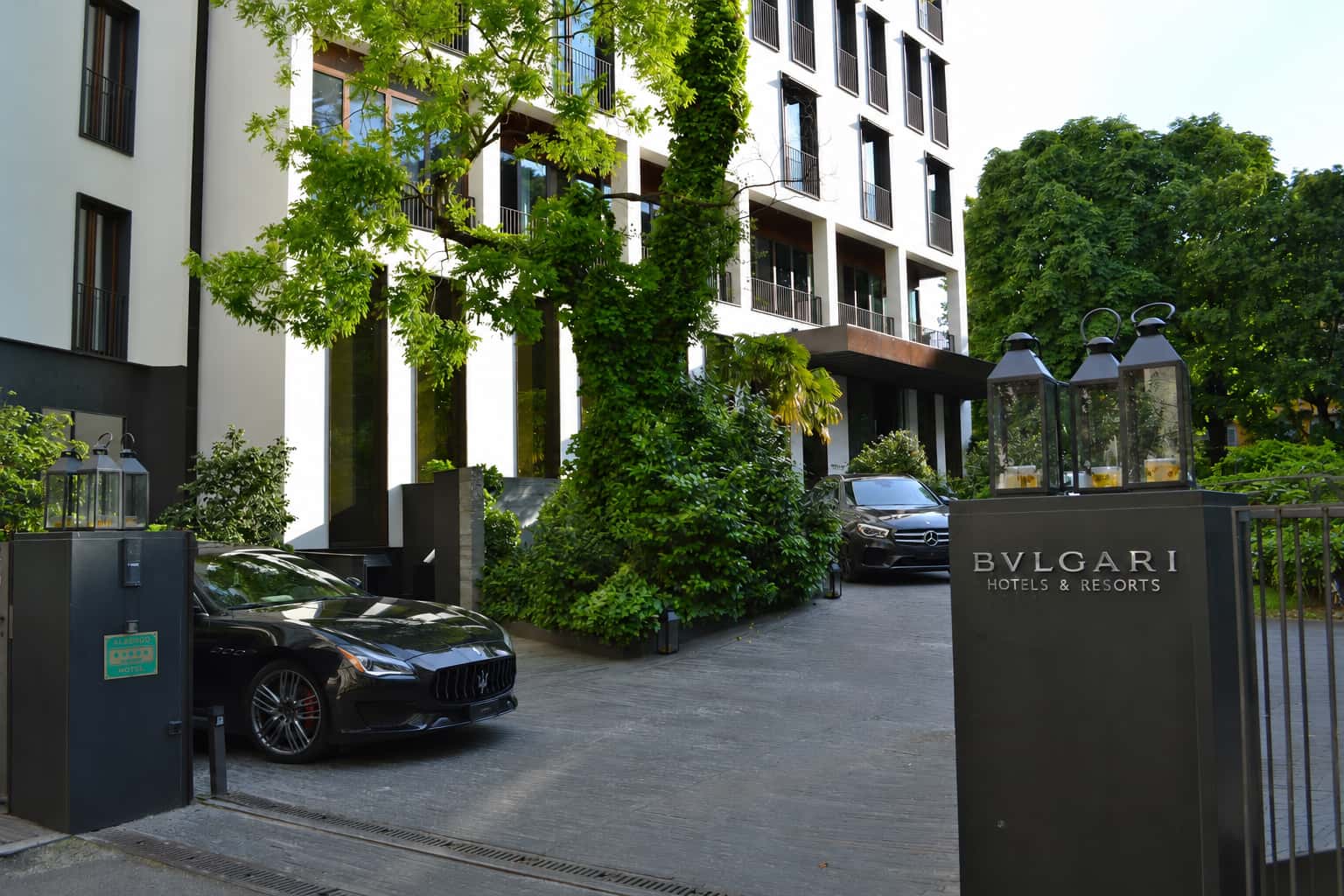
From room selection to seasonal pricing and spa quality, our review explains where Bvlgari Hotel Milano excels and where expectations matter.
Luxury hotels in Milan generally compete through one of three approaches. Some lean into historic grandeur, filling restored palaces with ornate interiors and long-established traditions. Others focus on contemporary urban sophistication, balancing business travel with lifestyle appeal.
Bvlgari Hotel Milano takes a different route altogether. Hidden behind mature gardens on a quiet street in Brera, it aims to feel less like a hotel and more like a secluded Milanese residence whose owner happens to have impeccable taste and unlimited resources.
That identity has made Bvlgari Hotel Milano one of the city's defining luxury addresses since opening in 2004 as the first property in what has since become the global Bvlgari Hotels & Resorts collection. Designed by Antonio Citterio and Patricia Viel of ACPV Architects, the hotel established many of the principles that continue to shape the brand today: restrained contemporary design, exceptional materials, intimate scale, and privacy ahead of spectacle.
Recognition with Two MICHELIN Keys and a Forbes Travel Guide Four-Star rating reinforces its standing among Milan's leading luxury hotels.
Nightly rates frequently rank among the highest in Milan, placing Bvlgari alongside established competitors such as Four Seasons Milano, Mandarin Oriental Milan, and Portrait Milano. Travelers therefore expect more than beautiful architecture and a prestigious name. Service, dining, housekeeping, and operational details carry far greater weight once rates regularly move well above €1,500 per night and can climb higher during busy fashion and business periods.
Direct pricing research, operational analysis, independent observation, and guest feedback reveal a property whose greatest strengths are unmistakable but whose execution does not always match its ambitions.
Guest feedback consistently highlights genuinely memorable stays built around the hotel's remarkable garden, discreet atmosphere, attentive staff, and calm setting within walking distance of Milan's Fashion District and Teatro alla Scala. Others report service inconsistencies, uneven dining experiences, housekeeping oversights, or value concerns that become difficult to overlook at this price level.
At A Glance
| Attribute | Details |
|---|---|
| Hotel | Bvlgari Hotel Milano |
| Location | Brera, Milan, Italy |
| Address | Via Privata Fratelli Gabba 7B, 20121 Milan |
| Official Category | Five-star luxury hotel |
| Brand | Bvlgari Hotels & Resorts |
| Best Understood As | A contemporary luxury urban retreat centered on privacy, architecture, and one of Milan's largest private hotel gardens |
| Building Context | Opened in 2004 as the inaugural Bvlgari hotel, transforming a historic Milanese property into the blueprint for the brand's hospitality identity |
| Rooms & Suites | 61 guestrooms and suites |
| Room Size Range | Approximately 35–100 m² |
| Strongest Feature | A secluded 4,000 m² landscaped garden in the heart of Brera |
| Main Limitation | Premium pricing leaves little margin for service or operational inconsistency |
| Best For | Couples, design enthusiasts, repeat luxury travelers, fashion visitors, and guests seeking privacy over spectacle |
| Less Suitable For | Travelers prioritizing maximum room size, family-focused facilities, loyalty benefits, or consistently polished service at every touchpoint |
| Dining | Pizza Bar – Pier Daniele Seu, The Bvlgari Bar, private dining, garden view |
| Wellness | Spa, 25-meter indoor pool, fitness center, salon |
| Parking | Private valet parking (€50 per day) |
| Pet Policy | Pets welcome without an additional nightly fee; dedicated Bvlgari Pet amenities available |
| Loyalty | No proprietary loyalty program; eligible bookings available through American Express Fine Hotels + Resorts |
| Recognitions | Two MICHELIN Keys; Forbes Travel Guide Four-Star |
| Editorial Verdict | One of Milan's most distinctive luxury hotels for travelers who value privacy and design, provided expectations around service consistency and value remain realistic. |
Why Stay at Bvlgari Hotel Milano?
The moment travelers pass through Bvlgari Hotel Milano’s discreet entrance, the city begins to fade into the background despite remaining only minutes from some of its busiest streets.
Rather than occupying Piazza della Repubblica or overlooking one of the city's famous squares, the hotel sits on a quiet private street bordering Brera and the Fashion District. Teatro alla Scala, Via Montenapoleone, Galleria Vittorio Emanuele II, and Castello Sforzesco all remain comfortably walkable.
- The Garden. Covering roughly 4,000 square meters, it functions less as decorative landscaping and more as an outdoor extension of the hotel itself. Mature trees, layered planting, and carefully divided seating areas soften the transition between restaurant terraces, lounge spaces, and guest circulation. Few central Milan hotels possess enough outdoor space to create that sense of retreat without leaving the historic center.
- Design. Antonio Citterio designed virtually every aspect of the property, from large structural elements to furniture, lighting, and many of the smaller interior details. Instead of relying on decorative references to Italian luxury, the hotel embraces restrained geometry, rich natural materials, and carefully controlled proportions. Zimbabwe black granite, Vicenza stone, Turkish Afyon marble, dark oak, bronze accents, and custom furnishings establish a coherent visual language that later became synonymous with Bvlgari Hotels worldwide.
- Scale. With only 61 rooms and suites, the property remains dramatically smaller than many direct competitors. Smaller inventory allows quieter public areas, more personalized service when operations run smoothly, and a greater sense of exclusivity throughout the day. Traveler feedback consistently reflects appreciation for that intimacy, particularly among couples and repeat luxury travelers who prefer discretion over social visibility.
Premium pricing raises expectations well beyond architecture. Guest sentiment therefore concentrates on operational details: attentive staff, polished dining, responsive concierge service, and meticulous housekeeping. Praise outweighs criticism, but weaker reviews consistently point toward uneven execution rather than structural flaws.
Critical reviews focus on concierge lapses, inconsistent restaurant execution, housekeeping oversights, spa treatments that fail to justify their cost, or staff interactions that feel less engaged than expected from a hotel carrying the Bvlgari name.
Awards and reputation establish expectations. Daily operations determine whether guests leave believing the hotel justified its rates. Travelers who connect with the property's understated philosophy often describe Bvlgari Hotel Milano as one of Europe's most relaxing city hotels. Guests arriving primarily because of the brand name or headline room rate sometimes expect a more theatrical luxury product and leave questioning whether every aspect of the stay justified the investment.
Bvlgari does not attempt to impress through oversized lobbies, lavish historical interiors, or an endless list of facilities. Calm surroundings, sophisticated design, privacy, and architectural coherence remain the hotel's defining strengths. Guests who appreciate those qualities usually discover exactly what they hoped to find.
Rooms and Suites
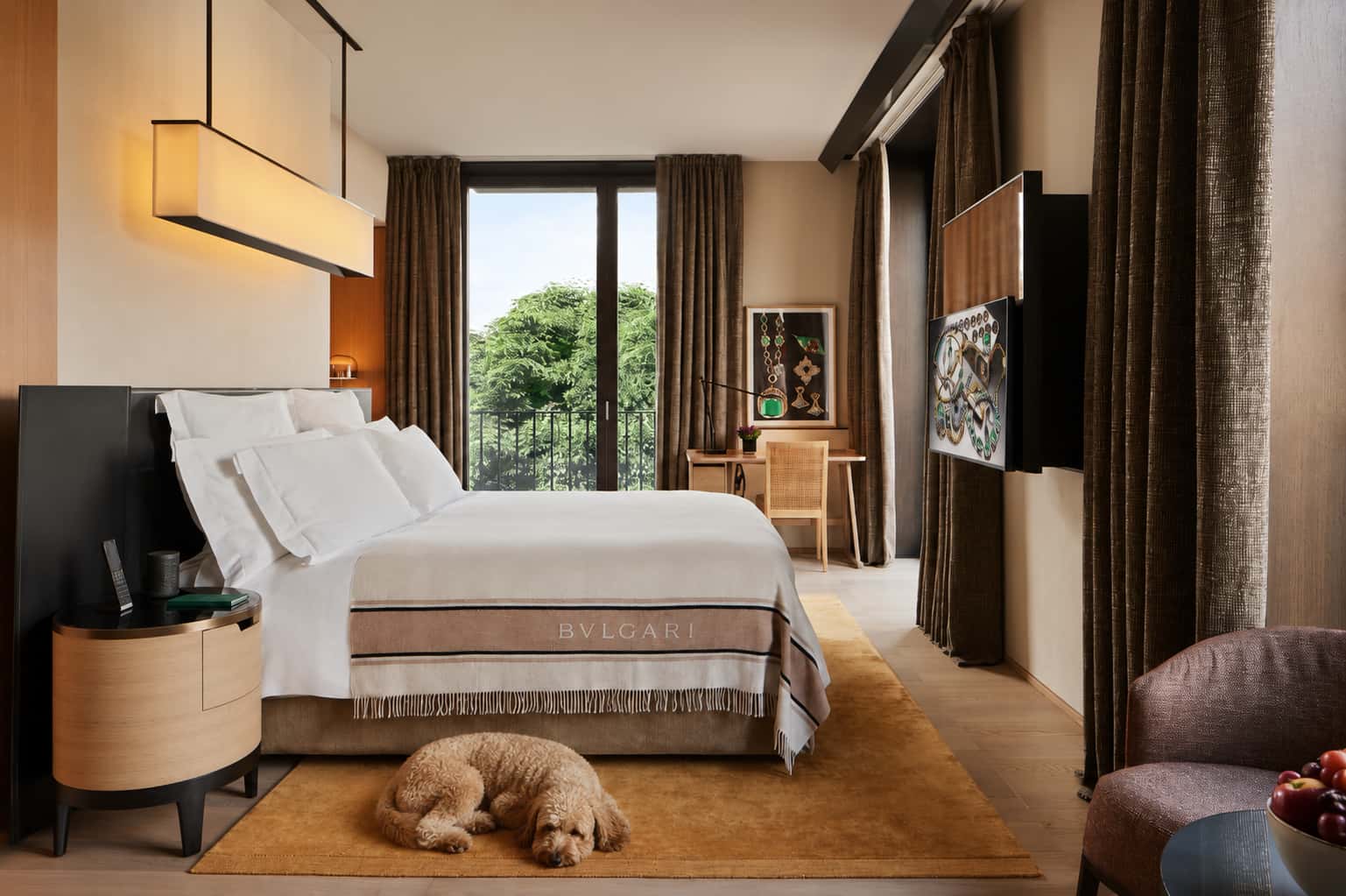
Room selection matters more at Bvlgari Hotel Milano than at many luxury competitors because differences between categories extend beyond floor area alone. Layout, views, outdoor space, included services, and relative value all change as guests move through the hierarchy, making upgrades easier to justify for certain travelers than others. The following isn't a full list of the hotel's accommodations; it covers the core room categories.
Superior Rooms
Superior Rooms serve as the hotel's entry point at approximately 35 m², making them comfortably sized by central Milan standards but not especially generous relative to the rates charged. Contemporary furnishings, high-quality materials, marble bathrooms, and large windows maintain the property's architectural identity. However, guest feedback occasionally describes these rooms as smaller than expected given the nightly price.
Couples planning to spend most of their day exploring Milan may find the category perfectly adequate, particularly during lower-demand periods when entry rates become more attractive. Guests accustomed to palace hotels or oversized international luxury brands may find the entry category smaller than the headline rates suggest.
Deluxe Rooms
Deluxe Rooms of around 40 m² introduce a noticeable improvement without a dramatic increase in price. Depending on configuration, guests benefit from additional living space, improved layouts, or twin-bed options better suited to families and friends traveling together.
Pricing research consistently showed Deluxe Rooms representing one of the strongest value propositions within the hotel's hierarchy. Upgrades from Superior often required only a modest premium on ordinary travel dates while delivering greater long-term comfort during multi-night stays.
Premium Rooms
Premium Rooms elevate the residential character that defines the property. Measuring around 45 m², they offer more generous circulation, brighter interiors, and, in many cases, attractive views overlooking the garden or surrounding greenery.
Guests intending to spend meaningful time inside the hotel should consider this category seriously. Additional space becomes particularly valuable for longer visits, fashion-week itineraries, or travelers balancing sightseeing with remote work and leisurely afternoons enjoying the property.
Junior Suites
Junior Suites begin at approximately 55–65 m², transforming the accommodation from an upscale guest room into something much closer to a private apartment. Separate seating areas, improved proportions, and additional privacy create a noticeably different rhythm to the stay.
Garden View Junior Suites often represent the sweet spot for travelers seeking a special occasion without moving into the highest-priced accommodations. Direct booking benefits on selected flexible rates may also include additional privileges such as transfers and butler service, although these advantages depend on the specific rate plan rather than the room category alone.
Superior Suite
The Superior One-Bedroom Suite, measuring approximately 70 m², occupies the top of the standard accommodation hierarchy. Spacious living areas, refined contemporary interiors, and direct engagement with the surrounding greenery reinforce the residential philosophy that defines the hotel.
Garden
The garden remains one of central Milan's largest private hotel gardens. Landscape architect Sophie Agata Ambroise avoided creating a single open park. Instead, she divided the grounds into interconnected outdoor "rooms" separated by mature trees, planting, and gentle changes in elevation. Paths reveal new perspectives gradually, encouraging guests to linger rather than simply pass through.
Returning from nearby Via Montenapoleone, the transition is immediate. Traffic fades behind dense planting, replaced by conversation, birdsong, and the subdued rhythm of the terrace. Numerous guest reviews identify the garden as the hotel's defining feature, describing it as an unexpected sanctuary hidden within one of Italy's busiest fashion capitals.
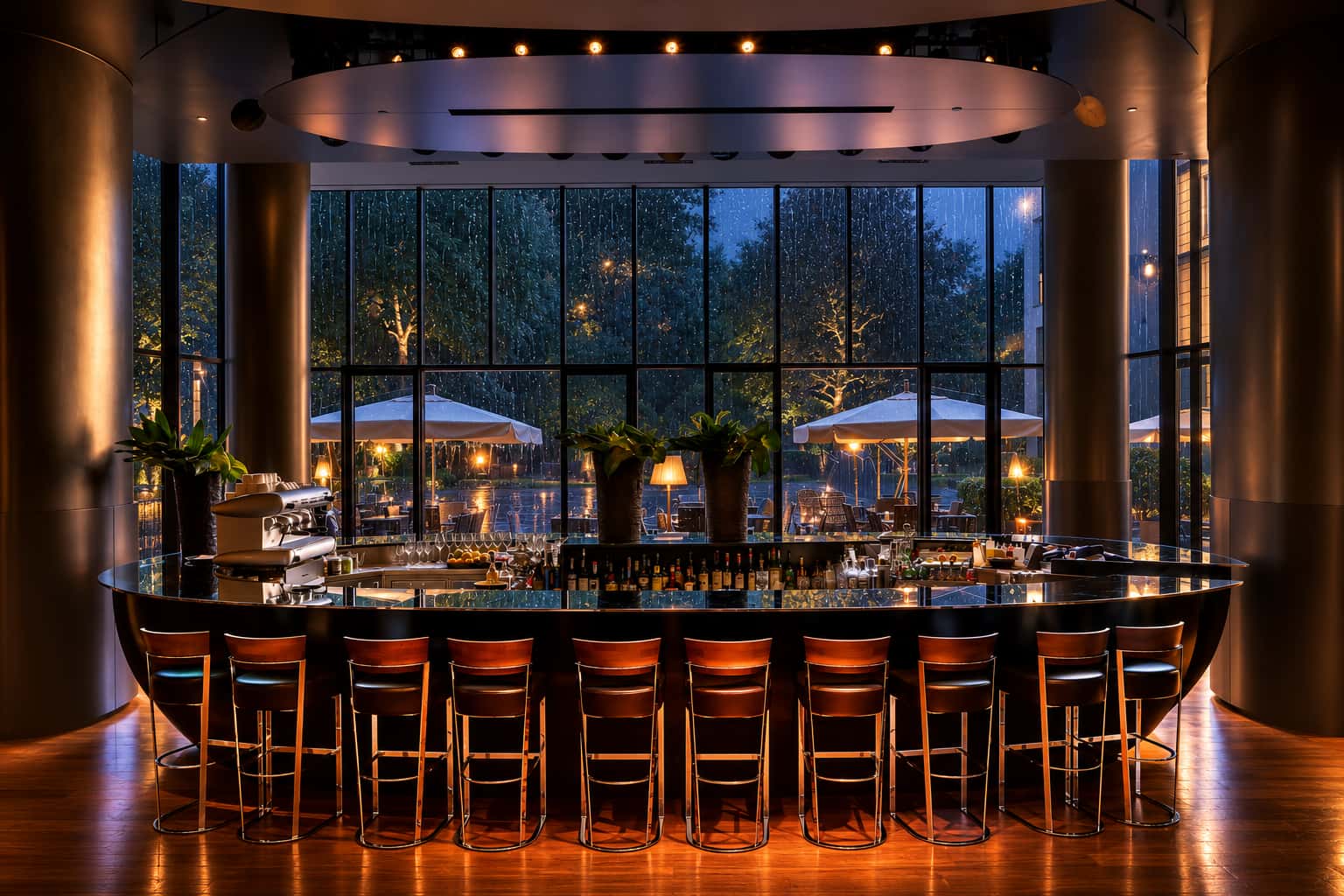
The Bvlgari Bar extends naturally onto the terrace. Floor-to-ceiling glazing reduces the separation between indoor and outdoor environments, allowing daylight and vegetation to shape much of the hotel's character throughout the year.
Public Spaces
Reception occupies a modest footprint without the theatrical arrival sequence found at Four Seasons Milano or Park Hyatt Milan. Corridors remain quiet, seating areas intentionally limited, and the overall layout prioritizes intimacy over spectacle.
That philosophy works exceptionally well for travelers seeking discretion. Large conferences, wedding groups, and constant public activity rarely dominate the atmosphere. Business meetings, fashion-industry conversations, and relaxed afternoon drinks coexist without overwhelming one another.
Intimacy comes with compromises. Some guests mention limited lounge seating outside the restaurant and bar, particularly during busy periods. Others describe the interiors as darker than expected, especially at breakfast, where subdued lighting occasionally reduces the sense of energy compared with brighter competitors.
Service
Luxury hotels at this price level are judged less by individual acts of hospitality than by hundreds of small interactions accumulated across an entire stay. Bvlgari Hotel Milano demonstrates exactly why operational consistency often matters more than architectural excellence.
Positive guest sentiment remains dominated by staff. Booking.com scores service at 9.5 out of 10. Numerous reviews praise genuinely attentive employees who remember preferences, respond quickly to requests, and create an understated style of hospitality that matches the hotel's personality. Several guests specifically highlighted warm welcomes, efficient problem solving, thoughtful room preparation, personalized amenities, and memorable assistance from restaurant teams and concierges.
Several long-form reviews reinforce the same impression. Guests describe receiving personalized pillow selections, welcome champagne, carefully prepared rooms, thoughtful anniversary touches, and proactive assistance arranging transportation, shopping, or cultural activities. Repeat visitors frequently mention returning because they trust the hotel to deliver a calm, discreet stay rather than an overly formal luxury performance.
Lower-rated stays rarely describe major failures. Instead, they point toward inconsistency between employees, departments, and individual interactions.
- Concierge communication occasionally breaks down.
- Restaurant reservations have reportedly been forgotten.
- Lost-property handling receives criticism from several travelers.
- Housekeeping errors appear infrequently but include misplaced belongings, discarded receipts, or insufficient attention to guests' personal items.
A recurring theme across lower-rated reviews involves guests feeling overlooked. Greeting rituals sometimes appear inconsistent. Dining staff occasionally become task-focused instead of guest-focused. A few visitors describe reception or restaurant employees responding politely but without the warmth expected at this level of luxury.
Independent observations support aspects of that interpretation. During one stay:
- Footmen repeatedly failed to acknowledge guests entering and leaving the hotel despite standing nearby.
- Restaurant staff occasionally walked through the dining room concentrating on operational duties rather than scanning tables for potential guest needs.
None of these moments would seem remarkable in an ordinary hotel. At rates exceeding €3,000 per night during busy periods, however, subtle lapses become far more noticeable.
One example illustrates that distinction particularly well. A doorman started a Lamborghini directly beside departing pedestrians without offering guidance or creating space for guests to pass comfortably. Operationally, nothing serious occurred. Emotionally, the interaction conveyed priority for the vehicle rather than the guest.
Similar observations appear in guest feedback describing concierge follow-up, restaurant communication, or housekeeping attention to personal belongings. Each incident remains relatively minor in isolation. Together, they suggest occasional breaks in service psychology rather than systemic operational failure.
Perspective Matters
The overwhelming majority of guests leave highly satisfied. Platform scores remain excellent across Booking.com, Google, and TripAdvisor, and positive reviews substantially outnumber negative ones. Complaints rarely concern catastrophic service failures. Instead, expectations rise alongside pricing, meaning details that might pass unnoticed elsewhere become meaningful differentiators here.
Guests choosing Bvlgari primarily for architecture, privacy, and quiet refinement are likely to overlook isolated inconsistencies. Travelers expecting flawless execution comparable to the world's very best palace hotels may evaluate the same interactions more critically.
Dining, Breakfast, and Spa
Dining remains central to the Bvlgari proposition, although the culinary offering is temporarily evolving. Il Ristorante – Niko Romito, long regarded as the property's flagship fine dining venue, is temporarily closed. Being reimagined as da Niko, a new restaurant concept is expected to open following the renovation. During this period, guests are directed toward The Bvlgari Bar and the seasonal Pizza Bar – Pier Daniele Seu, both overlooking the hotel's private garden.
The Bvlgari Bar
A dramatic oval black-resin bar anchors the double-height space, while floor-to-ceiling glass walls blur the boundary between the lounge and the garden. Breakfast is served here around the clock alongside an all-day dining menu, afternoon tea, aperitivo from 6:00 pm to 9:00 pm, and evening cocktails until 1:00 am. Unlike many luxury hotel bars that primarily cater to overnight guests, this one also attracts Milan residents, giving the space a livelier rhythm than is often found in destination hotels.
Guest feedback aligns with that observation. Restaurant and bar staff are frequently praised for their attentiveness, and many visitors describe breakfast as one of the stronger parts of the stay. Opinions become more divided over value. Lower-rated reviews occasionally mention breakfasts that feel underwhelming for the room rate, limited variety, or lighting that remains quite subdued during the morning.
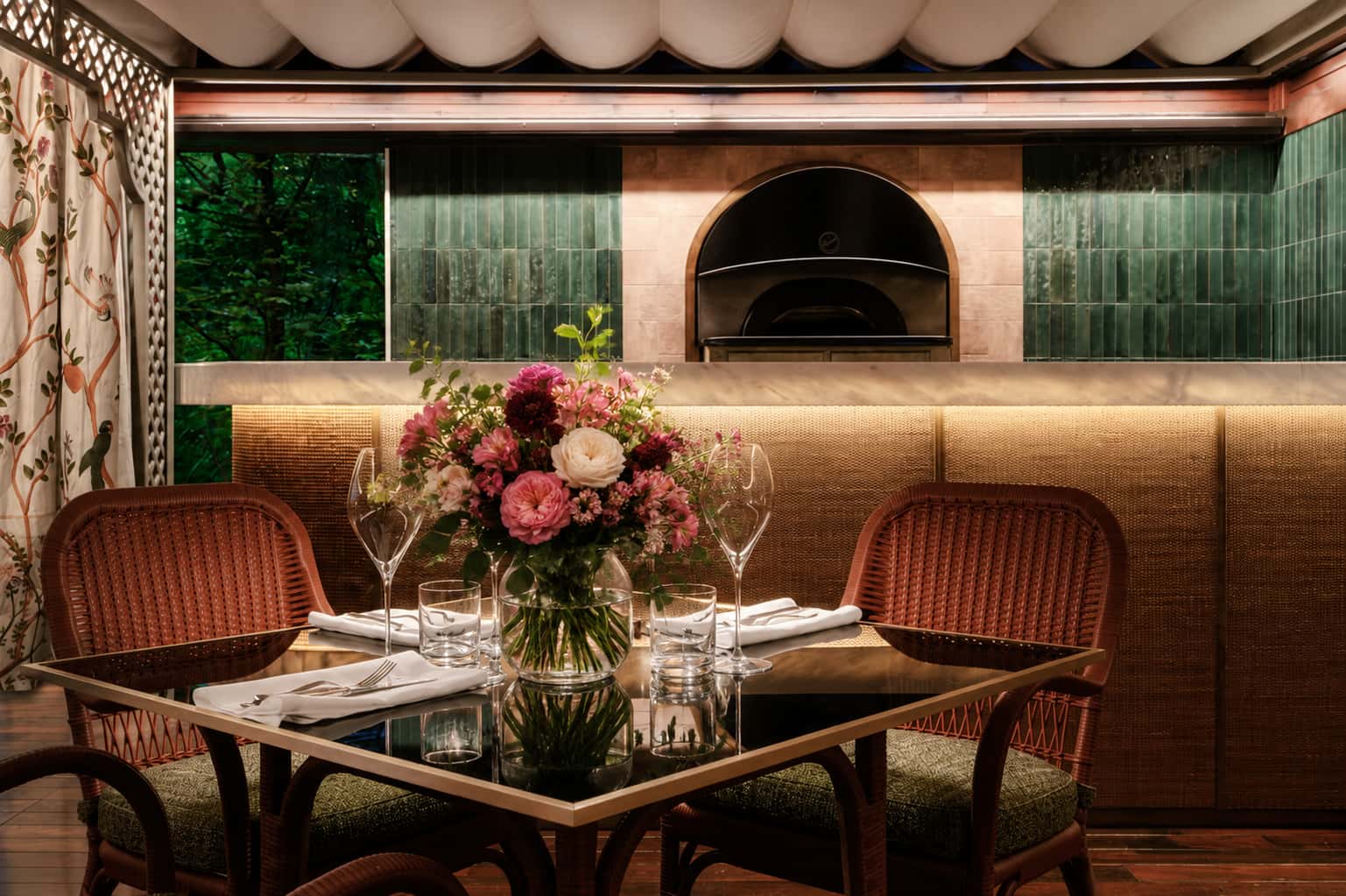
Pizza Bar – Pier Daniele Seu
A newer addition broadens the dining offer. Pizza Bar – Pier Daniele Seu presents a contemporary interpretation of Italian pizza. It’s developed with Roman pizzaiolo Pier Daniele Seu, whose restaurants have earned recognition among Italy's leading modern pizzerias.
His signature dough undergoes approximately 30 hours of controlled fermentation before being paired with carefully sourced Italian ingredients. Alongside refined takes on classics such as Margherita DOP, the menu introduces more inventive seasonal combinations, supported by Franciacorta wines from Bellavista and cocktails created specifically for the venue.
Conceived as a more relaxed counterpart to the main restaurant, it delivers a distinctly Milanese social dining style without abandoning the polished character associated with the Bvlgari brand.
Wellness Facilities
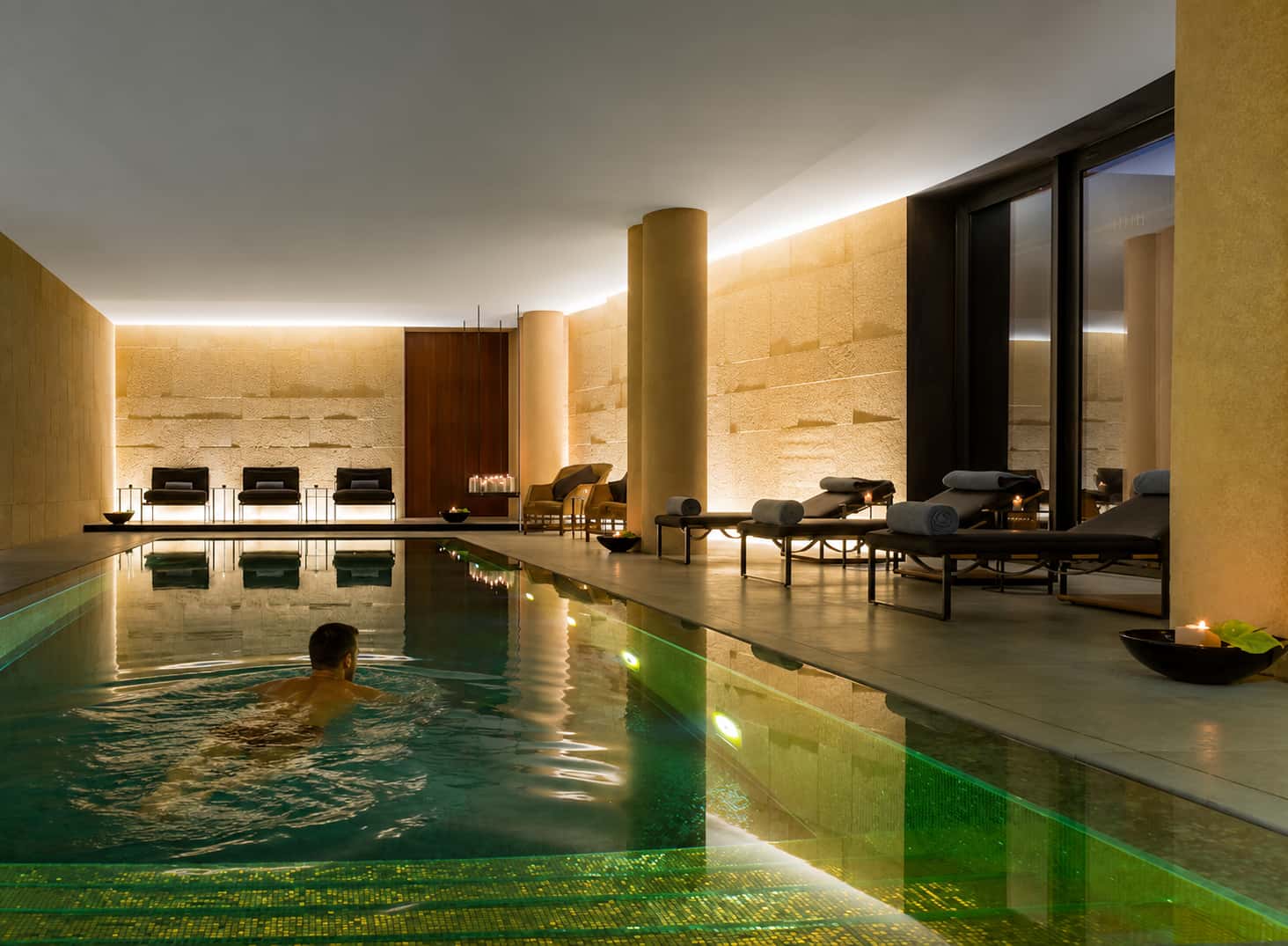
The Bvlgari Spa occupies a substantial portion of the lower level and centers around a 25-meter indoor swimming pool finished in Vicenza stone and Turkish Afyon white marble. Additional facilities include treatment rooms, saunas, steam rooms, relaxation spaces, a Technogym-equipped fitness center, hair salon, and curated wellness journeys. A private membership program also gives local residents access, contributing to an atmosphere that feels integrated into Milan's luxury lifestyle rather than reserved exclusively for hotel guests.
Unlike the dining program, the spa attracts remarkably consistent praise across review platforms. Guests regularly highlight its tranquil environment, generous proportions, and meticulous maintenance, making it one of the property's most dependable strengths. Travelers visiting Milan for shopping, business, or fashion events often value the ability to retreat into a genuinely quiet wellness space without leaving the city center.
Treatments
Treatment quality generates more varied reactions. One independently observed facial demonstrated the gap that occasionally appears between impressive facilities and operational execution. The consultation proved minimal, skin analysis remained superficial, product explanations were largely absent, and much of the session focused on repetitive massage instead of individualized skincare. Communication also became challenging because of limited English throughout parts of the treatment.
A €240 facial invites expectations of deeper consultation and greater personalization. Comparable luxury spas often begin with detailed discussions covering skin condition, desired outcomes, sensitivities, and treatment objectives before selecting products accordingly.
Guests primarily interested in using the pool, relaxation facilities, and fitness center are unlikely to leave disappointed. Travelers booking premium treatments should arrive expecting elegant surroundings first and individualized expertise second.
Location
Brera remains one of Milan's most desirable neighborhoods. Fashion boutiques, independent galleries, historic streets, and refined restaurants coexist without the intensity found around Piazza del Duomo.
Bvlgari Hotel Milano occupies one of the district's quietest addresses on Via Privata Fratelli Gabba, allowing guests to reach Milan's major attractions on foot without sacrificing privacy.
Via Montenapoleone lies roughly five minutes away. Teatro alla Scala, Galleria Vittorio Emanuele II, Castello Sforzesco, and the Pinacoteca di Brera all fall within comfortable walking distance. Luxury shopping, museums, and business appointments can therefore be combined without relying heavily on taxis.
Milan Linate Airport sits approximately 7.5 to 8.5 kilometers away, with typical taxi journeys taking around 20 minutes depending on traffic. Milan Malpensa Airport requires approximately 40 to 50 minutes by car, making the hotel practical for both short business visits and longer international stays.
Despite its central position, the property rarely feels surrounded by the city. Mature landscaping, private access, and thoughtful orientation create an unusual degree of separation from Milan's everyday activity.
Pricing and Value
Bvlgari Hotel Milano operates with a high public rate floor, but its pricing is not governed by a simple low-, shoulder- and high-season curve. The sampled dates reveal three distinct regimes:
- stable pricing on ordinary November and January weekdays
- a higher September rate band without visible inventory pressure
- sharply compressed pricing on a late-September Friday.
Official flexible rates for November 10, 2026 and January 19, 2027 were identical across every sampled category. Eleven room types remained available, with no minimum stay, deposit or restrictive cancellation policy visible.
September 29 followed the same category ladder but added exactly €800 to every sampled rate. Inventory remained broad and cancellation was still permitted until the day before arrival, indicating a deliberate high-season rate band rather than compression.
September 25 (Friday) behaved very differently. Rates increased dramatically. Only 5 room types remained on the official website, the Junior Suite and Superior Suite were unavailable, and the rate required full tax-inclusive payment around 30 days before arrival. Booking.com showed even narrower inventory, offering only Superior, Deluxe and Premium.
The evidence therefore supports three practical pricing levels:
| Pricing regime for 2 adults | Sampled date | Superior Room | Premium Room | Junior Suite Garden | Booking conditions |
|---|---|---|---|---|---|
| Ordinary non-compression | Nov 10, 2026 / Jan 19, 2027 | €1,600 | €1,850 | €2,800 | Cancellation until one day before arrival; no stated prepayment |
| High season without compression | Sep 29, 2026 | €2,400 | €2,650 | €3,600 | Broad availability; cancellation until one day before arrival |
| Compressed demand | Sep 25, 2026 | €3,400 | €3,850 | €4,650 | Restricted inventory; approximately 30-day cancellation and prepayment |
Official prices are quoted before tax. The booking conditions indicate 10% VAT plus a city tax of €12 per adult per night. For two adults, the €1,600 entry rate therefore produces a tax-inclusive total of €1,784, while a €3,400 compressed-period Superior Room reaches €3,764.
Breakfast was not listed among the standard direct-rate benefits on any sampled date and should be treated as excluded unless it appears in the final booking summary. Booking.com offered breakfast-inclusive options at roughly US$75 to US$76 more for two adults, suggesting a supplement of approximately US$38 per person.
The pricing structure described above makes Premium proportionally more attractive during normal high season. The upgrade delivers a 45 to 50 sqm room for a relatively controlled premium over the entry categories. Its value becomes less automatic during compression. On September 25, Premium cost €370 more than Deluxe rather than the usual €170.
Compression Risk
The September evidence shows that Bvlgari does not rely on one consistent compression mechanism. It can raise rates, close selected room types, withdraw suites from online travel agency channels and replace short cancellation terms with advance payment requirements.
September 25 and September 29 were only four days apart, yet the official Superior rate differed by €1,000. Premium differed by €1,200, the 65 sqm Junior Suite by €1,550, and five room types disappeared from the booking engine.
Compare individual dates rather than treat an entire month as uniformly expensive. Moving a late-September stay by several days may materially improve price, flexibility, and category access.
Direct vs OTA Booking Logic
No sampled Booking.com rate showed an obvious economic advantage over the direct tax-inclusive equivalent. The online travel agency also offered narrower inventory on several dates.
Booking.com’s practical advantages are clearer tax-inclusive presentation, USD pricing, explicit breakfast options and, on ordinary dates, payment at the property.
Verdict
Few Milan hotels combine architecture, privacy, and garden space as convincingly as Bvlgari Hotel Milano. Whether the stay feels exceptional depends largely on how consistently the service matches that remarkable setting.
Travelers choosing Bvlgari for privacy, architecture, and a sophisticated residential atmosphere are likely to understand exactly what makes the property special. Guests expecting the broadest facilities, the largest rooms, or impeccably polished service at every interaction may conclude that competitors offer a stronger overall proposition.
Frequently Asked Questions
Which room offers the best value?
The Premium Room (approximately 50 m²) represents the strongest balance of space, comfort, and price. Deluxe Rooms are also worthwhile when available at only a modest premium over Superior Rooms.
Are suites worth the upgrade?
Junior Suites become worthwhile for longer stays or travelers who plan to spend significant time at the hotel. Selected direct bookings may also include benefits such as airport or railway transfers and butler service, depending on the rate.
Is breakfast included?
Not with the standard flexible room rate. Breakfast is available through selected packages, prepaid offers, and booking programs such as American Express Fine Hotels + Resorts.
Does the hotel have a swimming pool?
Yes. The Bvlgari Spa includes a 25-meter indoor pool, fitness center, treatment rooms, and relaxation facilities.
Is Bvlgari Hotel Milano pet friendly?
Yes. Dogs are welcome without an additional nightly accommodation fee. The hotel also offers dedicated Bvlgari Pet amenities, including beds, bowls, blankets, carriers, toys, and travel accessories.
Does the hotel have parking?
Yes. Private valet parking is available on site for €50 per day.
Is the location convenient for sightseeing?
Very much so. Teatro alla Scala, Via Montenapoleone, the Pinacoteca di Brera, Galleria Vittorio Emanuele II, and Castello Sforzesco are all within comfortable walking distance.
Does Bvlgari Hotel Milano have a loyalty program?
No. The hotel does not operate its own rewards scheme. Guests can, however, access additional benefits through programs such as American Express Fine Hotels + Resorts when eligible.
When are room rates typically lowest?
Our pricing research found the strongest value outside Milan's busiest event periods. January and November generally offered substantially lower rates than late September. Fashion Week and other high-demand dates produced the steepest increases and the fastest loss of premium room inventory.